Why Vision Boards Can Be a Powerful Tool After Stroke
If someone suggests making a vision board, you may roll your eyes. Cutting pictures out of magazines and sticking them to a piece of card doesn’t exactly sound life changing.
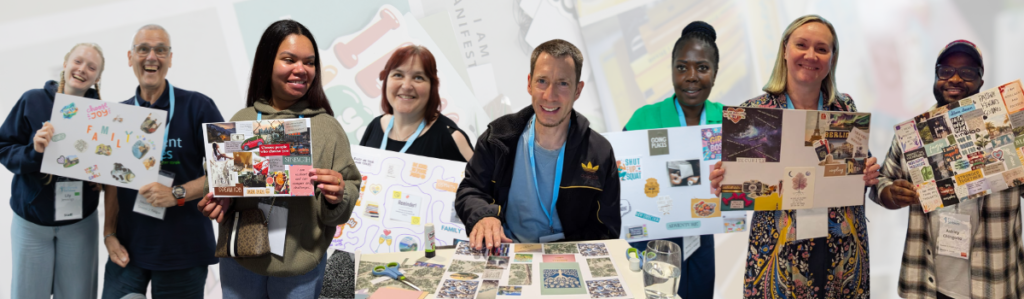
But for the last two years, we’ve run vision board workshops at the Different Strokes Conference and they’ve become one of the most popular sessions.
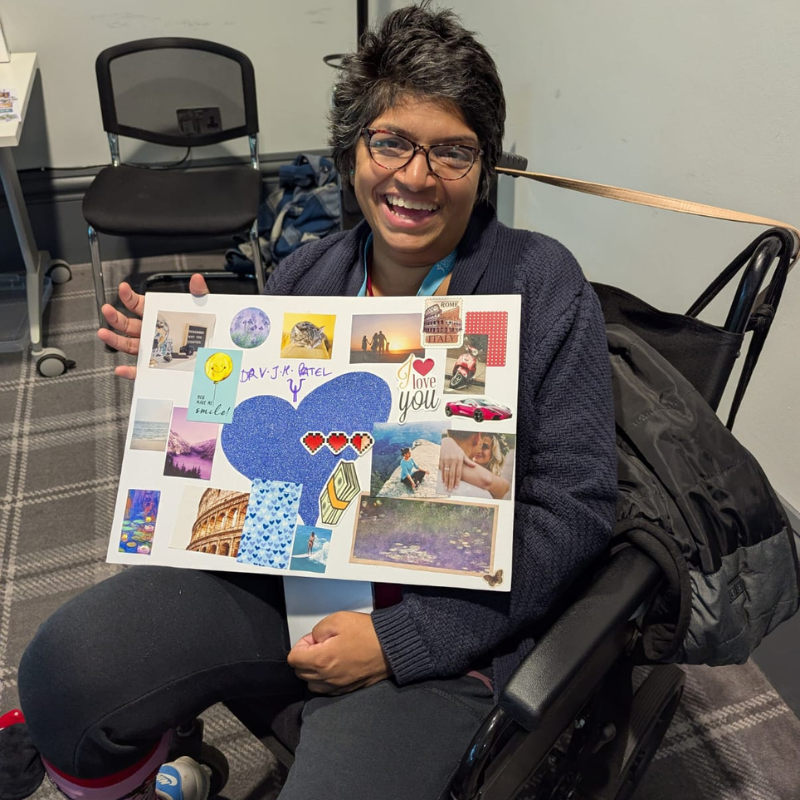
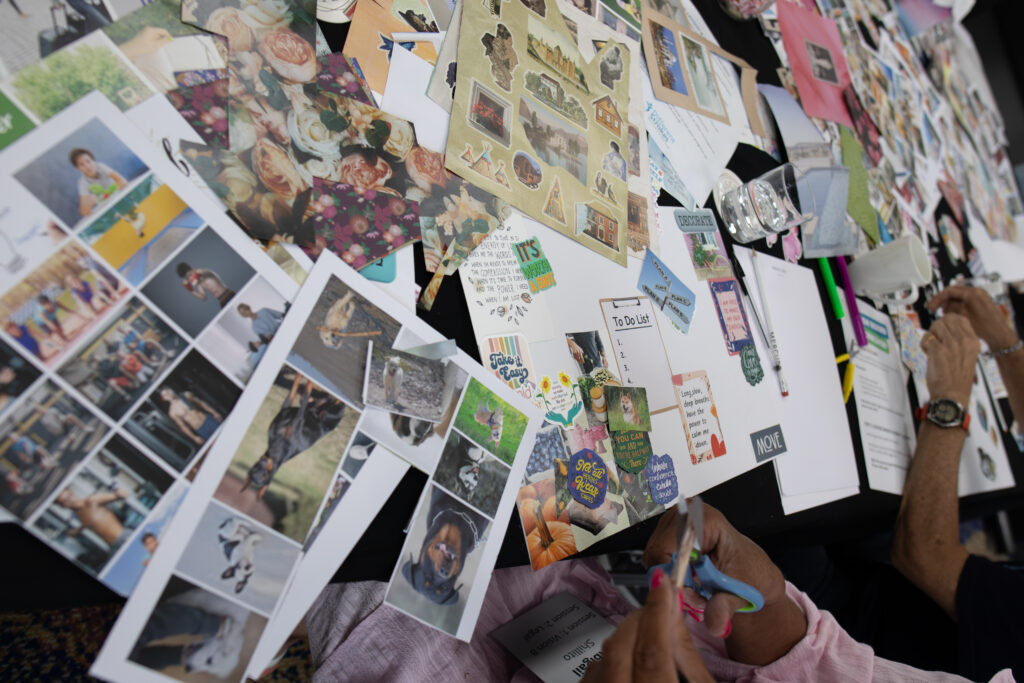
Each year we’ve watched stroke survivors gather around tables with magazines, scissors and glue, chatting, laughing and sharing ideas as they create something completely personal to them. Some boards are full of travel destinations. Others focus on family, hobbies, returning to work, being able to do small tasks they once took for granted again, or simply finding more joy in everyday life.
What makes them so special isn’t always the finished board. It’s what happens while people are making them.
Looking Forward Instead of Looking Back
After a stroke, it’s easy to become focused on everything that’s changed. Recovery appointments, medication, fatigue, adapting to life and coping with uncertainty and living in this survival mode can make it difficult to think beyond the next few days.
A vision board gently encourages you to do something different. It asks one simple question: “What would I like my future to look like?” That future doesn’t have to be perfect. It doesn’t even have to be full of ambition.
Sometimes it’s simply being able to enjoy a walk with your family, start painting again, return to gardening or feeling confident enough to meet friends for coffee.
Small Goals Matter
Recovery after stroke often happens in small steps. There isn’t usually one big moment where everything suddenly feels normal again. Progress is often made through lots of little achievements that gradually build confidence.
A vision board can help make those goals visible. Seeing them every day can be a reminder of what you’re working towards, especially on the tougher days when progress feels slow.
Research into stroke rehabilitation and goal setting has shown that having meaningful, personal goals can help people stay motivated throughout recovery.
One of the lovely things about our workshops is that no two boards ever look the same. That’s because no two people and no two strokes are the same. For one person, success might be walking without a stick.
For someone else, it might be returning to work, learning to drive again, travelling abroad, taking up a new hobby, or simply finding more time to rest without feeling guilty.
It Doesn't Have to Be About Big Dreams
Sometimes the word vision can make it sound as though you need huge ambitions. You don’t.
Many people include simple things that make them smile:
- Spending more time with family
- Reading again
- Getting outside more often
- Cooking more regularly
- Building confidence
- Feeling calmer
- Making new friends
- Joining a support group
These everyday moments are what make up the fabric of our lives – they play an important role in the quality of our days and how we feel about them.
A Creative Way to Reflect
Making a vision board can also be a chance to slow down. Choosing pictures, colours and words gives you time to think about what you enjoy, what’s important to you now, and how far you’ve already come.
Many survivors who took part in our conference workshops told us they found the activity relaxing, uplifting and surprisingly emotional. It gave them permission to think about the future with hope rather than fear.
The best part? You don’t need to be artistic! You can use magazines, photos, postcards, drawings, quotes, stickers or simply write words on a piece of paper. You can create a large board for your wall, keep one in a notebook or even make a digital version on your phone or tablet.
There isn’t a right or wrong way to do it.
Feedback From a Survivor
“I took part in the vision board workshop at a Different Strokes event in 2025, and the board I made still sits on my desk in front of me.
I realised how therapeutic it can be to tap into that creative side, to have a bit of time away from all the determination and the other stuff that comes with recovery. It was just about letting things flow and seeing where you end up.
My vision board ended up inspiring me to go and take holidays, because a lot of what I put on there was pictures of places I wanted to go. There’s something about it that made me realise how many places are out there, and that with this sort of second chance, I should get out and experience them.
I also had lots of pictures of how rooms are decorated, because I want to start doing things like that around my house. All those things that went on hold after my stroke. I didn’t really know what to expect going in, but it was a really peaceful and useful thing to do.”
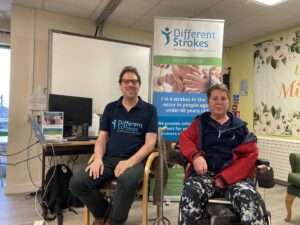
- Andrew Reynolds, pictured here with his partner at our 2025 conference.
Make It Work for You
Making a vision board doesn’t have to be complicated, and it certainly doesn’t need to be perfect. If your stroke has affected your movement, dexterity or coordination, there are plenty of ways to adapt the activity to suit you.
If cutting out pictures feels difficult, try using one-handed or easy-grip scissors or ask a family member or friend to help with the cutting while you choose the images. Glue sticks can sometimes be tricky to hold, so glue tape or sticky dots can make sticking things down much easier. You could also use stickers, postcards, greetings cards, printed photos or colourful paper instead of cutting from magazines.
Some people prefer to keep things even simpler by writing words or drawing symbols that represent their goals. Others create a digital vision board using a tablet, phone or computer, where images can be dragged and dropped without needing scissors or glue at all.
The most important thing isn’t how your board looks; it’s that it reflects your hopes, your interests and your journey. Whether it’s full of carefully arranged pictures or just a handful of meaningful words, every vision board is unique because every life is unique.
Looking Ahead
Recovery isn’t always about getting back to the person you were before your stroke. Sometimes it’s about discovering who you are now, what matters most, and finding new goals that give your life meaning.
That’s why we’ll continue running our vision board workshops at the Different Strokes Conference. They’ve become much more than a craft activity. They’re an opportunity to reflect, dream, connect with others and remember that recovery isn’t just about rehabilitation. It’s also about hope.
Because sometimes, seeing your future laid out in front of you is the first step towards believing it’s possible.
Why not give it a go?
Find some old magazines, print a few photos, gather some stickers or colourful paper and spend an hour thinking about what you’d like your future to hold. There are no right or wrong answers, just an opportunity to focus on what matters most to you, one small step at a time.