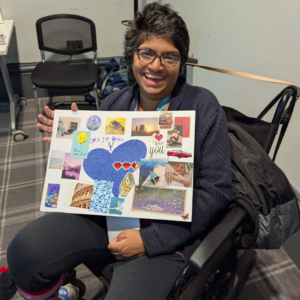
My experience of living with Aphasia

Written by Amber Sunner
Amber is a ‘two-time’ childhood stroke survivor, journalist, and Different Strokes Volunteer. Here she explores her experience with living with aphasia.
In 2015, I had my second stroke, which affected the left side of my brain. Despite making a speedy recovery within the hospital walls and then being discharged, I began deteriorating as I got home.
I vividly remember waking up each day and my speech becoming more and more slurred. I was taken to the hospital again, but the damage to my brain was already done.
Before my stroke, I was a bubbly, chatty 15-year-old. My mum used to say ‘She can talk for England.’ But after the stroke, I withdrew into myself, and I became insular. I stopped speaking because I wasn’t used to my new voice. I sounded different, and most importantly I felt different. Like a different version of myself.
At school, I stopped putting my hand up in lessons, which affected my learning.
Living with aphasia at school and university
I also found it physically and mentally hard to tell friends what had happened. After the initial shock of the aphasia, I began to talk because I knew that I had to talk to get by in my life. I attended speech and language therapy sessions in my school which helped me.
After a day of talking I would be exhausted. The sheer power it took me to talk to my friends and family was unwitting.
Aphasia is a hard thing to live with. Your voice can be a part of your identity – and when aphasia hit I felt like I lost my identity.
Facing Ableism
I have faced much adversity when it comes to my voice. One particular moment stands out to me. At 18 I was looking at universities that I may like to attend to study a journalism course. After each introduction, I would go to the head lecturer of the course and ask them for the support they could offer me. On one occasion a lecturer said to me ‘You shouldn’t do the course if you can’t speak,’ or something to that effect. But I could speak, I asked her the question and she replied with a shocking ableist response.
Aphasia can be a hard effect to get to terms with, as a voice is a major factor in our identity. I still refuse to hear my voice back in videos, because seven years later I am still not used to the sound.
Sometimes people understandably have difficulty in understanding what I say, and I have to repeat myself multiple times a day, which again exhausts me. And sometimes I wonder how much further I would be in my career if I wasn’t living with aphasia. All of these doubts creep in and I have to shoo them away.
I remember crying about how I sounded at university. My mood became very low and I found it to be a difficult part of myself to come to grips with. Aphasia taught me about how so many people lack patience. In a world defined by a rat race, this revelation shouldn’t have been new to me.
However, aphasia is a part of me now, and a large part of my everyday life. I feel as though the more I talk, my voice improves, but I also keep in mind that I probably will not be at the same level I was before my stroke. That is a notion I wept over.
Reclaiming my identity
Aphasia shouldn’t define you. To this day, I still continue my speech and language exercises because I want my voice to be the best that it can be, even though it won’t return to its original state.
Seven years after my stroke, I landed a great job, I graduated with a first-class degree with honours and I am happy in life.
Building your confidence after a stroke can be a difficult thing to regain, I did it by carrying on going to school, pursuing my learning and getting ready for my GCSE exams which would take place the following year. Those goals pushed me to keep going.
Define set goals for yourself, be it mastering a new skill, or spending more time with family or friends.
Keep talking, keep going and build your confidence. Warm up to achieving bigger things with the mindset of a stroke can’t hold you back.
Achieve these goals with your own considerations and comfort in mind. For example, I find it harder to walk after my first stroke in 2012, so I would never go on a hike because I would be in pain. Set goals designed to your own abilities.
Also, be sure that everything aligns with your rehab plan, and follows medical advice.
“Since so much of our identity is constructed through our social relationships, which rely so heavily on language, aphasia can obliterate that feeling of belonging.” This is a quote from Debra Meyerson, in her book Identity Theft: Rediscovering Ourselves After Stroke. People like me living with aphasia must carve out a new space for our belonging, because remember – we do belong.

Why Vision Boards Can Be a Powerful Tool After Stroke
Why Vision Boards Can Be a Powerful Tool After Stroke If someone suggests making a vision board, you may roll your eyes. Cutting pictures out
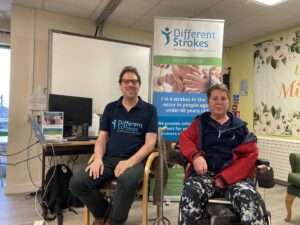
A Life-changing 5 Years
A Life-changing 5 Years! Colin Phillimore Colin is a stroke survivor, musician, poet and founder of the Different Strokes Poole group. After experiencing a stroke

What Advice Do I Have To Share Over Three and a Half Years After My Stroke?
What Advice Do I Have To Share Over Three and a Half Years After My Stroke? David Morten-Lawrence “At the age of thirty, I never
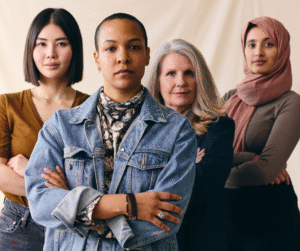
Women’s Health and Stroke: Navigating Challenges
Women’s Health and Stroke: Navigating Challenges The NHS is home to some of the most skilled and dedicated healthcare professionals in the world, but for

Eating and Drinking after Stroke: Everyone’s Journey is Different
Eating and Drinking after Stroke: Everyone’s Journey is Different Alexander Lang Alexander Lang is a Doctoral Researcher at Anglia Ruskin University in Cambridge. He is
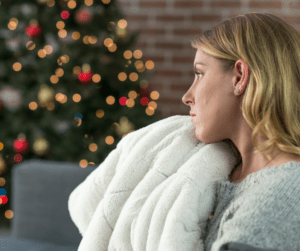
Coping with Isolation at Christmas: A Guide for Stroke Survivors
Coping with Isolation at Christmas: A Guide for Stroke Survivors The festive season is often portrayed as a time of joy, connection and celebration. However,