
Bridging the Gap: Understanding Cultural Barriers to Stroke Care in Black and South Asian Communities

Stroke is a life-changing event that demands immediate medical attention and comprehensive post-stroke care. Yet, for many individuals in Black and South Asian communities, accessing appropriate rehabilitation and support services remains challenging. While clinical factors such as hypertension, diabetes, and heart disease contribute significantly to stroke risk—Black people are twice as likely to have a stroke, and South Asians face a 25-50% higher risk—cultural and social factors play an equally critical role in shaping outcomes.
Disclaimer: While some cultural norms or shared experiences may shape health behaviours or access to support, they do not apply universally. We must avoid making assumptions based solely on someone’s ethnicity or skin colour. Each person’s experience is shaped by a complex mix of culture, identity, family, community, and individual perspective. This blog explores some of the common barriers identified, while recognising that they won’t reflect everyone’s reality.
Cultural Beliefs and Behaviours
Cultural values deeply influence health decisions. In many Black and South Asian communities, strong spiritual beliefs and traditional cultural norms can shape perceptions about illness. For some, a stroke is viewed as a test of faith or a matter to be managed within the family. These beliefs, while offering comfort and purpose, can also inadvertently delay medical intervention.
The idea that one should rely solely on prayer or family support often means that crucial early symptoms—such as facial drooping, arm weakness, or slurred speech—may not be recognised or acted upon quickly.
For healthcare professionals, understanding these cultural nuances is essential. Recognising that some patients might delay seeking help due to faith or a desire to avoid burdening family members, can guide the development of more sensitive and effective communication strategies. For example, healthcare providers can partner with community and religious leaders to convey that seeking prompt medical attention does not diminish one’s faith but is, in fact, a necessary step in preserving life and well-being.
The Role of Family and Community Expectations
In many Black and South Asian households, family structures are close-knit and play a central role in daily life. While family support is invaluable, it can sometimes lead to a reluctance to engage external support services.
Adversely, some aspects of healthcare can unintentionally be withheld due to an assumption that the patient has enough support from family.
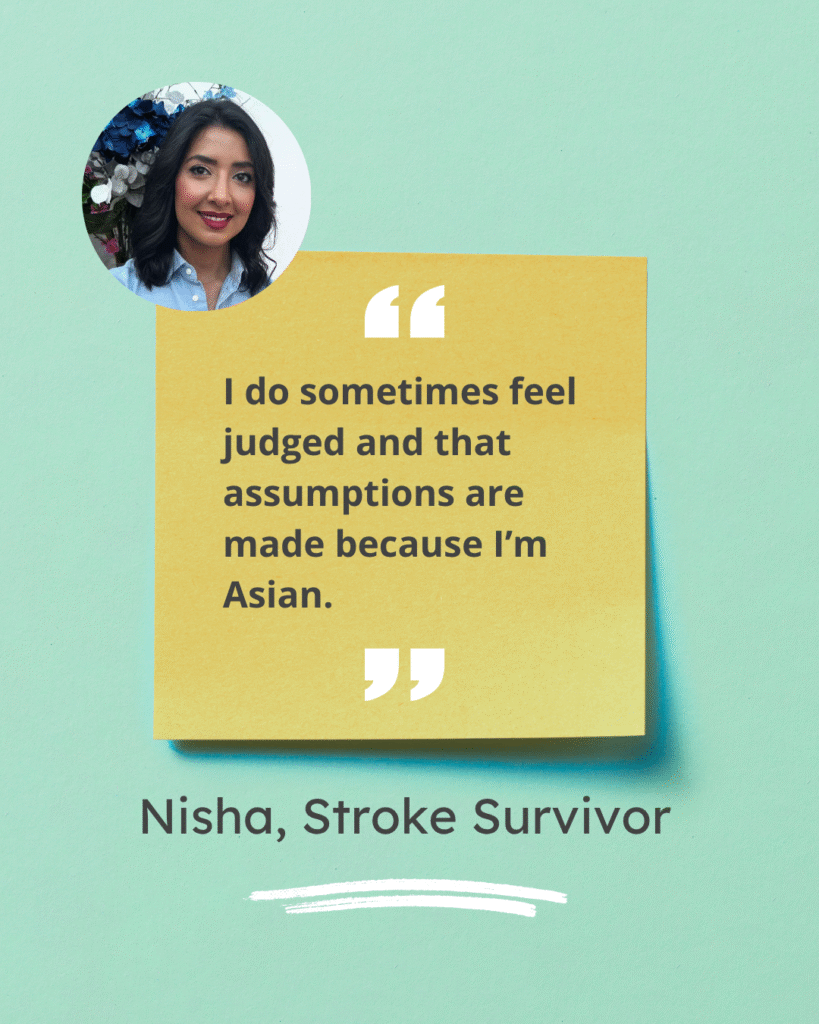
“I do sometimes feel judged and that assumptions are made because I’m Asian.
During my recovery I mentioned to the therapist how lonely and isolated I felt and how I had lost many of my friends.
Though she was lovely, she made a comment about how it was okay, I would be alright because Asian people have a lot of family and how she was pretty sure they’d help me. Though she may have been trying to be nice, the comment angered me.
I felt dismissed and frustrated because I didn’t appreciate the assumption and the idea that it was the responsibility of my family.” – Nisha, Stroke Survivor and BASS Ambassador.
Family members may often become full-time caregivers without adequate assistance, placing significant emotional and physical strain on both the patient and their loved ones. This dynamic can lead to isolation and a lack of specialised care that is crucial for effective stroke recovery.
Educating both the general public and healthcare professionals about the importance of professional rehabilitation is vital. It is important for healthcare professionals to be aware that a patient’s hesitation to seek external help may stem from deeply ingrained cultural expectations about family duty and self-reliance. Inclusive public health initiatives can help reshape these perceptions by emphasising that professional support services are designed to complement, not replace, family care.
Navigating the NHS: Challenges for Immigrants and Children of Immigrants
The immigrant experience adds another layer of complexity to stroke care. Many first-generation immigrants from Black and South Asian backgrounds may be unfamiliar with how the National Health Service (NHS) operates. Language barriers and differences in healthcare systems can result in delays in seeking care or miscommunication about symptoms and treatment options. This misunderstanding can also trickle down to second-generation children of immigrants.
For some, the fear of not being understood or concerns about being treated differently may deter them from engaging with healthcare services altogether.
There can also be the assumption that they may not speak or understand English correctly, which can result in vital information being either omitted or not presented correctly.
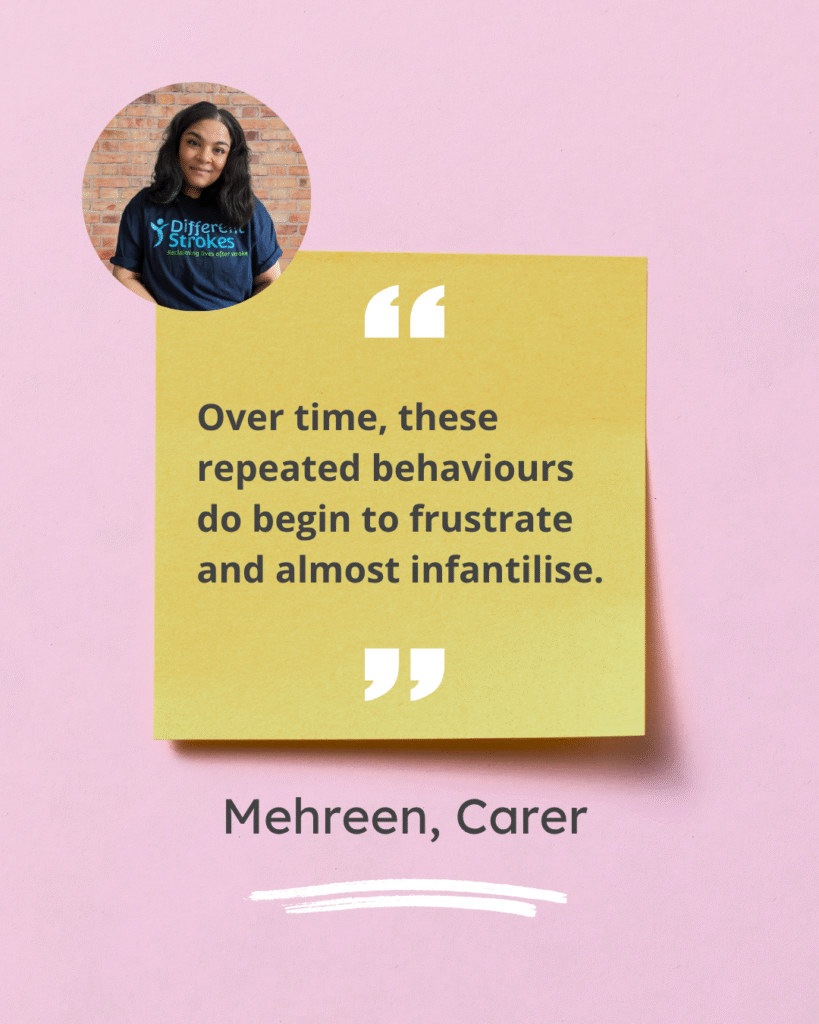
“My father speaks English perfectly however, he is hard of hearing due to older age. I accompany him to many of his appointments, there have been many instances where he has misunderstood something or not heard it at all due to his hearing.
At these points the conversation either pivots to me under the assumption he is not capable of understanding, or we have been pushed to book an interpreter. He just requires some patience, a louder voice and a bit more enunciation.
While I don’t doubt that they are well-meaning, over time, these repeated behaviours do begin to frustrate and almost infantilise him – regardless of the intention” Mehreen, carer.
For healthcare professionals, this underscores the importance of culturally competent care. Taking the time to understand someone’s communication needs whether in English or another language, is key. People cannot take full responsibility for their health and care if they have not been given the chance to understand correctly.
Where language barriers do exist, initiatives like offering multilingual resources and employing community link workers can help bridge the communication gap. Moreover, training for NHS staff in cultural sensitivity can ensure that patients feel heard and respected, fostering trust and encouraging timely access to care.
Misunderstood or Misdiagnosed
In the UK, evidence has shown that Black and South Asian patients are sometimes not taken as seriously by healthcare professionals—especially when presenting with stroke symptoms.
Part of this stems from how stroke is traditionally taught and recognised in medical training, with a focus on white, male bodies as the “standard patient.” A 2021 review by the NHS Race and Health Observatory found significant disparities in how pain and illness are assessed across ethnic groups, highlighting that clinicians may underplay symptoms presented by Black or South Asian patients.
Additionally, cultural norms often encourage individuals in these communities to “carry on” and maintain dignity, even when unwell. This can lead to them presenting more composed or understated, which unfortunately can be misinterpreted as less severe illness.
Historical mistrust in the system—built on decades of unequal treatment and underrepresentation—can also discourage individuals from fully expressing their concerns.
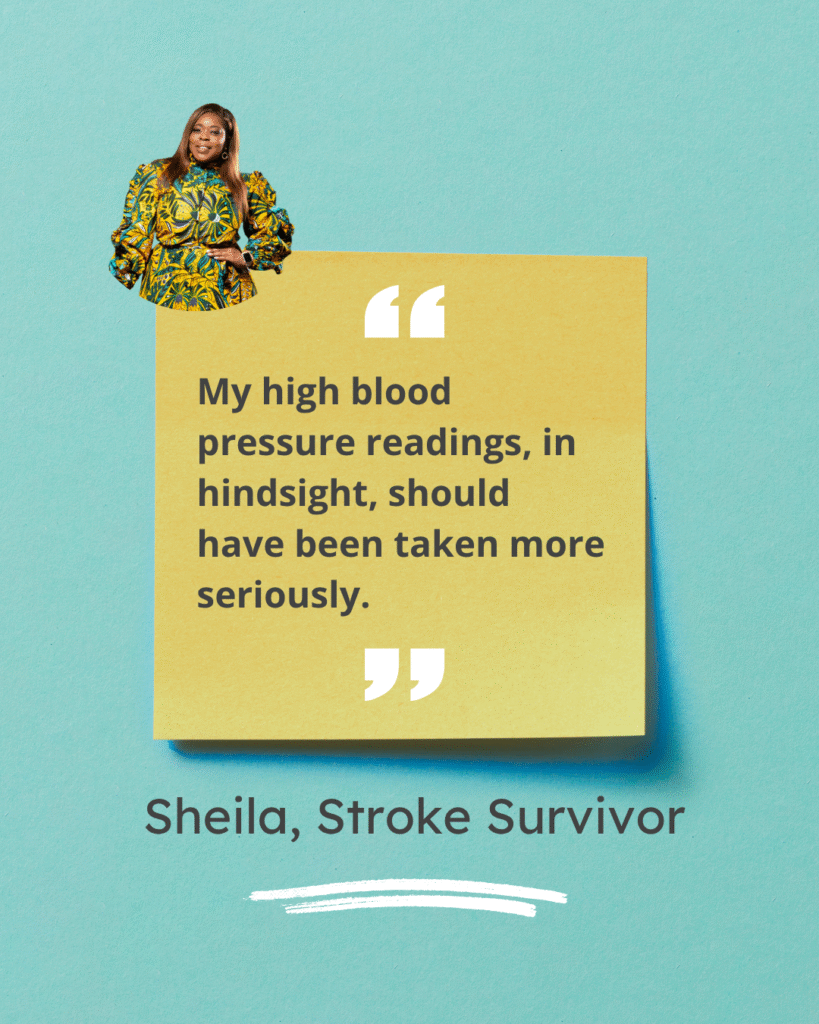
“The biggest issue I had especially when I relocated to Nuneaton, which had a low ethnic minority presence was not being taken seriously.
Health professionals at my GP surgery were very relaxed about the monitoring of my blood pressure and because I often presented as ‘strong’ and ‘confident’ this potentially led to a misconception that my body was also well.
Realistically, my high blood pressure readings in hindsight should have been taken more seriously.” Sheila, Stroke Survivor and BASS Ambassador.
These misunderstandings can delay diagnosis and rehabilitation, impacting long-term recovery. Raising awareness among both healthcare professionals and communities is key to addressing this bias and ensuring timely, culturally competent care.
The Impact on Stroke Recovery
The effect of these cultural barriers is a significant gap in post-stroke care among Black and South Asian populations. When survivors delay or avoid accessing rehabilitation services, their recoveries can be hampered, leading to long-term disabilities and a diminished quality of life.
Early intervention is crucial; every minute counts in reducing the severity of stroke outcomes. Yet, without understanding and addressing the cultural context, many individuals remain at risk.
A Way Forward: Collaboration and Culturally Competent Care
Addressing these challenges requires a coordinated approach involving community education, healthcare reform and active engagement with affected communities. Public health campaigns tailored to cultural contexts, which explain that seeking medical help is both a personal and communal responsibility, can significantly impact outcomes. For example, sharing success stories of stroke survivors who combined traditional support systems with modern medical care can provide a powerful message of hope and empowerment.
Healthcare professionals should work closely with more community leaders to ensure that health information is disseminated in culturally and linguistically appropriate ways. Collaborative efforts with faith-based organisations can also help integrate health messages with spiritual beliefs, ensuring that the importance of timely medical care is clearly understood without compromising cultural values.
Cultural beliefs, family dynamics, and the immigrant experience all contribute to the challenges faced by Black and South Asian communities in accessing post-stroke care. Overcoming these barriers requires a shared commitment from both healthcare professionals and the community at large. By fostering open, respectful conversations and providing culturally competent care, we can work together to ensure that every stroke survivor receives the support they need for a full and healthy recovery.
The BASS Project (Black and Asian Stroke Survivors Project) is aiming to be at the forefront of this change. By empowering stroke survivors to share their experiences and by developing culturally relevant educational materials, the BASS Project aims to increase awareness, improve access to care, and ultimately reduce the disparities in stroke recovery outcomes.
For more information on how the BASS Project is making a difference and to learn how you can get involved, please visit our BASS Project Page.
Together, through understanding and action, we can build a more inclusive healthcare system that truly meets the needs of all communities.
Resources Used:
- NHS Race and Health Observatory Report (2021), edited by The King’s Fund
- Raleigh and Holmes (2021) on ethnic health inequalities
- Public Health England (2020) on cardiovascular and stroke risk factors
- Office for National Statistics (2020) data on CVD mortality
A Life-changing 5 Years
A Life-changing 5 Years! Colin Phillimore Colin is a stroke survivor, musician, poet and founder of the Different Strokes Poole group. After experiencing a stroke

What Advice Do I Have To Share Over Three and a Half Years After My Stroke?
What Advice Do I Have To Share Over Three and a Half Years After My Stroke? David Morten-Lawrence “At the age of thirty, I never
Women’s Health and Stroke: Navigating Challenges
Women’s Health and Stroke: Navigating Challenges The NHS is home to some of the most skilled and dedicated healthcare professionals in the world, but for