The Discharge Gap: an important report on what happens after stroke

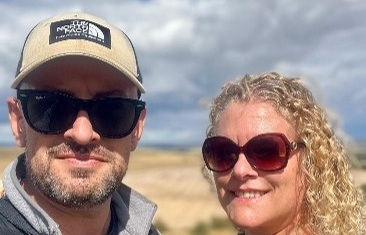
A  member of the Different Strokes community, Maya Kuzalti, has co-written an important new report looking at what happens to stroke survivors after they leave hospital and why so many people struggle to access the support they need.

The Discharge Gap, written by Maya and fellow stroke survivor and stroke advocate Paul Quinn, is an independent policy report published to mark World Stroke Day on 29th October. It looks at stroke aftercare in England, examining the gap between the support people are recommended to receive and what is actually available.

The report is the result of Maya and Paul’s own research and work. It brings together clinical evidence, national data and the experiences of stroke survivors to explore a problem that many people in our community will recognise: support can become harder to access as time goes on, even when someone still has rehabilitation goals and needs help.

What happens after six months?

The report describes what it calls the “six-month cliff”. It argues that the way stroke care is currently organised in England can leave people without a clear route back into rehabilitation and support once they reach this point.

The national stroke audit, SSNAP, follows up with eligible patients at six months, but does not routinely measure what happens beyond that. The report highlights that just 35.1% of eligible survivors received a six-month review in 2024/25.

It also looks at the difference between clinical guidance and people’s experiences. National guidance recognises that people can benefit from rehabilitation at any point after a stroke, depending on their needs and goals. But the report argues that community services are not consistently commissioned to provide this support.

As part of their research, Maya and Paul gathered feedback from 20 stroke survivors. In this group, 14 people described the support they received after leaving hospital as “little” or “nothing”, while 18 had looked for additional help through charities, private providers or their own networks.

The report explores the impact this can have, not only on stroke survivors but also on their families and unpaid carers.

What needs to change?

The Discharge Gap does more than set out the problems. It puts forward practical recommendations for improving the pathway after stroke.

These includes:

  • Extending national follow-up to 12 months
  • Making sure community stroke rehabilitation is commissioned in line with existing guidance
  • Giving survivors a named stroke care coordinator who can help them navigate services.

It also proposes a clearer way for people to return to rehabilitation when they need it, rather than having access determined simply by how long it has been since their stroke. The report calls for stroke survivors and carers to be involved in shaping these services from the beginning, with paid roles and a meaningful say in decisions.

The aim is a system where people are not left to work out what support is available on their own, and where rehabilitation is guided by individual need rather than an arbitrary timeline.

Read the report and join the discussion

We are sharing Maya and Paul’s work because we believe it raises important questions for stroke survivors, families, health professionals and decision-makers. It is an opportunity to understand more about the challenges people face after leaving hospital, and to think about what better support could look like.

The report is free to read on Substack:

What you can do next

Stroke survivors

  1. Ask the question. Ask your GP, community stroke team or local Integrated Care Board (ICB): “Who looks after stroke survivors in our area after six months?” Note the answer, or that nobody could give you one.
  2. Ask for a review. Only 35.1% of eligible survivors had a six-month review in 2024/25. If you never had one, ask whether you can.
  3. Tell us your story. Comment on the report’s Substack page or email Maya and Paul at hello@thedischargegap.com: what support you were offered, what stopped, and what you found for yourself.

Carers and family

  1. Ask the same question for the person you support, and ask what support there is for you.
  2. Share your experience. The report shows the gap affects families and unpaid carers too. You can comment on Substack or email hello@thedischargegap.com.

Everyone

  1. Read the report. It’s free.
  2. Send it, with the question, to one person who could help. That could be your MP, a councillor, your GP practice or an ICB board member.
  3. Send us the answers you get, in the Substack comments or at hello@thedischargegap.com, so we can see what is happening across the country.
  4. Want to help shape services? The report calls for paid roles for survivors and carers. Email Maya and Paul at hello@thedischargegap.com.

Thank you to Maya and Paul for the time and work they have put into this report, and for sharing it with our community.

Facebook
X
LinkedIn
Pinterest
Reddit
WhatsApp
Email

Join Our Mailing List

This field is for validation purposes and should be left unchanged.
Name
Email(Required)
Would you like to join our postal mailing list to receive physical newsletters in the post twice a year?
Address