After her mum’s stroke at just 45, Huma as a carer, is sharing her family’s experience to raise awareness, encourage early health checks and help other families recognise the signs of stroke.
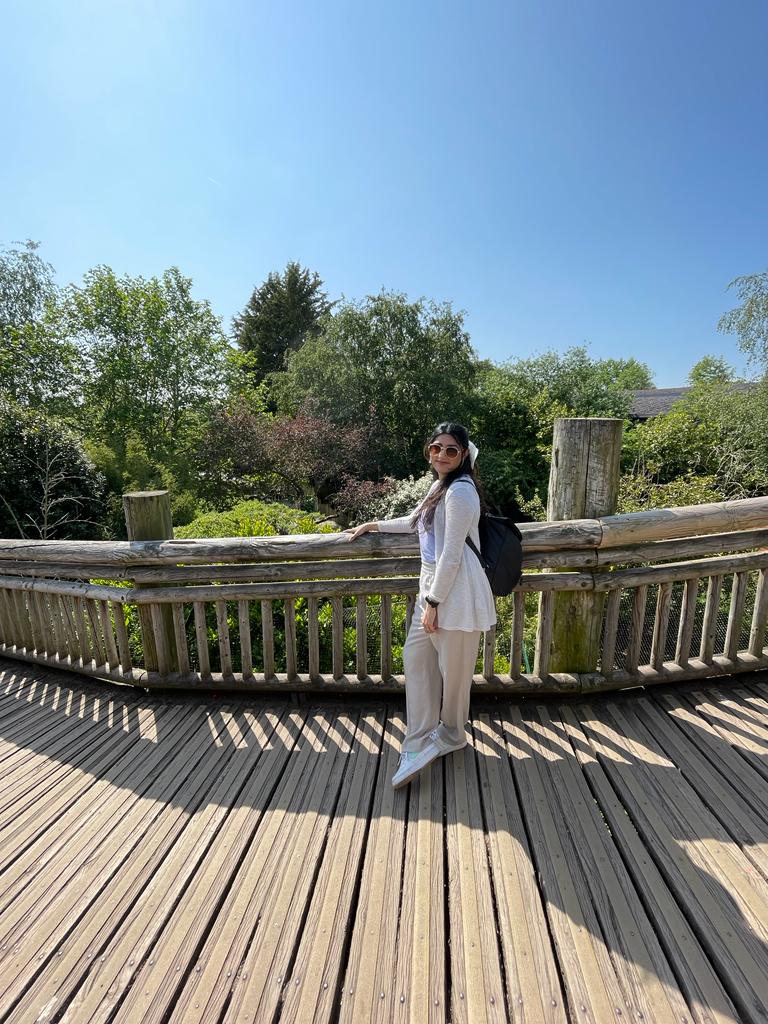
Huma is 30 and lives in Manchester with her husband. As the eldest of three siblings, she has been by her mum’s side ever since she experienced a stroke at the age of 45. Her mum now lives with aphasia, which affects her ability to communicate. Huma is also a BASS Ambassador volunteer for Different Strokes, where she uses her background in marketing to support the marketing team. She actively raises awareness in her local community by distributing flyers at mosques and her local library, and hopes to organise awareness events in the future.
“We never thought it would happen”
“Although my mum didn’t have the common symptoms you associate with a stroke, such as a drooping face or slurred speech, we took her to A&E immediately.
We arrived at the hospital around 8 in the morning, but my mum didn’t get a bed until 11 that night. The waiting times were awful, and the constant waiting around was distressing and made an already difficult situation feel even worse. At one point, the hospital was so overcrowded that my mum was left lying on the floor, and I had to speak up and push for her to receive the care she needed because I couldn’t bear to see her like that.
Initially, the doctors were trying to establish whether she had Bell’s palsy, which they eventually ruled out. It wasn’t until the following day that they investigated further and sent her for an MRI scan, which confirmed that she had suffered a stroke caused by a bleed. The scan also revealed that she had experienced two previous silent strokes, despite showing no obvious symptoms at the time.
She seemed completely normal to us. Looking back, the only thing we had noticed was that she had been moving more slowly, but we would never have imagined that this could be a sign of a stroke.Her food had to be mushed up, and I had to help her to the toilet because one side of her ody wasn’t working. Looking back, I watched her get worse before she got better.
In hospital, she had speech therapy and physio. But when she came home, that support lasted about six weeks, and then it went very quiet. You feel left to figure it out on your own.”
Before her stroke, Mum was chatty and full of life. Now she’s very quiet, and she’s more emotional than she used to be. At first we thought she’d be back to her old self, and we aw her improve physically and with her speech. But now we realise she may not be, and that was a shock to all of us.
It’s been hard for my Dad too. He’s her main carer, and he feels he’s lost the emotional connection with his wife. My brother was only 13 when it happened, and he was trying to make sense of it as a child. I look after her medication and the paperwork, and I try to encourage her to read aloud to keep her speech
going. She used to love cooking. She still cooks now, but we make sure someone’s nearby.
I tried to stay strong for everyone. Then, after Mum came home, it all caught up with me, and I broke down. My husband has been my biggest support.”
Finding Different Strokes
“We first heard about Different Strokes in hospital, where we were given an information pack. Then I saw a post on Facebook looking for BASS ambassador volunteers and I jumped on it straight away.
I’d taken Mum to a few groups, but most people there were in their 60s and she felt out of place, older than she actually is. I wanted to help build networks for younger survivors. We also went to a Different Strokes event in Manchester with an indoor golf session. A speaker there had recovered and now runs marathons, which was amazing to hear.”
What I'd say to others
- Get checked. “Even if you’re healthy, go to the gym and eat well, get your
blood pressure and blood sugar checked regularly. Don’t wait until
something happens to you. I don’t want to frighten people, but a stroke
can happen at any age. If we’d known, we’d have monitored Mum’s levels,
and now we do.”
- Look at what’s on the plate. “In the Asian community we often eat a lot
of processed food, oil and sugar. It’s worth being mindful of that, and
perhaps in the Black community too.”
- Fight their corner. “If someone’s waiting and getting worse, speak up for
them.”
- Be patient. “It’s easy to get frustrated when they’re not communicating,
but remind yourself they’ve been through a shock. Treat them as a normal
person, they’re a lot stronger than people who haven’t been through it.”
- Accept the now. “Try not to dwell on how things used to be. Deal with
what you can control.”
- Be there. “My sister and I talk about how we should have spent even
more time with Mum before. It’s brought us closer.”
“Family is a big part of the Asian community, but I think about people who don’t
have that around them. That’s where Different Strokes comes in. Everyone has
been so lovely and friendly, and it really does feel like family.”
What is the BASS Project?
The BASS Project (Black and South Asian Stroke Survivors) was launched by Different Strokes in 2021 to help change this.
BASS is a grassroots, community-led project focused on raising wareness, increasing representation and building connections with Black and South Asian communities.
It is about making sure that people can see themselves reflected in the stories, information and conversations around stroke and helping to ensure that the voices and experiences of Black and South Asian stroke survivors are heard.
If you would like to be involved, email info@differentstrokes.co.uk
Your donation helps others like Huma and her family on their journeys
There are 100,000 strokes in the UK each year with 1 in 4 happening to somebody of working age or younger. Different Strokes aims to promote independent stroke recovery and help these younger stroke survivors reclaim their lives.
Make a smile lottery is a weekly fundraising lottery. A fun and exciting way to help Different Strokes raise vital funds that will secure our future.
It only costs £1 per play, and you can choose to play every week or whenever you feel like taking a chance and doing something good. For more information click here.