 I Have Been Lucky.
On Friday 8 August 1997, aged 30, I awoke feeling a little sick and sweaty. Two weeks prior to this I had woken up with an upset stomach and had a couple of days off work but this felt much worse than before.
I staggered to the toilet and started being sick, over and over again, as well as sweating profusely, from every pore in my body. I fell against the toilet wall and I could see sweat running down the wall, and I continued to be sick. I was (and still am) in the Royal Air Force (RAF). My wife, Bev phoned the military medical centre where I worked and arranged an appointment for me and a military ambulance was sent, as I couldn’t walk.
Meanwhile I felt faint and laid on the bed continuing to be sick, as the room spun round. I quickly worked out that if I laid on my left hand side, and in the foetal position, I stopped being sick. Shortly after the ambulance arrived, so I bumped down the stairs on my backside (as I couldn’t walk). An RAF medic tried to help me walk to the ambulance, but I staggered so badly that I pulled her over as I stumbled into the ambulance and was sick.
In the medical centre I was examined and told I had a middle ear infection, given an anti-sickness drug (which finally stopped me vomiting) and painkillers for a headache, which was getting worse.
The next day my head was even worse and another trip to the GP (same doctor as the day before) where I was given stronger painkillers for my head. The sweating and my balance was awful, the hours passed as I tried and I hoped to get better. Sunday 10th June passed in a blur, still sweating with a blinding headache, Bev opened all of the doors and windows in the house to allow a breeze to pass through to try and keep me cool as it was a very hot and humid August. It made me feel slightly better as I witnessed Damon Hill almost win the Hungarian GP in his inferior car. I then staggered back up to bed to collapse on the bed, without washing, shaving, cleaning my teeth etc., as my head was so painful.
Monday dawned bright and sunny, but not for me; my head hurt, Bev went to work to clear her desk as she was supposed to start two weeks holiday, which didn’t start well. When she came back I was groaning with pain so she got me back to the GP. This time I saw a different doctor who immediately summoned a nurse and they both agreed I wasn’t very well and wasn’t breathing properly. My neck was stiff and my eyes were hurting – cue a military ambulance taking me to the John Radcliffe (JR) hospital in Oxford, who then redirected the ambulance to the Radcliffe Infirmary (RI) (as it was then), as it was assumed I had meningitis (which, incidentally I had aged 8). On arrival at the RI I could hear someone moaning and groaning, and I wondered why they were so noisy. That person was me! I didn’t know which floor I was placed on (there is only one), and a CT Scan was performed , quickly followed by a magnetic resonance imaging (MRI) scan.
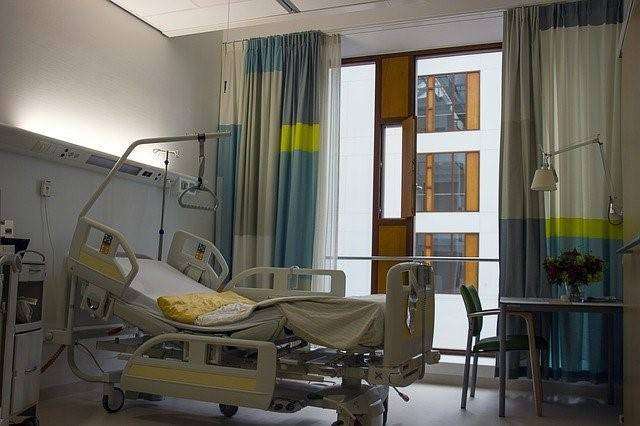 The infirmary was a neurological unit, but in those days there was no designated stroke ward. I was placed next to the nurses’ station and placed on the VSI (very seriously ill…) list. I was extremely dehydrated and, once a vein was found, put on a saline drip, and was breathing irregularly. I was then informed that I had suffered a cerebellar stroke by the consultant neurologist , and promptly burst into tears , saying it wasn’t possible as I was young and strokes only happen to people aged 45 plus…little did I know!
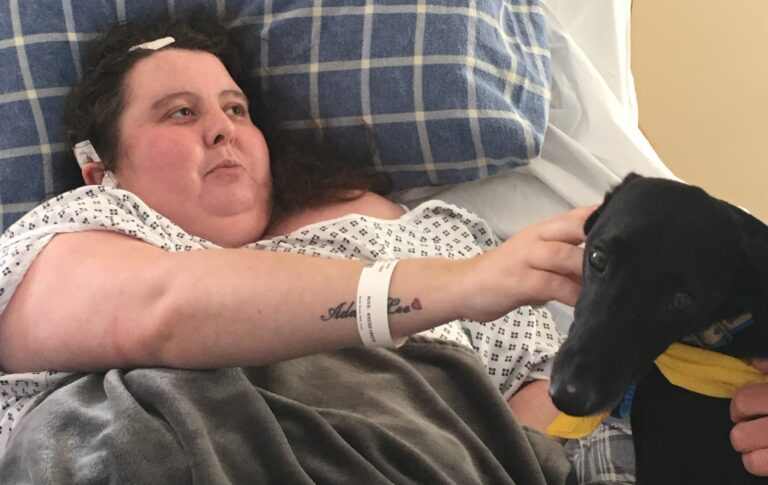
Day 5 , followed in a blur, poor sleep, with no painkillers allowed as the doctors wanted to see how alert I was. I had fluid pressure building up in the ventricles in my brain, (hydrocephalus). It was hoped that this fluid would vent naturally, but alas it didn’t and on day 6 I was told that if I didn’t sign the consent form for an operation then I would die. Within three hours I was wheeled down to theatre and put under in order to have a VP Shunt fitted to relieve the hydrocephalus, which was giving me the headaches. Waking from the anaesthesia I was confused, volatile and quite angry, but this quickly left as the drugs wore off. I didn’t feel much better, wasn’t allowed to sit up and had to try and do everything lying down – difficult when going to the toilet in a cardboard bottle. The shunt started to do its job over the next few days but left a reasonable scar around the back of my head, and across my stomach, left blood all over my pillow until it finally stopped leaking – but a small price to pay.
It was at this time that I met somebody else in the hospital who had some sort of degenerative illness. I got on really well and had a really good laugh with him, and soon realised that (in my case) there is always someone worse off than you (which I still relate to today).
I have been lucky.
I stayed in hospital for a total of ten days, which was a long time in those days and had a barrage of further tests, all of which came back negative, including a scan of my neck and heart valves. No cause of stroke was found. I was told by a doctor that if I ‘had’ to have a stroke, the cerebellum would be the part of the brain to choose to have it, as a full recovery was expected.
I have been lucky.
So, back home, off work, (taking 150mg of aspirin) still weaving about but balance and coordination improving quite quickly and the headaches gradually receding. One thing I was starting to think about was “why me?”. I kept myself very fit, didn’t smoke and appeared to have no other risk factors at all. Slowly the frustration built up. At aged thirty I was also worried about my own mortality and having a further stroke, which scared me, and still does to this day. (more of this later). I bought a 1997 mobile phone ‘brick’ for emergency use – I still have the same number to this day. (I wish my phone provider would recognise my loyalty!!). I also couldn’t drive for six months, further fuelling my thoughts that I was an invalid.
After a further six weeks off I was deemed fit enough to go back to work and carry on with my military career (well sort of, but I won’t go into this here…). Around this time I heard about a relatively new charity called Different Strokes (DS), who dealt with strokes in younger people I think, at the time, in U50s, but I will stand corrected on this point. The Stroke Association was OK, but I found DS more refreshing and more in tune with me at aged 30.
I have been lucky.
 My frustration at this time was growing, with great physical health and fitness/ recovery, but not so good in relation to mental health, as I felt people considered me an invalid (not necessarily true). This was not helped by being in the military and being considered ‘unfit for normal duties’. I find this is the way the military do things, even to this day and it is the way they protect the patient, and themselves. However, I felt fully fit and wanted to get on with my career but I wasn’t allowed. At this time I spoke with someone called Donal O’Kelly from DS who was a breath of fresh air and founded DS- I am grateful to him this day for his support and advice. In 1998 work colleagues and I raised £500-£600 for DS by completing a ‘Rhino Poo Clear Up’ at the local wildlife park. I wonder if there’s any information about this in the DS archives?
I have been lucky.
Meanwhile more frustration was building. Bev noticed me getting angrier and angrier, as did colleagues at work – which wasn’t really me. So I took my loved one’s advice and sought some counselling and anger management, via the military medical services, and which was very good. Eventually, and after treatment, I became a friend of the counsellor.
I have been lucky.
Over the next years I got my career back on track; I got promoted, I worked in Cyprus, I raised a family and I went to the Middle East serving in places like Iraq, Afghanistan and all over the Middle East. I suppose it was fair to say I never let my stroke define me. I kept myself very fit and it became a distant memory. As did DS! I also realised how fortunate I was not to suffer any long term disabilities and felt ‘normal’. Although I always felt guilty when I heard of other stroke suffers who were permanently disabled. I had recovered virtually ‘scot free’ – or so I thought….
I have been lucky.
Roll on almost 24 years (now aged 54) until May of this year. My RAF career had progressed quite nicely, we have two teenage daughters and Bev and I had recently celebrated our 30th wedding anniversary. I had been out on my bike, completing 38 miles the day before, having taken up the road cycling thing during lockdown – and realising that I quite enjoy it. It also meant I kept fit. I was now on 75mg aspirin and 40mg simvistatin. I had tried clopidogrel a few years ago but I got so many bruises the GP put me back to aspirin (with my agreement).
I have been lucky.
I woke up feeling a bit odd, not quite 100%, like I was a bit hungover, despite not touching any alcohol. I walked into the bathroom, tried to blow my nose but only used my right hand as my left arm had pins and needles in it from where I had been laying on it (or so I thought). I collected some washing and went downstairs to place it in the washing machine. I did notice that the washing machine door seemed difficult to open with my left hand, and felt ‘wet’ and slippery, even though I knew it was dry. The kitchen worktop also felt wet. In my increasingly confused state I decided to take my daily aspirin, with a few more(which was the right thing to do). I suspected what was going on but couldn’t get any out of the foil (which is often impossible with 2 normally working hands!). Bev found me in the kitchen and I told her everything felt wet. She asked what was wrong with my face (droop apparently), and calmly told me to sit down while she phoned 999. Whilst on the phone to the call-centre and with an ambulance on the way, Bev noticed my face return to normal and I informed her that my left arm seemed back to normal. I then insisted on shaving and cleaning my teeth before my suspected trip to the hospital, to be honest I felt totally back to normal and didn’t want a repeat of my dishevelled state in 1997!
The paramedics quickly arrived and did the usual cursory checks – all were normal, with one paramedic saying my blood pressure (BP) was lower than his! They notified the JR hospital that I was on my way and Bev and my youngest daughter, who was supposed to be playing football quite close to the hospital, drove me to A&E.
I have been lucky.
I was seen quite quickly. As usual loads of bloods were taken from me, all tests came back normal, including a CAT scan of the shunt in my head. It was noted that my BP was high though, in contrast to what the paramedics said. t was rightly assumed I was anxious, hence the raised BP. The phrase transient ischemic attack (TIA) was used and 24 years of suppressed memories came flooding back, leaving me in tears. Why me? Why now? I just couldn’t understand it. After about five hours I was packed off and told the TIA clinic would be in touch.
I have been lucky.
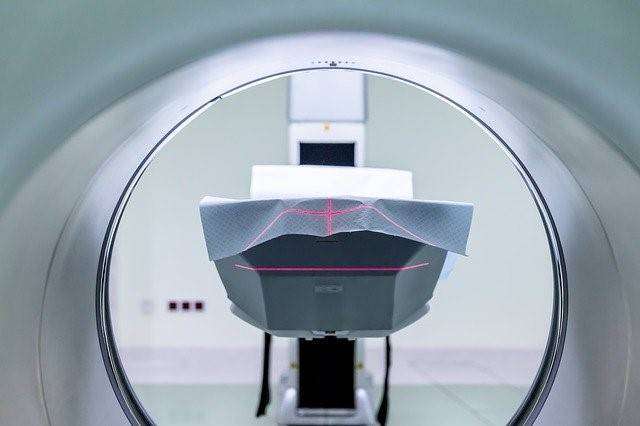 The next morning Bev’s mobile phone went off, as mine was switched off. It was a call from the consultant neurologist at the JR who asked her to wake me and then bombarded me with questions and asked if I would go back in for a further MRI brain scan including neck arteries. So I had another trip to the JR and the lovely MRI scanner, which brought back more unpleasant memories. While waiting for the results Bev and my youngest daughter were waiting in the car downstairs. I was well looked after by the busy, but cheerful NHS staff. The nurses regularly checked my BP which was fine, but my temperature was 34.5C, so they tried 3 different thermometers, all with the same reading and I felt quite warm.
After another 3 hour wait the consultant finally found me and thanked me for coming in (it was at this point that I realised that in 1997 most of the doctors and consultants were older than me, but this time round they were younger!!). He said my scan had showed some interesting results that were not good news. He took me back to 1997 and showed me the clot damage to the left hand side of my cerebellum. He then showed me some smaller clot damage to the right hand side of my cerebellum. I didn’t know, and he couldn’t tell, if this damage had occurred in 1997 or since and over the last 24 years. My original scan pictures were gone. He then showed me pictures of a large clot area in the right hand side of my brain, near to a main artery, confirming a TIA. Although if I hadn’t told him that my symptoms had only lasted for 20 minutes he could have thought it was a full blown stroke. He said the clots must be being sent up to my brain from my heart as they were in three different areas of my brain. So he requested further tests to try and get to the bottom of what had caused these strokes/TIA. He put me on clopidogrel as an ‘upgrade’ to the aspirin and now astorvastatin 80mg. He also explained I couldn’t drive for 28 days and was at a 40% higher chance of having a further major stroke, which didn’t go down very well with me.
I left the hospital quite distraught, feeling well looked after, but totally gutted with my latest episode. I had a lot of trouble telling Bev and my daughter in the car in the car park what had happened without dissolving into tears, but I somehow managed to almost compose myself.
But I have been lucky.
Three weeks later I had the heart bubble scan with a rather eccentric but very nice consultant cardiologist. Before the scan he explained that he was looking for a PFO and because of my history he suspected that I had one. He got the saline syringe ready in my arm and started scanning. He said he could see a large PFO without needing to use the bubbles (an emotional moment for me that I kept in check). When he did fire the bubbles into me they just moved left to right across the heart in one mass. He didn’t have to ask me to cough or press my stomach.. He explained that I also had an aneurysmal interatrial septum which he believes is what was probably causing blood clots to form. He told me I had had this from birth, but it could be fixed relatively easily with my stroke risk then receding to someone of my age rather than what it was now. I could have hugged him and told him I had waited over twenty years to hear this news. I walked out of the hospital feeling overwhelmed and trying to hold back dry sobs which came from deep within me. I texted Bev to tell her the news (in case I couldn’t verbally tell her), but her phone had switched itself off. I sat outside the hospital and told her what had gone on, breaking down in the process of telling her my good news “I know the cause of my strokes and I now need a heart operation!”
I also had almost twenty four years of frustration and anger coming out of me, as well as relief. I honestly thought I would go to my grave not knowing what had caused me to have so many clots in my head. I now knew and there was a solution – and in the not too distant future.
I have been lucky.
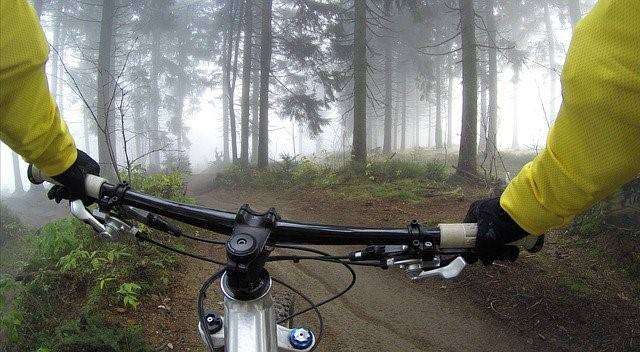 The recent TIA made me realise my mortality again. It also made me realise and remember how ill I was back in 1997. I read a book called the Diving Bell and The Butterfly, and it terrified me then but I know I could read it now. I recovered very quickly and very well, and most people have recently admitted they didn’t even register that I had had a stroke. It makes me remember that stroke isn’t just about the physical disabilities; it is about the mental issues afterwards too. The effects are often invisible – I feel guilty reading so many other stories of disability when I am going out running, riding my bike for over thirty miles, or swimming sixty lengths in the swimming pool – all aged 54! But, I suppose it is what I have to do to prove normality and the way I try to show that stroke will not defeat me, at least not physically.
I have been so lucky really.
This story is long, it spans almost twenty four years. I hope it offers some of you some help or hope, maybe a few smiles and you can relate to it. If it helps just one person, then I will be content. I still have a way to go and I will try not (I mean I won’t) forget DS – hence this story.
One more thing I realise I could not have remained so positive and normal without the powerful support of my guardian angel, my wife Bev – not just with stroke but a whole myriad of things, with me being in the RAF for some 37 years, which have kept me focused. I dedicate this survival story to her, my daughters, the rest of my family who always supported me, my work colleagues (you know who you are), friends and to all stroke survivors.
Stay positive , try and smile, and (probably) there is somebody else out there who is worse off than you.
I have been so lucky but I am a survivor and so are you.