I left the kitchen and walked towards my son, with my brother still calling and following me, then felt very dizzy and leant towards the wall – and then I fell down. I am told that I had collapsed on the floor. My dad came out and tried to revive me, but my arm was weak, my face was drooping, and I couldn’t speak! My dad suspected it was a stroke, so they called an ambulance and called my wife Adjoa to come home, when she was on her way to work.
The ambulance came quickly and took me to a local hospital, then later transferred to Kings College Hospital. However, the ambulance was going slowly, and without sirens on. Adjoa was with me at that time, and she knew that time was critical for a stroke, so she asked the ambulance why they were going slowly. They said they had notice from the hospital that his case was not so urgent, but thankfully my wife persisted, and they put the siren on. I’m glad so she was with me because time is so important for when dealing with a stroke! So I arrived at Kings College Hospital and by this time I was going in and out of consciousness, so I couldn’t see what was going on. It all happened so quickly, but I remember going through the process of thrombolysis, which is the process of removing the blood clot from the brain.
Hospital & Recovery
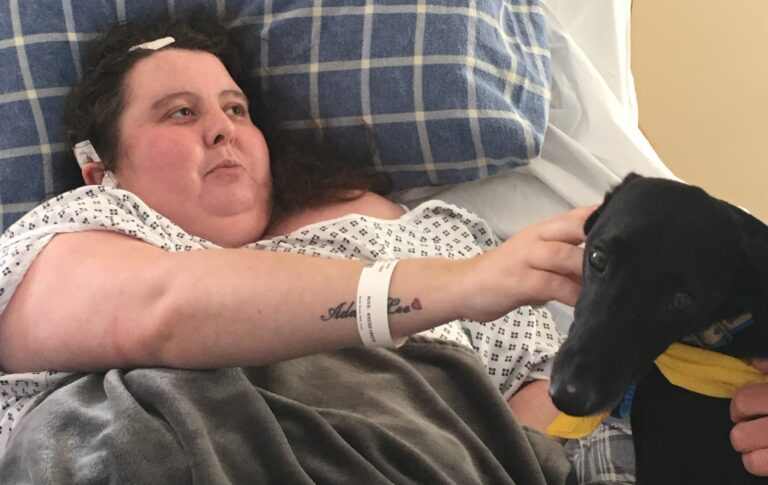
After the procedure I suffered severe headaches while in hospital and for weeks, I couldn’t eat, my tongue was swollen and I was been feed through a straw. I was in hospital for three weeks, where I was paralysed and bedridden for most of that time. After three weeks, doctors begin talking about sending me home, still not able to talk and not being able to walk properly, but once again Adjoa advocated for me, fighting for me to get speech therapy and a place in rehab, so I was transferred to the Frank Cooksey Rehabilitation Unit (FCRU) in South London, where I spent the next three months of intense speech therapy and some physio rehabilitation. On being discharged form FCRU, I was able to walk (without aids) – but I could not speak properly, and the words was coming out were very laboured at that point – despite lots of intensive speech therapy; three times a day, five or six times a week. Over time, I was able to regain my speech and six month after the stroke returned to FCRU and have a conversation (still very laboured) with the nurses and my speech therapist to their amusement….
Tragedy and Transition
I suffered the stroke of the 12 May and on the 15th May, and just a few days after my stroke, my mother passed away. She had been sent home for palliative care to our family home in Beckenham. On the day of the stroke Mum had been in a coma for a couple of days, and my family and I were staying with them as we had recently purchased our current house, and we were in the process of renovating the house. The morning of the stroke around 5am (as was my custom) I had sat and prayed with her despite being in the coma. That was the last time I saw mum; I won’t know if she heard the commotion of the stroke while outside her room.
I was discharged from the FCRU in early August. The doctor’s plan was to transfer my care to the NHS in the London borough of Bromley, where our new home was, but until two weeks before my stroke my family’s home had been in Nunhead (nr Peckham), in the London borough of Southwark. My wife knew that services for me would be much better in Southwark. I would only have had one hour a week of speech therapy in Bromley. Adjoa argued successfully that he should be treated as if I was still Southwark. Eventually they agreed, so I was able to access some more services while at home.
Life after stroke & Different Strokes
Initially the doctors thought I had hole in my heart that had caused the stroke, but after tests they diagnosed left ventricular cardiomyopathy that lad led to a blood clot, which travelled from my heart and to my brain. The outcome of my stroke was aphasia (loss of speech), temporary paralysis, and weakness to the right side of my body. Currently I am still on warfarin, beta blockers, statins and blood pressure medication. In the first period after the stroke, I had anxiety about a possible second stroke – and my wife was very worried when I started to go out and about on my own again!
I was introduced to Different Strokes through a work colleague who is also a stroke survivor while I was in hospital. After leaving hospital, I made contact and requested the information pack and was placed on the mailing list. However, I forgot about the information pack for a least a year but went back to it after receiving a copy of a newsletter. I found in the newsletter an upcoming annual conference, which I attended. At that time Different Strokes didn’t even have a Facebook group – and it was predominantly local groups, but I went to one of their conferences, when it was held in Milton Keynes.
After the conference I spoke to some of the Different Strokes staff members, including the chair of trustees to ask what I could do to help. I chose to apply to become a trustee, which they were recruiting for at the time. I realised at the conference how fortunate I had been in my stroke recovery, as I met so many that seemed far worse off than me. I was also very surprised that there were one other black person and no Asians, considering my time at FCRU where it was largely blacks and at that time I couldn’t understand why.