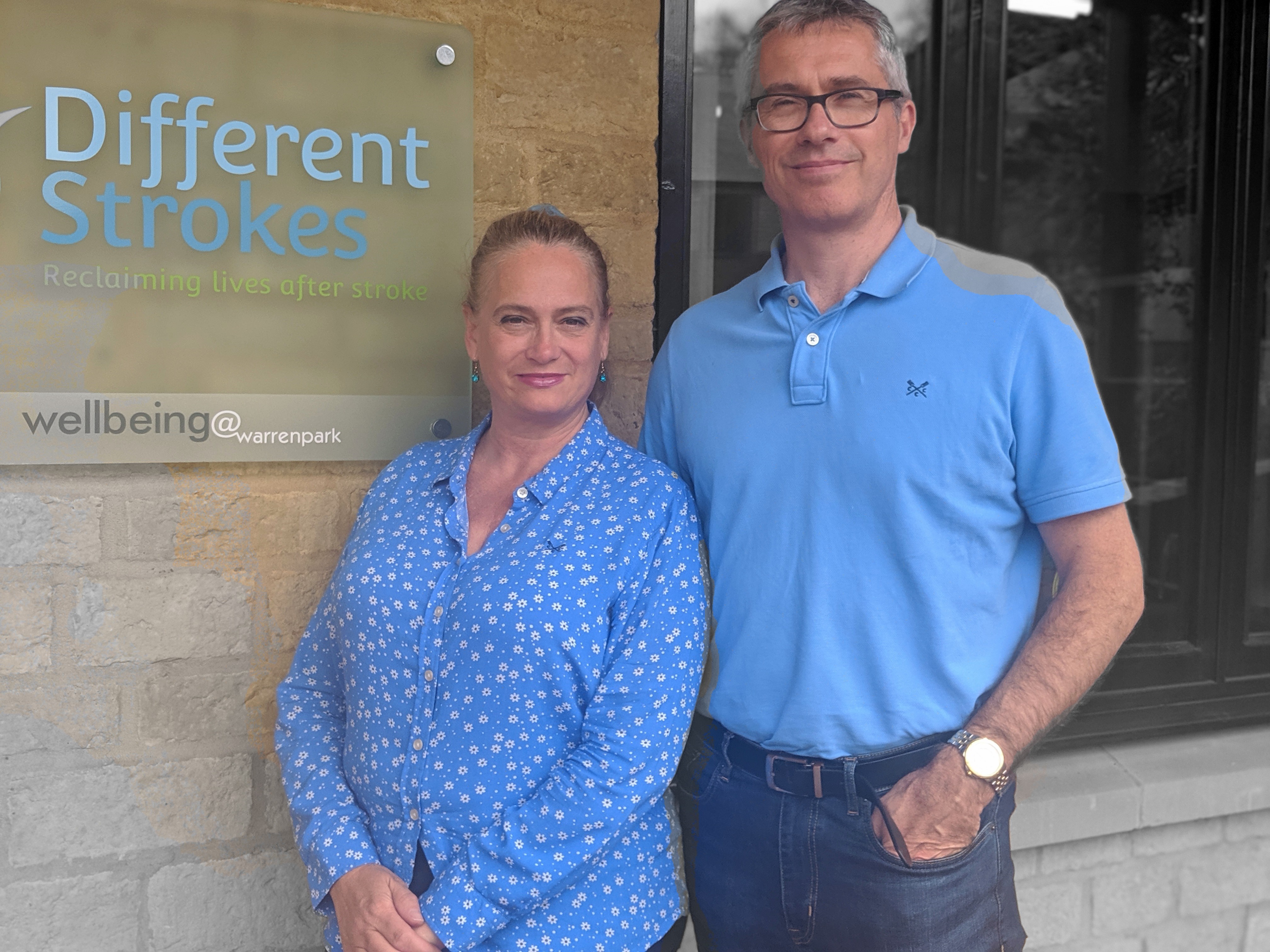
I was 51 years old, I worked for a local village playgroup setting as a nursery nurse/senior administrator doing part-time hours. I was a member of Champneys Springs Spa which is local to where we live. I visited several times a week to take part in aqua fit, gym sessions, swimming and Pilates classes. I enjoyed cooking and reading books at home. I was a social butterfly and was always out, with either my husband or my friends, socialising over a nice meal, or just in one of our many local pubs/wine bars. I was always busy with our three children, organising our son at university, our other son at sixth form and our daughter who was moving from a middle school to upper.
One Monday morning, we rose at 6.30am as usual. I had a food shop coming between the hours of 6.30am and 7.30am. My husband and I sat and had breakfast in our new kitchen (only finished being refitted a few weeks previously), all was calm and normal. My son and daughter, who lived at home at the time, were upstairs getting ready for school. My husband went upstairs to shower, as he was driving to Glasgow that morning for a few overnight stays with work. I waited downstairs to unload the food shopping once it had arrived. Suddenly my husband shouted my name and I looked out of the window and saw the food van on our driveway. I thought he was letting me know that the food shop had arrived. So, I shouted back upstairs “yes I know the food is here”. He shouted me again, but sounded strange, so I huffed and puffed and ran quickly upstairs to see what was wrong. He was sitting on the edge of the bed naked, not speaking. Other than that, he looked normal. Having had a bad back the year previously and being in so much pain that he couldn’t speak, I presumed it was his back again. So, I asked him, “Is it your back?” – he never answered. Meanwhile the doorbell was ringing, and it was the food delivery man. So, I asked our son to keep an eye on him whilst I went to put the food away. My son called me, saying that he really didn’t think dad looked well. I went back upstairs and asked again if it was his back. I got quite cross that he was choosing not to speak to me. He had no signs of a stroke to me, like the advert they show on the TV, with the drooping face, etc., and the only sign he did have was he couldn’t lift his right arm or leg. He was speaking a little though.
I reluctantly called 999 worrying I would be wasting their time. I even apologised to the lady who answered the telephone, saying I just think he has hurt his back. She asked me some questions about my husband and said she would send an ambulance. I remember feeling quite embarrassed thinking we were wasting their time and frustrated as I wanted to get my food put away. Luckily for us, the ambulance was just finishing its shift and was on the way back to our local hospital and was nearby, so they were on the drive within five minutes. I remember opening the door casually and directed the calmly to our bedroom where by now my husband had laid back on the bed. I also had put him some boxer shorts on, worrying as I did it in case I hurt his back. The two paramedics quite quickly diagnosed a potential stroke. I was so shocked and I remember saying to them “But are you sure? He went out for an eight-mile run last night and is super fit and he is only 46 years old!” They said they were, and they were sure and suggested I got dressed to go with them in the ambulance.
Within another 15 mins, I had called my parents and said what had happened and asked them to come over to stay with our son and daughter, who were by now in floods of tears. We were in the back of the ambulance, on our way, blue flashing lights, to the hospital which was 20 minutes away.
I went into complete shock. My husband had no health issues, was fit and healthy, didn’t smoke or drink too much. He was not overweight. He ran several times a week and was a keen cyclist. How on earth could he have had a stroke?? I stared into space, by this time my husband was being sick in the back of the ambulance. I saw my whole life flash before me. I felt numb.
Once in the hospital, they did a CT scan, but it did not show a stroke at that stage. Due to his symptoms, they said they still needed to act as if it was a stroke. So, they treated him accordingly. The stoke specialist came to speak to me as I was in utter shock. He told me they suspected he had suffered from a significant stroke but could not give me any prognosis. My father had arrived at the hospital to be with me and some good friends were on their way. After a couple of hours, they moved my husband to the stroke ward. The following day my husband had another CT scan, which showed two clots one on each side of his brain. They said it would have been a large clot which split in two.
I was distraught. I felt guilty for thinking it was his back. I didn’t know if I was ever going to have my husband back again. I was frightened. How would we survive financially? Where were all our savings? Where were all the bills? I had relied on my husband for most of our married life (21 years at the time) – he was the rock of the whole family. Who would take care of us all now? I didn’t sleep properly for days.
My husband’s recovery seemed slow, but we were told he had made a quick recovery. It didn’t seem like it to us as a family. When he came home from the hospital, we were given a pack of information and told someone would contact us to arrange physio in due course. It took weeks before anyone contacted us. However, as he had BUPA through work I immediately contacted them and arranged neuro-physio at home. I looked through the information given to us by the hospital and found a small leaflet with Different Strokes number on, which said it was for young stroke survivors. I contacted them after a day or two of my husband coming out of the hospital as I was terrified and scared of our future and for the children. Friends and my parents arrived in abundance with food hampers, cooked casseroles, chocolates, flowers, phone calls and texts and just giving me lots of reassurance and shoulders to cry on. My parents did my washing and ironing, as I had no time to do anything and was I so tired all the time.
My husband slept so much in the first few months. He was asleep more than he was awake. He was always scared to go to sleep though and I had to promise I would check on him every half an hour. His whole world was spinning in his head and his eyesight was badly affected so he was completely disorientated. We had lots of people who wanted to visit him; the nurses had told us that fifteen minutes to half an hour was plenty of time for people to stay as his brain was healing. Most visitors respected this and didn’t stay too long.
I didn’t know where to go for help. Different Strokes pointed us in the right direction as to where to locate the relevant help and advice. When my husband was asleep, I would call Different Strokes for reassurance as to how I was feeling, or how my husband was feeling was normal. I would speak to stroke survivors on the telephone at Different Strokes regularly, getting advice, support and help. This service was invaluable to me as a frightened carer. My husband also called them and spoke for hours about what he was feeling – and they were so supportive and kind and helpful. We referred to them as our lifeline.
I stayed off work for many months as we had lots of hospital appointments to attend as through my husband’s BUPA I organised scans, physio, and tests up and down the country, to try to establish what had caused the stroke. He became a “guinea pig” for the doctors and surgeons as they were so confused as to how someone so fit and healthy could have a double stroke. They found virtually nothing, only a tiny blip on his ECG scans, but said it would have been extremely unlucky if that was what caused his stroke.
Slowly he started to walk again, slowly started using his arm and slowly his vision became clearer and the dizziness started to become less. His constant sleeping slowly improved.
His work was very supportive saying they would stand by us as a whole family – and they did, thank goodness! After three or four months he went back to work part-time, slowly increasing his hours until after 6 months he was full time. I eventually went back to work but in a new role with less hours.
Life now is very different to how it was previously. We see life through different eyes. My husband’s memory is not as sharp as it was, and I must remember and take care of things I never used to ever have to deal with. Life for me now is tougher than it was before. The responsibility is heavy on my shoulders. Albeit I am very grateful he is doing so amazingly well in his recovery and I am blessed with a lovely family around me. I re-joined my health club again and try to stay fit, I changed my diet for the whole family to be as healthy as we can be. I try to socialise as much as I can with friends to hold on to my identity.
Our future plans are to do lots of things we were putting off doing and try to relax more and to be grateful for what we have and enjoy every minute.
My words of advice to a carer of someone who has had a stroke would be to keep in close contact with Different Strokes. They pretty much help to find the answer to any questions you may have or if not they can point you in the right direction to find it. Speak to their stroke survivors, even if you are a carer. They can reassure you about what is happening in your life and help you understand what is happening to the person you are caring for. Also, nag, fight and nag some more everyone you can to get the support you need as a family. It won’t just come knocking on your door – you have to go out there and find the help and then nag lots to get it. There is so much help there you just need to find it. Keep on top of paperwork. Start up a folder and keep every bit of information that comes your way. I kept things I never thought I would ever need again, but I did and was so pleased I had kept it. Keep all doctors’ letters, codes, telephone numbers, membership numbers to hand. Keep Different Strokes number in your mobile. Be as organised as you can be. Also, my advice would be to take any help you can off anyone who is offering to give it to you. Don’t be shy! You will need lots of support in the early months and beyond, so, take every bit of help you can.
Try to eat well, drink plenty of water, sleep when you can, and find anything you can to help you relax to stay strong so you can support the person you are caring for. You might need all the strength you have. Get some time alone whenever you can, and don’t feel guilty if you do this. Finally remember, it does get better! Keep a diary. You can read back on things and be amazed at how far you have come. Things do, and will, get better.