Kate’s Story – Stroke at 42 with Locked-in Syndrome

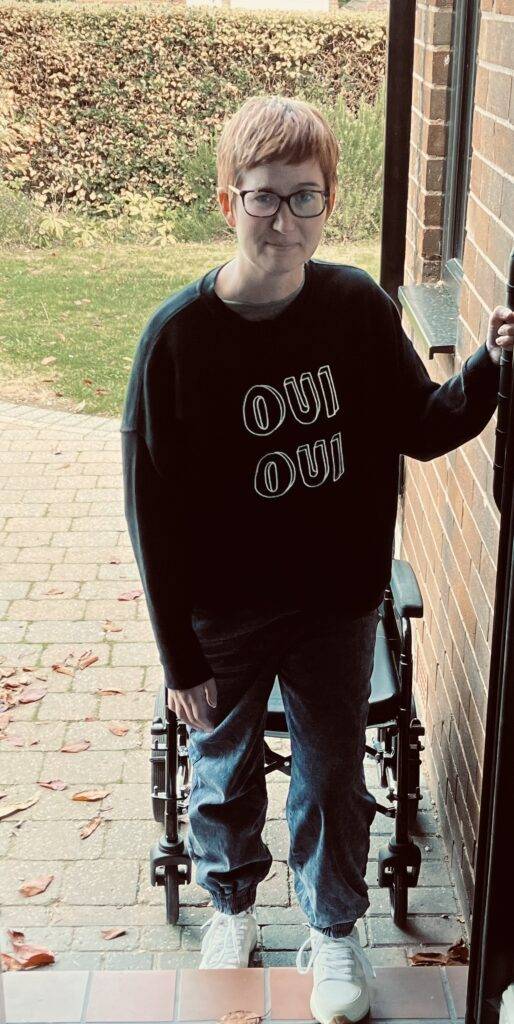
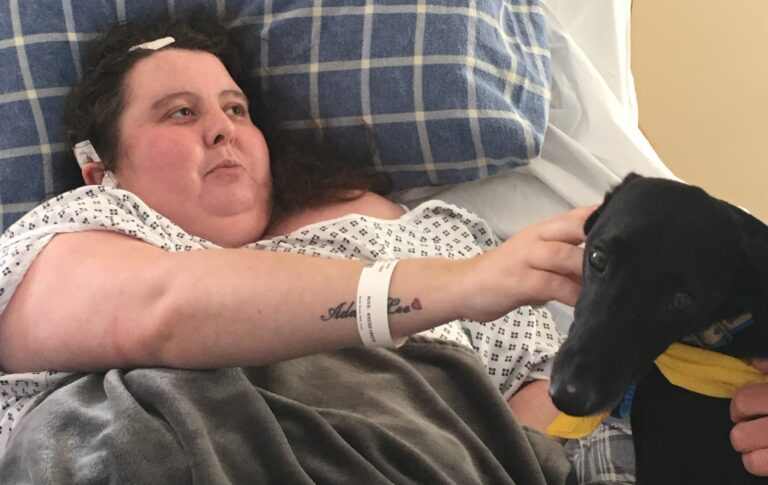
Picture of Kate who survived a stroke at 42 with her son

“Hi I’m Kate, in 43 and live in Rotherham, South Yorkshire with my husband Adam and eight year old son Stanley.

On 2nd December 2021, aged 42, my life was ripped up into little pieces, thrown up in to the air, and scattered all around me. I suffered a pretty massive bleed in the pons area of my brain stem, which left me with locked in syndrome (LIS). I feel like I’ve spent the last 15 months trying to pick up the pieces and put them back together.

I’d taken Stanley (who was seven at the time) to his swimming lesson one evening and all seemed fairly normal, then an overwhelming feeling of tiredness came over me whilst I was watching him – I felt hot and irritable.

I genuinely thought if I blinked that I might fall asleep! When I look back this was possibly a sign, but if everyone who felt like that thought they were having a stroke the NHS would crumble!

I had no idea what was about to happen. The chain of events that happened next have led me to call myself the ‘luckiest unlucky girl’. The car ride home was about ten minutes, and we made it. If it had been any longer it could have happened while I was driving with Stanley in the car. That fact haunted me for a long time. The minute I stepped in the front door I felt the most intense pain at the back of my neck and I felt weirdly vacant.

Luckily Adam was in and after telling me to go and have a lie down, he followed me upstairs. He later told me he just had a feeling something wasn’t right – what a legend because within minutes I couldn’t move my arms or legs, couldn’t speak, and very quickly started struggling to breathe and was making a sort of gurgling rattle sound.

Stanley was with me through all this and I’ll never forget his little face – and his voice calling out to me telling me he loved me. I just hope he forgets. I remember all this happening although it was almost like I wasn’t really there; and like I was a fly on the wall watching this situation unfold. It was terrifying. The last thing I remember is an unfamiliar voice calling my name, which must have been the paramedic, who had arrived pretty quickly. I only live ten minutes from the hospital (didn’t realise how handy that would become when we moved in two years earlier). From me arriving home that evening to getting to hospital was about 30 minutes. I think that saved my life.

My next memory was waking up and someone telling me I was in Rotherham hospital. It was all very blurry; I couldn’t move my body, I couldn’t speak and I couldn’t even move my head or eyes properly. I could only see what was directly in front of me and was completely trapped inside my own body. I felt like I was ‘buzzing’ (not like in a nineties good way but like I was an electricity cable). It felt like if someone touched me they would get an electric shock. I caught a glimpse of my fingers and they were all swollen like purple sausages, and my head hurt like it was being crushed in a vice. I’d been in an induced coma for four days, completely unaware that doctors didn’t think I’d make it, or if I did I’d very likely be in a vegetative state. So when I woke up no one even knew I was in there.

I always think about how my family must have dealt with that, and not knowing – and in a weird way I’m sort of glad I was on the other side. Those early days I can only describe as ‘bonkers’. I experienced vivid dreams and hallucinations. I had no idea what was real or not. I was convinced the nurses were taking me into the hospital basement at night, but couldn’t tell anyone.

A few days later though they must have realised I could move my eyes up and down so I was asked if I could lift them ‘up’ for ‘yes’ and ‘down’ for ‘no’. I could, so they started asking me a series of questions to see if I knew who I was, if I knew Adam and Stanley’s names and where I was etc. 

It was like I was being tested, but I passed with flying colours and they knew I was ‘there’! I was introduced to a communication chart, which was the greatest feeling! I could finally tell people what I was thinking and feeling and would often drive Adam mad with spelling out unnecessarily long sentences, because I wanted to stay true to who I was, and talk like I normally talk, and not talk in one-word or short sentences. This also helped to stop me going insane with boredom. Although with me using:
“would you mind lowering my bed please“
Instead of 
“lower bed”
I can maybe see why he got mad, (haha).

It also meant I could ask what the f*** was going on!? Doctors must have told me at some point, but I was so in and out of sleep and on various drugs I couldn’t remember. When Adam mentioned the word ‘stroke’ to me, I remember thinking I couldn’t have had a stroke; that only happens to older people or smokers or people that drink too much. I was a pretty fit and healthy 42 year old. I loved running, and I’d even done a few marathons in my time; there’s no way I’ve had a stroke!

I found coming to terms with this really difficult. I went through a period of grief for my old life. But I’m an annoyingly stubborn person and there was no way this was beating me. I started to accept what had happened because I couldn’t go back and make it ‘unhappen’ – so for me that was the only way to move on.

I put all my energy into getting this body of mine moving. I was in hospital about five months then a specialist neuro rehab facility for six. I had to learn to do EVERYTHING; to swallow, to breath, to move my body. It was hard. I don’t think you ever realise how complex we are as humans – we’re incredible! But it was also frustrating – and learning to do something that you don’t remember having had to learn before (like swallowing) is challenging.

I have had an amazing team of people around me, from the stroke therapy team in hospital and staff at the rehab facility. They became like best friends; all the doctors and nurses, and my OT and physio who I still work with weekly.

I moved back home in October last year (316 days from the stroke. Adam kept a little tally on a chalk board in the kitchen!

My rehab has been like a full time job. I’ve still got a very, very long way to go, but I’ve got use of my left side back, and my voice (it’s not quite the old one, but that’s ok). I still have limited mobility down my right-side so I’m mostly in a wheelchair ,which I’ve found hard to come to terms with. I can walk small amounts with a frame and a FES (Functional Electrical Stimulation) device  for my foot, and I have some good movement in my arm. I feel like I’m making progress – and all the time, albeit sometimes tiny, but this is my coping mechanism – I know if I keep showing up, stay determined and put every bit of effort in that I can into it, my life will continue to change.

I think some of the hardest things for me to deal with though are the ‘unseen’ impacts. My eyes still don’t move normally, and they are better than they were, but I still get some ‘double vision’. I’ve got horrible vertigo and tinnitus and struggle with fatigue – I feel I’ve got less control over those things, but my arms and legs I can deal with.

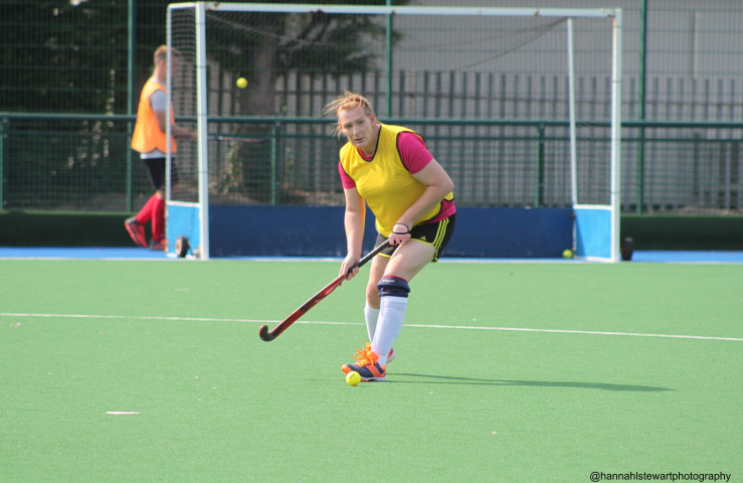
I think my life pre-stroke helps with this. I worked as a public health specialist at Rotherham Council, working mainly on initiatives to get people active. I’ve got a masters in physical activity and public health and many, many moons ago was a fitness instructor. I was also one of the founders and event director at my local parkrun.

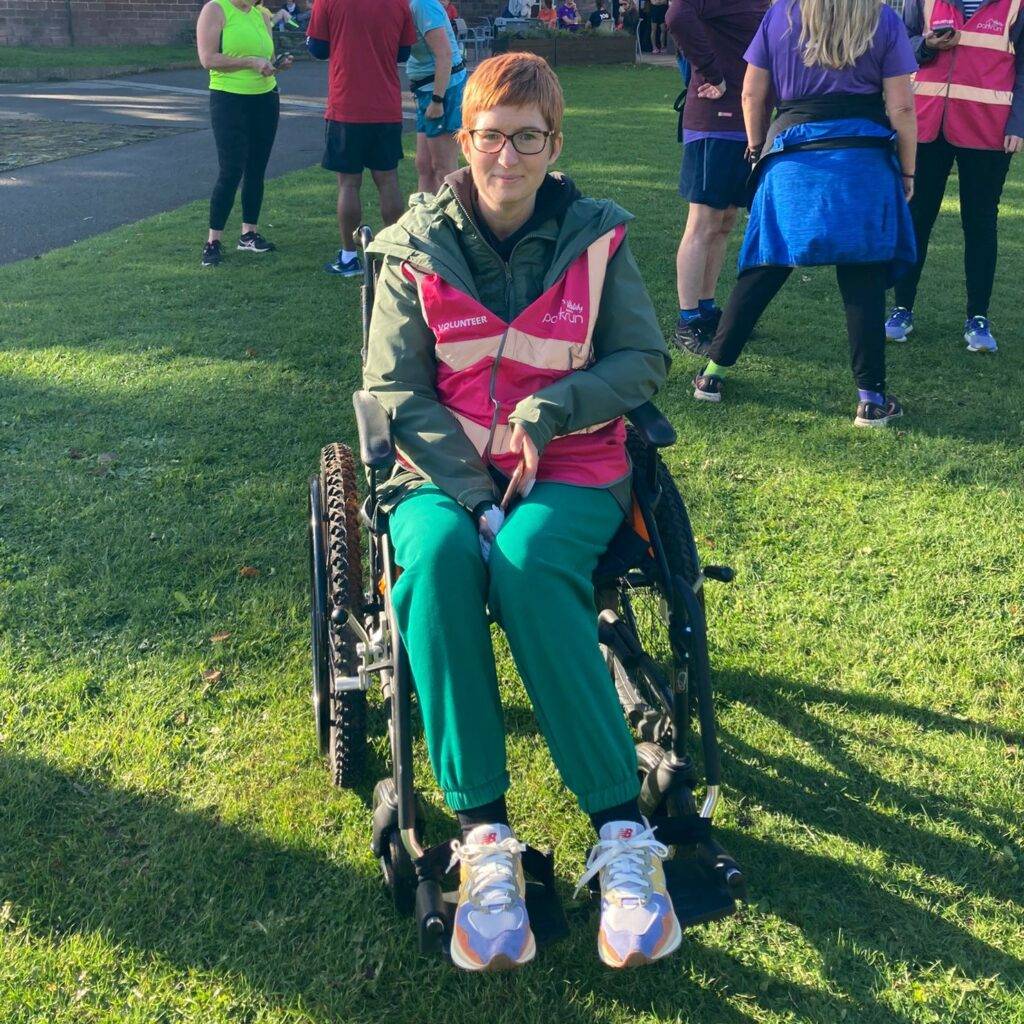
I’m planning a phased return to work in June and I can’t wait (although I’m a little nervous). My job is a really big part of me, and I love it. Having a stroke has affected so many aspects of my life though, and I realise even though I talked about stroke at work and how to help stroke survivors ‘be more active ‘; I really had no idea of the challenges people face. I’m hoping I can take some of my now lived experience and put it into something positive. I’ve also started back volunteering at parkrun (not every week like I did before but) occasionally when I can drag Adam and Stanley out of bed to take me! My first one back was a huge milestone for me, with my hi viz vest on. One day I plan to take part and walk (maybe even run) some of it.

Family life is very different now and I think that for survivors with children there should be much more support early on, with how to navigate this. My relationship with Stanley has changed. I’m not the one he goes to first anymore and it breaks me. I think there should also be psychological support offered to children at the acute stage. It’s such a traumatic life changing event.

My relationship with Adam is different, and he’s had to become my carer. He has to do so much for me. If you’ve ever had an argument with your partner and felt really mad with them, but then had to ask them to take you to the toilet…. it’s testing. I don’t think either of us were prepared for how we’d live this new life, and you just sort of have to ‘muddle through’. We’re doing OK though. I feel extremely lucky to have such a wonderful family and support network around me, who are my cheerleaders. Stanley will stand on the stairs in front of me cheering,

Come on mum you’ve got this
the best motivation ever!

Adam is my absolute rock, I don’t think I’d be where I am without him. I’m so glad I found the Different Strokes community. I just came across it while looking for something else, and they are amazing. The Facebook group has been a bit of a lifeline to get advice and a good old ‘pat on the back’ when it’s needed.

I think for anyone just starting their survivor journey, my little pearl of wisdom is to stay present,; focus on ‘now’ – don’t dwell on what’s happened that you can’t change. Focus on the ‘now’ that you can, and don’t look too far ahead. No one has a crystal ball and it can take away your energy for the ‘now’. Also be present; as in ‘show up’ – to therapy sessions, work, family life and doing all the things you enjoy. No one else can live your life for you.

From having tiny flickers of movement in my little finger while on the high dependency unit about ten days after my stroke, to today …. I feel like I’ve climbed the highest mountain. I’m so proud of what I’ve accomplished and know that things will just keep getting better and better.”

Picture of Kate who survived a stroke at 42

Your donation helps others like Kate on their journey

There are 100,000 strokes in the UK each year with 1 in 4 happening to somebody of working age or younger. Different Strokes aims to promote independent stroke recovery and help these younger stroke survivors reclaim their lives.

Facebook
Twitter
LinkedIn
Facebook
X
LinkedIn
Pinterest
Reddit
WhatsApp
Email

Join Our Mailing List

This field is for validation purposes and should be left unchanged.
Name
Email(Required)
Would you like to join our postal mailing list to receive physical newsletters in the post twice a year?
Address