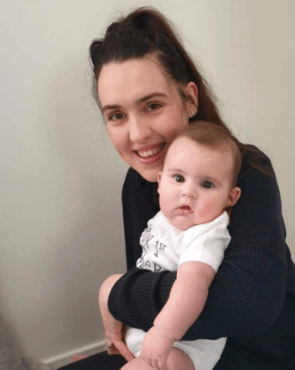
Before my stroke, I had a good job in HR and I enjoyed going out with friends and family. I had just become a first-time mum at 28 and I was really looking forward to my maternity leave, meeting other new mums and going to baby classes. I could never in my wildest dreams have predicted what was about to happen when my little boy was just a week old.
My stroke happened in November 2021 after I stepped out of the shower. My first signs were dizziness which quickly followed by loss of the use of the right side of my body, blurred vision and then I started to slur and jumble my speech. Losing control of my body was utterly terrifying and, in that moment, I knew something was seriously wrong. I somehow managed to drag myself from the bathroom to my bedroom to seek help from my husband. He took one look at me and called for an ambulance. The fear on his face when I was trying to speak and move my right side is something I will never forget.
I was taken to hospital in an ambulance but after 12 hours of sitting in the waiting room and a clear CT scan, I was diagnosed with a complex migraine and advised to come back 10 days later for a precautionary MRI scan.
The MRI scan showed that I had suffered a stroke in two areas of my brain. In an instant it felt like my whole world had fallen apart. I was 28; how could this be happening? I didn’t have any prior warning before having a stroke, and my pregnancy and labour had been really straightforward. I left the appointment with blood thinners and no information on next steps. They say when you have a stroke you need to rest and sleep to enable your brain to heal, but as I had a newborn I didn’t have any choice but to push through for my son.
Luckily, I found the Different Strokes Facebook group and the support from the outset was incredible. I suddenly realised that I wasn’t the only young person to have had a stroke and there was this amazing community which existed. The group helped me to advocate for myself, and as a result I then pushed for a referral to the cardiologist, haematologist and the local stroke team.
After multiple tests including a transoesophageal echocardiogram (TEE), I was diagnosed as having an atrial septal defect (ASD), which is similar to a patent foramen ovale (PFO) and also known as a hole in my heart but which comes about for different reasons. In 2023, I had the hole in my heart closed via transcatheter closure which was a really straightforward procedure.
The ASD had enabled a clot from my pelvis to cross my heart and shoot up into my brain causing my stroke. Now I am over three years down the line, having another stroke doesn’t consume me like it once did. I no longer feel the need to continuously check my smile or lift my arms to make sure there isn’t any weakness. I still get tired if I do too much and I do have some weakness in my right side if I get cold, but overall, I count my lucky stars that my body physically recovered so well.
There definitely needs to be more understanding that a stroke can happen to anyone at any age. There is a real stigma that strokes only happen to older people, and even when I tell health professionals that I have had a stroke they all look incredibly shocked, which in itself feels really isolating. I think there also needs to be more mental health support for stroke survivors.
I have been lucky to have met some incredible therapists since my stroke and I would advise any stroke survivors to make sure you reach out and get the support you need. The psychological side of a stroke is something I feel you can only truly understand if you have had a stroke, and it has definitely been my biggest challenge.
My advice to anyone who has just had a stroke is to speak to family and friends about how you are feeling. I have been really lucky to have a really supportive family and an incredible husband who got me through some of my hardest days, so I realise how important it is to be open with your feelings and emotions.
I now understand the term ‘life can change in a blink of an eye’ and although I would take it back in a heartbeat if I could, having a stroke has shown me just how strong I really am – and that you truly have to make the most of everything and everyone. If any new mums are unfortunate enough to be in a similar position and read my story, just know that you will make it through – even when it feels impossible. There is life after a stroke and having a stroke doesn’t have to define you.
Support Hannah’s Brother Joe – who is Running the Brighton Marathon for Different Strokes
Joe, Hannah’s brother, is running the Brighton Marathon in honour of his sister and their grandfather, both of whom have faced the challenges of stroke. By supporting Joe, you can help Different Strokes continue to provide vital resources and support to younger stroke survivors like Hannah. Every step Joe takes in the Brighton Marathon is a tribute to their strength and a commitment to making a difference for others facing similar journeys.

Fraser’s Story – Ischaemic Stroke at 45
What I realised quite quickly was that there didn’t seem to be much support available locally for younger stroke survivors.

Marissa’s Story – Subarachnoid Haemorrhage Causing a Stroke at 46
I found Different Strokes through my neuropsychologist, who pointed me in this direction when the day centre I had tried
Nick’s Story – Haemorrhagic Stroke at 46
My day-to-day life is very different now. Before the stroke I was Head of Analytics at the Stock Exchange. I’ve
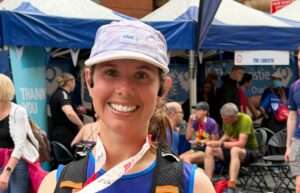
Ellie’s Story – A succession of transient ischaemic attacks (TIAs) due to a patent foramen ovale (PFO) starting at just 25
At the same time, the left side of my body became frighteningly weak. My arm and leg felt heavy and
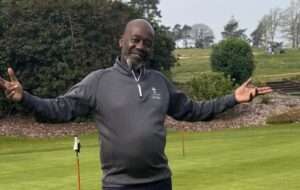
Ernie’s Story – Ischaemic Stroke at 58
The isolation is real. You get some people who want to help and they try their best. You get others
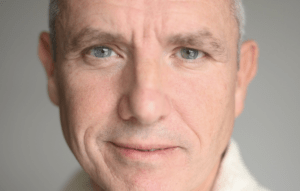
Wayne’s Story – 56, Ischaemic Stroke at 56 (Cerebellar Infarct)
Don’t let anyone tell you you’re too young for something serious to be happening.
I found Different Strokes through Facebook