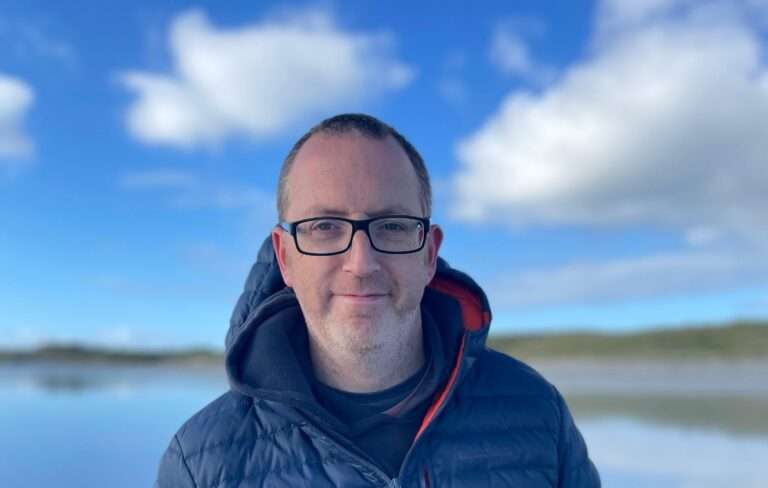
Wayne’s Story – 56, Ischaemic Stroke at 56 (Cerebellar Infarct)
- Greg Hollingworth

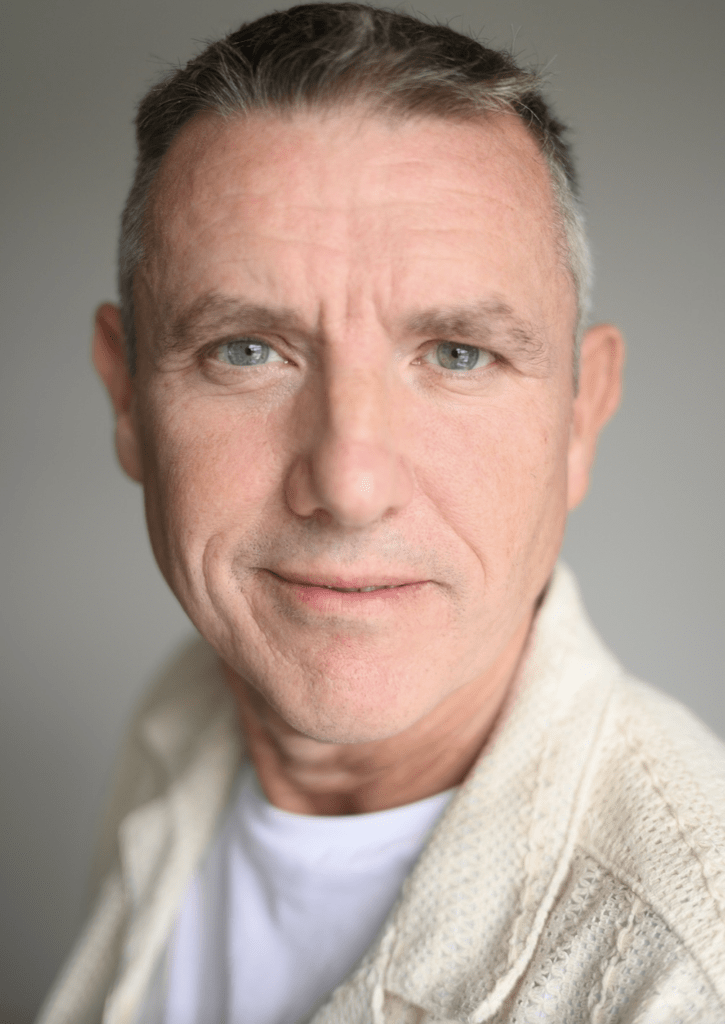
I’d worked in care for years. I’d sat with people who’d had strokes, helped them with their daily routines, kept them company, made them a brew. You’d think that of all people, I’d have seen it coming. But when it happened to me, I hadn’t got a clue.
It was 2020, right in the middle of COVID. I was living in Brighton (a long way from my Sheffield roots), working in a care home and trying to hold everything together. It wasn’t easy. I wasn’t getting on with my manager. I was moving house at the same time. I was seeing people I cared for become seriously ill and, in some cases, die. The food was whatever the kitchen could knock out: bacon sandwiches and chip suppers. And I was grabbing fast food when I didn’t fancy that. I was running at a hundred miles an hour, always had been. I just didn’t stop.
The morning it happened, I woke up and switched the telly on. Something wasn’t right. I was seeing double. I got up and it felt like the world had shifted. I couldn’t find my balance at all, like being on a boat that was rolling from side to side. I thought, that’s weird, but maybe I’m just overtired. I genuinely didn’t think too much of it.
And this is the bit that sounds mad: I went filming that same day. I’m a trained actor as well as a care worker, and I had a shoot to get to. I told the director I’d had a funny turn. He offered to cancel. I said I’d be fine. He gave me a chair and let me sit quietly. And I just… got on with it. That’s just how I was. You don’t think it’s a stroke. Why would you? I was in my mid-fifties, I had a full life. That doesn’t happen to people like me.
When I finally did see a doctor (and getting seen during COVID was its own ordeal, with white tents in the car park and clinicians in full PPE, like something out of a science fiction film) she took one look at me and said she thought it was an inner ear problem. That became the diagnosis that stuck for months. The neurologist was adamant, too. He kept saying,
“You’re far too young for a stroke.”
I was walking like I was drunk, couldn’t go in a straight line, genuinely couldn’t do my job properly, I thought because of problems with my inner ear.
I went back to work because they needed staff and because I still didn’t know what was really wrong. I just adapted as best I could and kept pushing on. Looking back, I can see how dangerous that was. I could have been in serious trouble.
It wasn’t until 2021, after months of CT scans and MRIs and eventually an MRA (the scan where they introduce contrast dye), that I got the phone call. They’d found a left cerebellar infarct. A stroke. At the back of my brain. And they said, start taking aspirin straight away.
All the other tests had come back clear. It was only the MRA that found it. And I’m sitting there thinking: six months. It took six months to find this. I could have been six foot under in that time.
The anxiety that came with the diagnosis was enormous. Even now, if it’s raining and the pavements are wet, I feel nervous. I’m more aware of my balance than most people will ever be. I get clumsy; I’ll trip over nothing, catch myself before I fall, but the worry is always there. I’ve also got reduced strength in my left arm, and I’m living with a bad back that I believe is related. When your balance is off and one side of your body isn’t pulling its weight, the rest of you compensates, and it takes its toll.
The physio support I received amounted to two sessions. Two. They gave me some exercises and signed me off. I didn’t feel supported. I felt like I was on my own.
I tried going back to full-time work. I couldn’t manage it. The fatigue was overwhelming in a way I hadn’t expected: not just tired, but a level of exhaustion that doesn’t make sense to people who haven’t experienced it.
My old job as an activity coordinator had me working Saturdays on top of my regular hours, and I eventually had to say, I can’t do this any more. That was a hard thing to accept. I’d always been someone who ran around, took everything on, kept going. Saying no, pulling back; it felt like giving up at first.
Now I do part-time care in the community, working hours that suit me: eight until two, no pressure, no one expecting me to push past what I can manage. And it’s a lot better. I’ve had to retrain myself in all sorts of ways: how to walk, how to pace myself, how to know when enough is enough. You’re basically rewiring your brain – and slowly, really slowly, things improve.
My walking is much better now than it was. I can move at a decent pace. There are still hard days, still moments where I look back at who I used to be and feel frustrated – but I’m getting there.
One thing I’ll say is that having a good GP makes a difference. Mine takes me seriously. When I lost strength in my arm, she referred me to TIA clinic straight away, no fussing. That kind of relationship is worth everything when you’re navigating this.
My background in care has given me something unexpected from all of this: more empathy than I ever had before. When I go in to see someone who’s confused, or frightened, or struggling to express themselves, I get it on a different level now. I’ve been that person who didn’t know what was wrong with their own body. I’ve been scared and unsteady and told not to worry. That experience has made me a better carer, I think.
I’ve also channelled some of what happened into a short film. I’m an actor and producer as well as a carer, and after my stroke I wrote a script, developed it with my director George, and we made a fifteen-minute film called Step Forwards. It’s a narrative story, not a documentary about me specifically, but a story about a man who has a stroke and turns his life around. It’s won awards at international film festivals, and I hope that as it gets more exposure, more people will see it and think: actually, I should pay attention to those warning signs. I should slow down. I should get checked out.
If I could go back and talk to myself on that morning when I woke up seeing double, the morning I went off to film a scene and told the director I’d just had a funny turn, here’s what I’d say: stop. Look at your diet. Look at your stress. Think about all the things you’re juggling and ask yourself whether every single one of them is worth it. Don’t bottle things up. Talk to your manager, talk to your mates – talk to someone. And if something doesn’t feel right in your body, push for answers. You know yourself better than any doctor. Don’t let anyone tell you you’re too young for something serious to be happening.
I found Different Strokes through Facebook groups. I’d joined a few stroke communities online and Different Strokes kept coming up. When I saw they were collecting stories, I thought, well, I’ve got a story to tell. I’m glad I did. It’s helped me get clearer in my own head about what happened and where I’m going.
There are more of us out there than people realise. You’d never know it to look at us – and that’s exactly why stories like this matter.

Your donation helps others like Wayne on their journeys
There are 100,000 strokes in the UK each year with 1 in 4 happening to somebody of working age or younger. Different Strokes aims to promote independent stroke recovery and help these younger stroke survivors reclaim their lives.

Make a smile lottery is a weekly fundraising lottery. A fun and exciting way to help Different Strokes raise vital funds that will secure our future.
It only costs £1 per play, and you can choose to play every week or whenever you feel like taking a chance and doing something good. For more information click here.