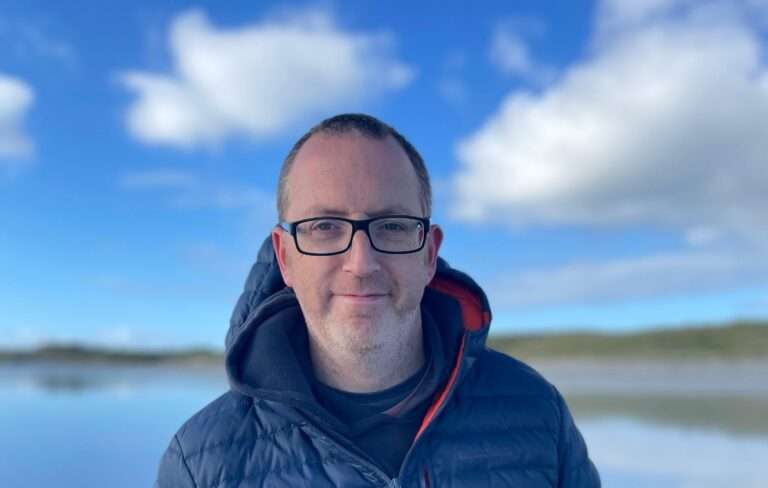
Ernie’s Story – Ischaemic Stroke at 58
- Greg Hollingworth

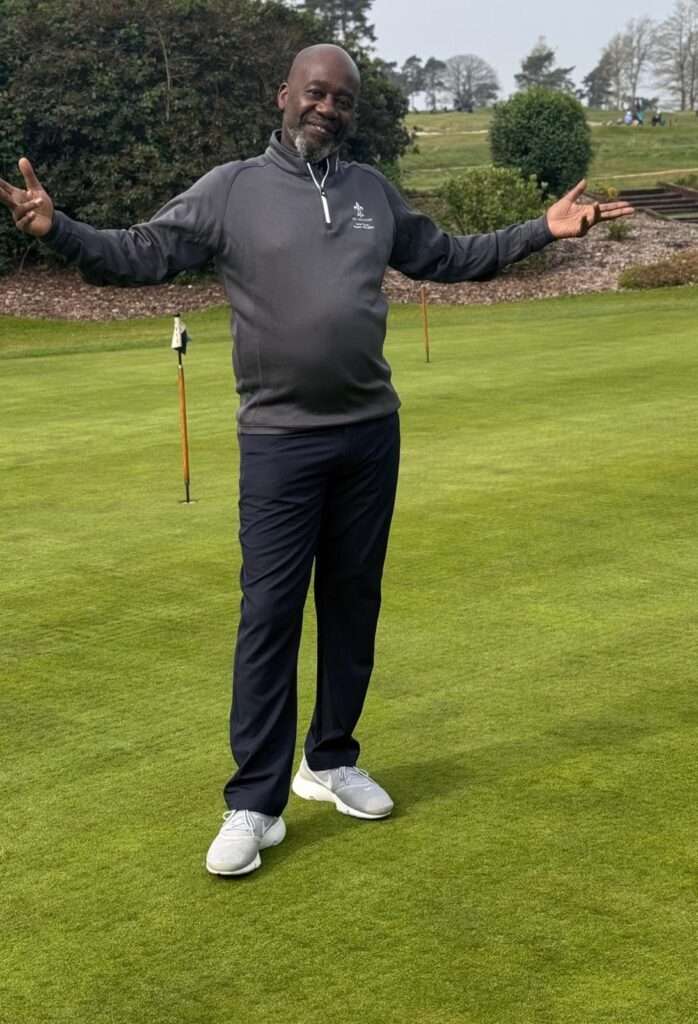
My name is Ernest, though most people know me as Ernie. I was 58 years old, HR Director for a pharmaceutical company based in Kent, a keen golfer and recent captain at my local club, someone who never sat still if he could help it. Four days before my stroke, I had been packing to fly to South Africa on business. That is the kind of life I had: always moving, always planning, always going.
I had no warning. Nothing. I had done my annual company health check just the month before and everything came back clear. I was fit, I was active, I went to the gym. A stroke was not on my radar, not even slightly.
The day before, I had been DJing at a friend’s 60th birthday party, getting everyone on the dance floor, doing what I do. The following morning I went for a round of golf and won. I came home feeling good; normal morning, normal life.
I was at home doing some ironing, getting ready to sort my food, and when I went to put food on my plate I just kept missing it. I kept reaching and missing. I thought, ‘what is going on?’
I asked my wife Paulette if anything was wrong. She said not, and that everything looked fine. I walked away, went to the garden to get some air, came back and said something felt strange. That was it. That was the beginning.
Then there was the music. Paulette had the TV on and there was a song playing that I liked. The song ended, but I could still hear it. I kept asking her why she was putting that music on, why did she keep doing it. She said she wasn’t. The music was still going inside my head. That is when she knew something was seriously wrong.
She called our neighbour, who happens to be a nurse. She came over. By that point Paulette had already called for emergency help. They were trying to get me to talk and I was babbling, the words just weren’t there. Things moved very quickly after that.
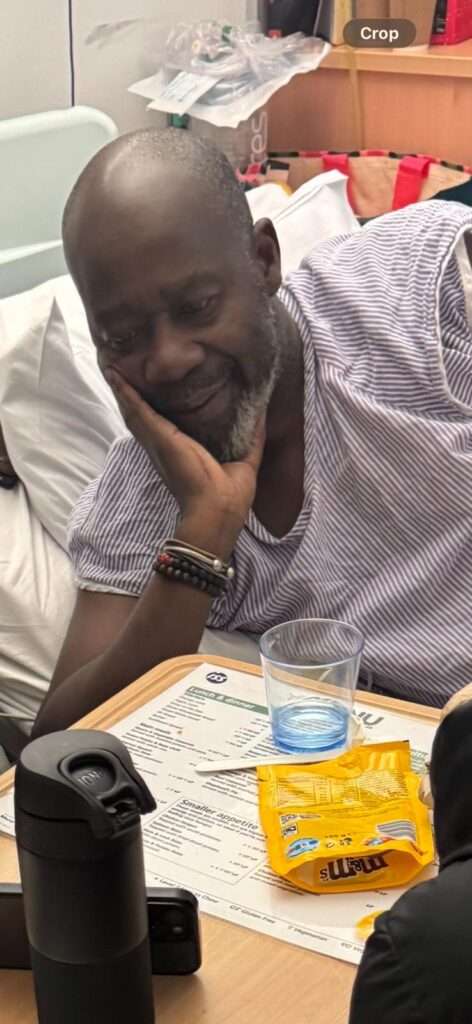
During my time in hospital after my stroke
At the hospital they acted fast. It was an ischaemic stroke, caused by a clot, and they needed to intervene immediately. They had to make a call with my son present because decisions needed to be made quickly. The treatment worked, but what followed was one of the most frightening periods of my life.
I had aphasia. I knew what I wanted to say. I could think it, I could feel it, but getting the words out was a different matter entirely. In hospital they asked me for my date of birth and I simply could not say it. I knew the answer. I just could not produce it. That happened again and again, and it still catches me sometimes now. Certain numbers, certain words, they just won’t come when I need them.
There was something else too. After the stroke, there was blood in my urine. The doctors expected that would settle down within the first week. It did not. Further tests confirmed I had bladder cancer. Within a few weeks after that, it was confirmed as stage 4.
I know how that sounds. But here is the thing: if I had not had the stroke, the cancer would have gone undetected. I would have carried on with my life, not knowing, and by the time it became apparent it would have been much further along. In a strange way, one crisis led to catching the other.
After Christmas, not long after the cancer diagnosis was confirmed, doctors told me I probably would not make it to the end of September. That is not something you can prepare for. I had conversations with my wife and my children. I had to get them ready for something I did not feel ready for myself.
A year on from that conversation, I am still here – and I intend to stay.
I went on to have immunotherapy for the cancer, and radiotherapy when it spread to my spine. I was in hospital for eight weeks, managing a stroke on one side and cancer on the other, with no real understanding of either, just trying to follow what my wife and sister told me to do because I could not make sense of things myself.
What I will say, and I mean this genuinely, is that the NHS was remarkable. People do not always give them credit. I have been very blessed in the care I received. Not everyone gets that, and I know that, which is part of why I feel the way I do about making sure others can access support.
What surprised me, honestly, was that the stroke hit me harder than the cancer diagnosis. That might seem like the wrong way round. But the cancer, I could get my head around.
The stroke took something much more immediate from me: my words, my coordination, my ability to just be the person I had always been. I could not eat properly. I could not drive. The things I had done without thinking every single day were suddenly out of reach.
The isolation is real. You get some people who want to help and they try their best. You get others who do not know what to do with you, and you can feel that. And you get people who simply cannot accept that you look and sound like yourself but are not quite yourself. That is one of the cruellest parts of stroke: it is so often invisible to everyone around you.
My frustration came from the words. I would be right on the edge of something I wanted to say and it would just not come. Or it would come out wrong. I had been a man who worked at board level, who communicated for a living. Having that stripped away was genuinely one of the hardest things I have ever had to face.
I am 18 months on now. And I am going to the gym four times a week. I am getting back to golf. Last month I flew to Ghana, which was the first time I had travelled since being told I might not make it to September. I had been the captain of my golf club. I have got a hundred people I am going to see at an event this week. There are challenges; large crowds and a lot of noise can be hard with the sensory effects of the stroke. But I am managing. I am doing things differently, and I am still doing them.
What I found helped after my stroke
One thing that has really helped me is slowing down the way I speak. I have always talked fast, always had a lot to say. Learning to breathe, to pace myself, to let the words come in their own time – that has made a real difference. It sounds simple, but it takes practice.
I have also found my faith to be a source of real strength. When I had the stroke, then the cancer, then the spread to my spine, I had some significant conversations with God about what was going on. But I am still here, so something is working.
Finding Different Strokes made a difference. I was referred through the speech therapy team at Princess Royal Hospital in Bromley, alongside Aphasia Connect. What struck me about Different Strokes was how quickly they got back to me. That matters more than people realise when you are sitting there not knowing what to do next. They understood what I was going through. They got it. That is not always the case.
I am now 59. I look around and I know there are people much younger than me going through this right now, people who do not know where to turn, who have no idea that there is a community of people who understand exactly what they are experiencing. I want those people to know that help exists.
All we need sometimes is a little chance. A little chance makes a difference. That is all any of us can do
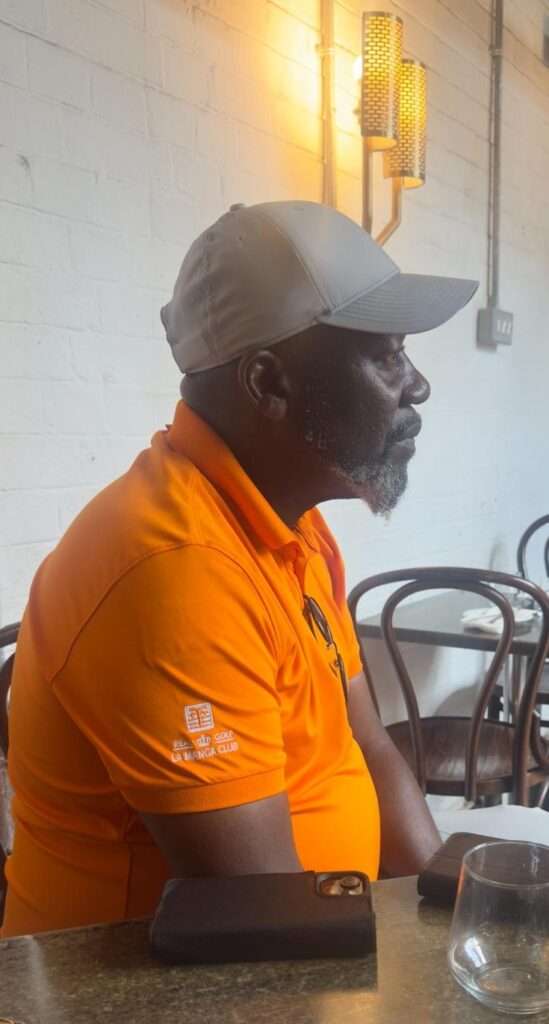
Your donation helps others like Ernie on their journeys
There are 100,000 strokes in the UK each year with 1 in 4 happening to somebody of working age or younger. Different Strokes aims to promote independent stroke recovery and help these younger stroke survivors reclaim their lives.

Make a smile lottery is a weekly fundraising lottery. A fun and exciting way to help Different Strokes raise vital funds that will secure our future.
It only costs £1 per play, and you can choose to play every week or whenever you feel like taking a chance and doing something good. For more information click here.