 “I’ve had grand mal (major) epilepsy since I was three years old. This meant that I couldn’t do certain things on my own without someone having to be there; in case I had a seizure – which was frustrating for me. As I got older my seizures didn’t get much better, like they were when I was younger. I couldn’t work either because I had a bad memory as well as having seizures.
I lived with my parents all the time, until I met Adam, and eventually (after getting to know him well) I moved in with him, which was not far away from where my parents lived. Before I had the stroke, I was a very active person.
Eventually, I went without a seizure for three years and I’d always wanted to drive, so I had a driving test, but I sadly failed. Shortly after my driving test I started having seizures again, which was very frustrating for me. I decided to have brain surgery to get rid of the epilepsy, as I was old enough to decide that for myself. After speaking to a specialist about having brain surgery, and discussing the risks, I agreed for him to refer me to have brain surgery at the Neurology & Neurosurgery Hospital (Queen Square, London) in 2009.
When the day came, the brain surgery to get rid of the epilepsy was a success, but five days after I was walking around near the window and I felt myself going numb and I got scared. I was losing my sense of feeling & I noticed changes in my awareness, so I made my way to the bed where the emergency button was, and just about made it, before I blacked out completely. I’d had a full-blown major stroke and the impact was down my right-hand side. I lost control of all my bodily functions and also my speech to begin with, and even had to be fed by a tube. I was frightened that I felt nothing on the right-hand side, and I couldn’t even move any of my body.
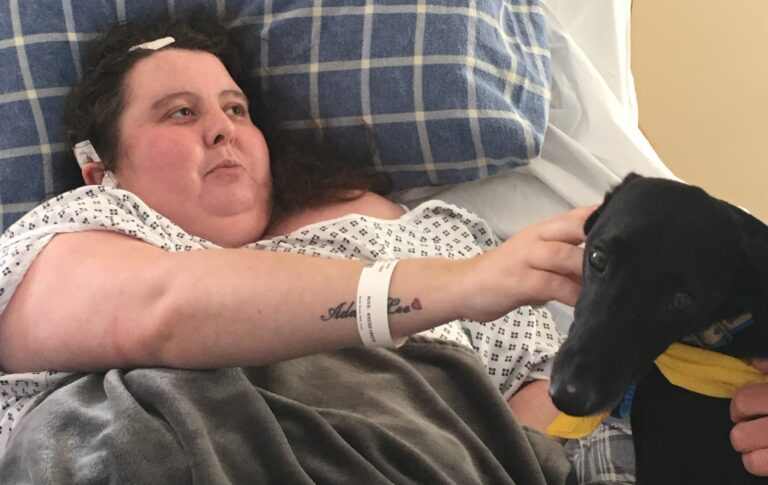
I was in hospital for almost four months; recovery & rehabilitation, continued with physiotherapy This was extensive to help me gradually learn how to be able to walk again. I had a lot of help with my speech too, as well as basic cooking, washing and showering. It was like being reborn and having to learn how to do everything from scratch. I also had endless further tests and treatments, but I was eventually discharged to my local hospital for two days to arrange ongoing physiotherapy and occupational therapy.
A foot/lower leg solid support was also made for me by the orthotist, because I also ended up with foot drop as well as weakness down my right hand side. I’ve had to wear a foot support to correct a very tight Achilles tendon, causing my right foot to go on its side. This gradually (in time) was stretched.
It was all very devastating for my parents, my family and my partner. When I was discharged from my local hospital, I had to stay at my parents’ house, as the flat we lived in was unsuitable for me to return to. My partner gave up the flat and eventually found one that was suitable for me, and not far from my parents’ house.
It changed everyone’s lives. Mum had to stay on a camping site until it closed, then she went back and forwards from home to London to be with me as much as she could. Unfortunately, the major full-blown stroke replaced one disability (epilepsy) with another.
I eventually started having panic attacks and suffered from anxiety and as time went by and my panic attacks slightly changed. So, I saw my doctor and he asked me to video myself having a panic attack. When he saw the video, he said that it looked more like a seizure, but he wasn’t too sure, so he got a second opinion from an epilepsy specialist and he said that it was an epileptic fit!
After being with my partner for over ten years, we drifted apart, and our relationship sadly came to an end. Due to the stroke, and other problems that have caused me to find it difficult to trust, it has been very difficult for me to meet partners or form long term relationships.
I have had to wear a foot support for nearly eleven years to correct a very tight Achilles tendon, causing my right foot to go on its side. This gradually was stretched and eventually when an orthotist couldn’t do any more to help, surgery was suggested.
In August 2019 I had seven operations in one, on my right lower leg and foot, to get rid of the foot drop.
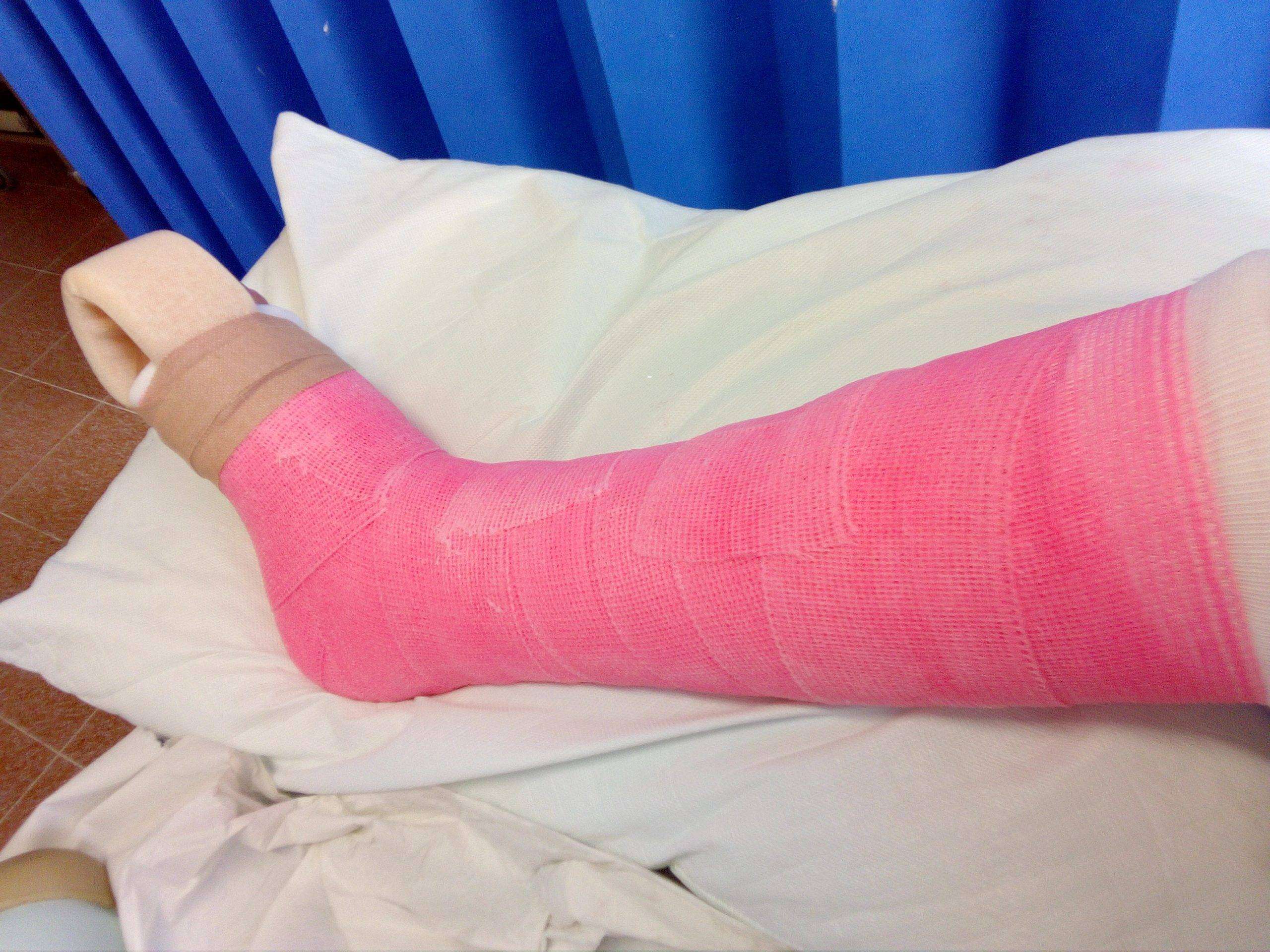
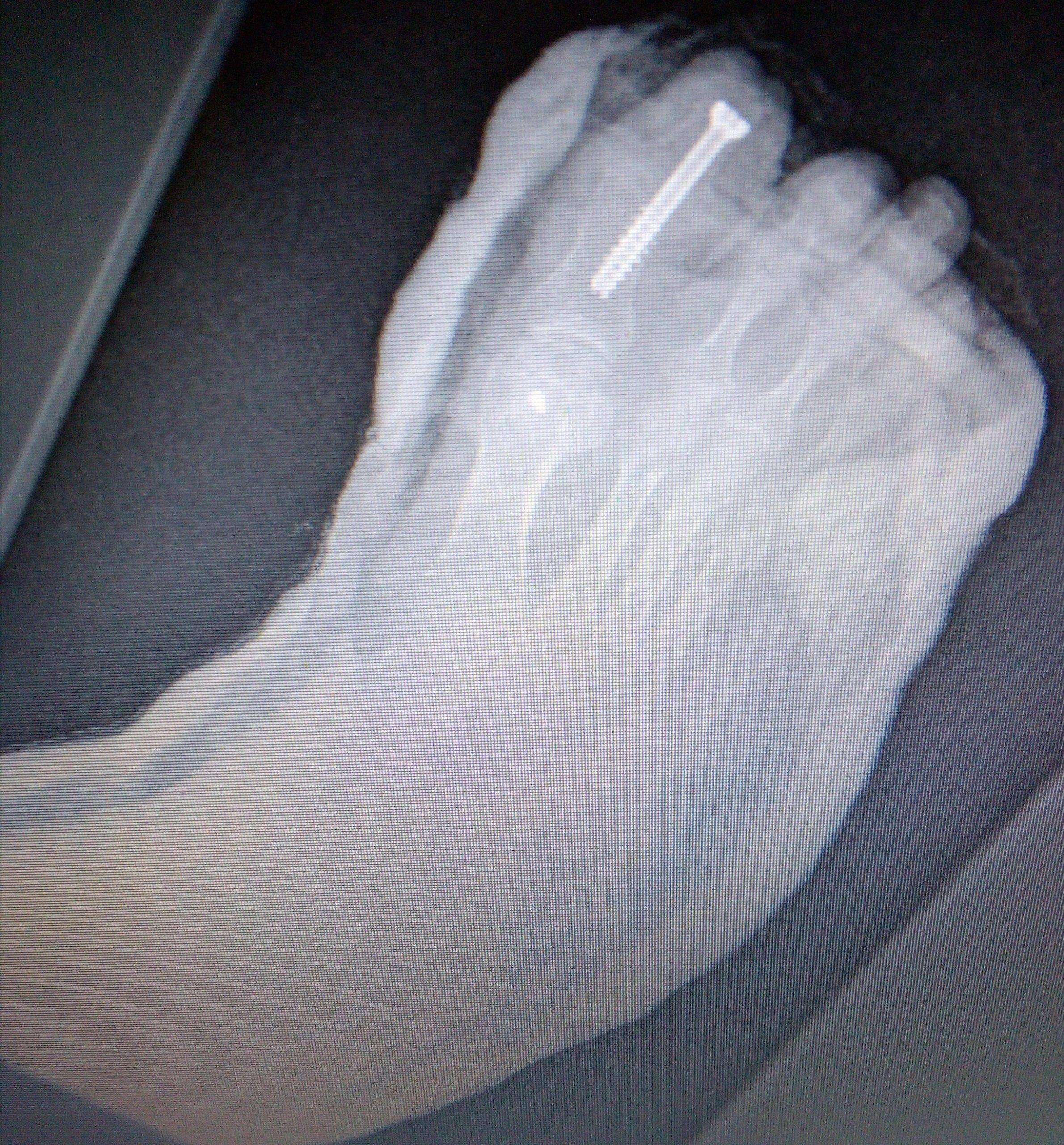 Swapped over the tendons in my lower leg.
- Put a screw through my big toe.
- Moved the tendons in my foot.
- Moved the mechanism of my big toe.
- Put two screws in the back of my foot.
I also had my foot in plaster and had to stay in hospital for four days, recovering from the surgery. Then a hospital bed was moved into my flat (because my bed was too low), so I could continue recovering at home with the help of my mum & dad. I was told not to put any weight at all on my right foot, so they provided me with the facilities that I needed (walker & a commode).
After two weeks, I had to go to back to the hospital and back home via ambulance to have X-rays of my lower leg and foot and to have the plaster changed. When I was at home, I wasn’t feeling well & my hair started coming out, so I phoned the doctor and he said that he would like me to have a blood test. When I had a blood test the results came back and the doctor said that my sodium /salt levels had dropped very low and he wanted me to go to a hospital ASAP.
So from the 9th to the 16th of September 2019, I was in hospital, feeling like a pin cushion, while the doctors and nurses were trying to raise my sodium levels by taking my blood every day. They even had to try in my wrist at one point, but I wouldn’t let them after it hurt me so much. I believed it was because of a certain epileptic tablet that I was taking. The doctor phoned and left a message for an epilepsy specialist and he got a reply within 24 hours!
Eventually, my sodium/salt level had gone back to normal and I was released on the 16th September 2019 & returned home via ambulance. After six weeks of having my foot /lower leg in plaster, I had to return to the hospital to finally have the plaster removed, to have a couple of x rays and to have an airboot fitted. I was also told me that I could gradually ‘bear weight’. I started having physio at home at home twice a week and the nurse came twice a week too. After twelve more weeks, I went to the hospital to have some X-rays of my foot and to see the surgeon for a follow up appointment. He said that I could gradually lose the airboot and the crutches.
I am now only using one crutch when I go out, but I also have a mobility scooter that gets me around. I have been doing continuous daily exercises and have slowly been training my foot to walk correctly. It’s going to take quite a while until my lower right leg and foot are fully strengthened but I’m not going to give up!
My epileptic seizures and anxiety have both got worse since, so a specialist is trying me on different medication, and I’m having various EEGs & other tests done until my seizures are controlled or have stopped.
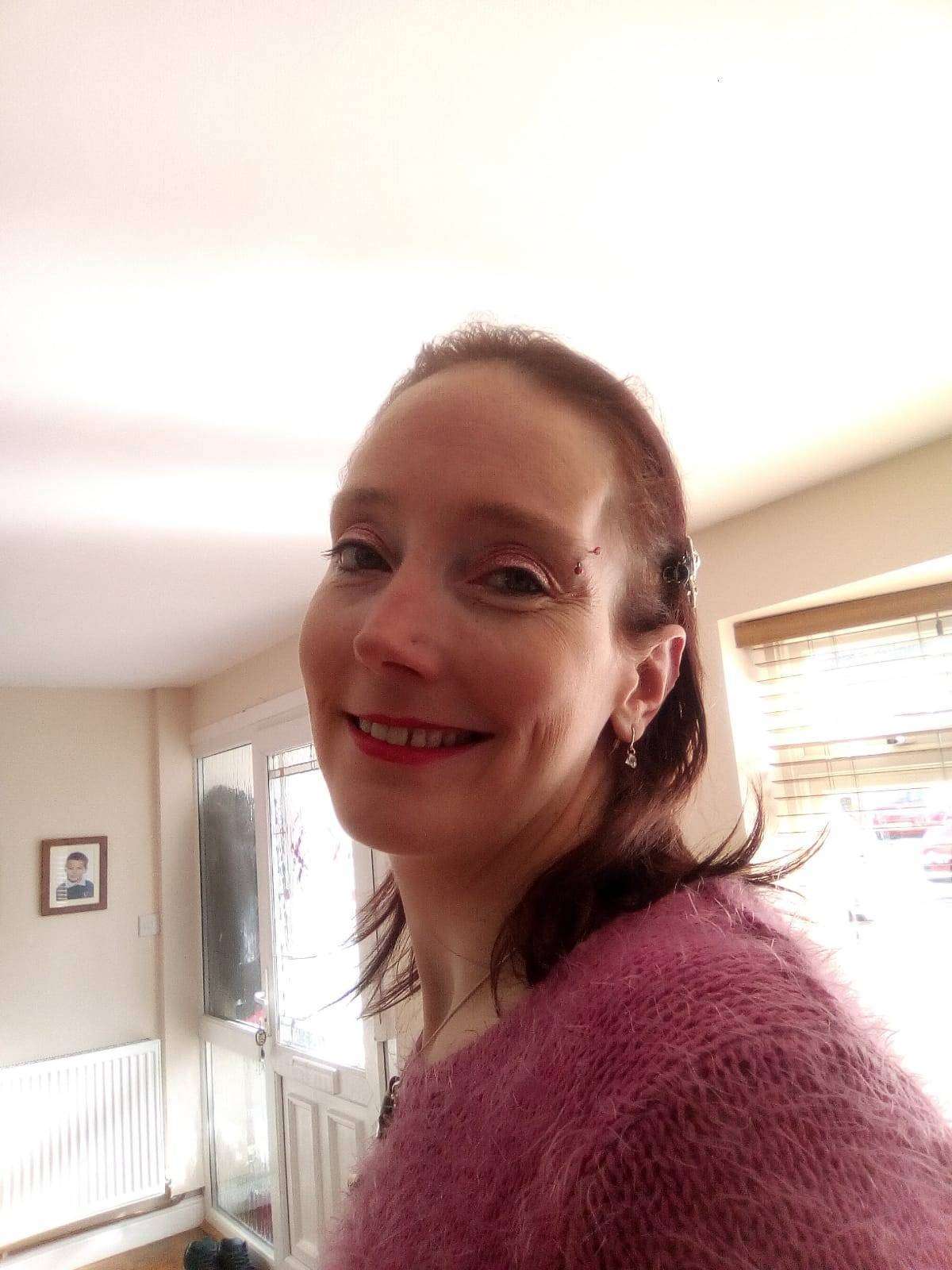
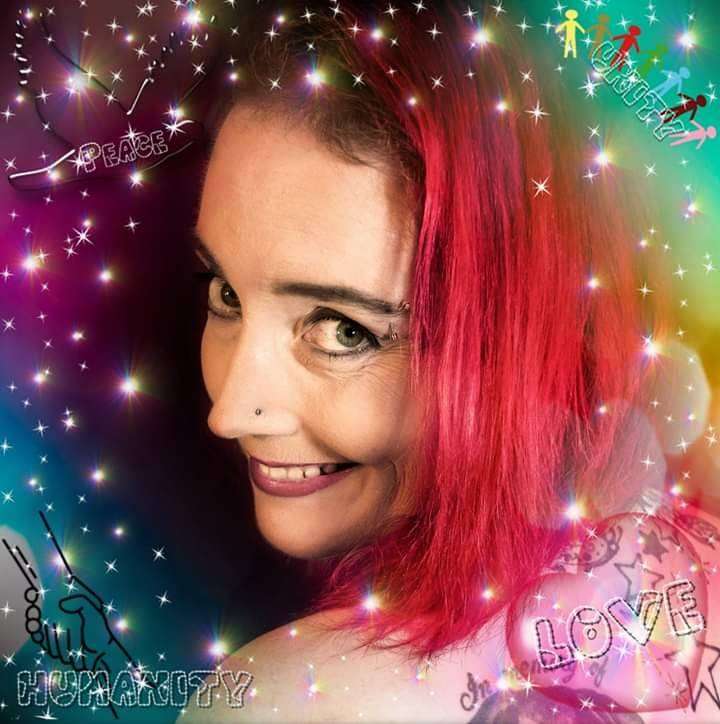
 My aim in life is to be either a singer or a model, as I can’t work. The main picture was when I had a modelling photo shoot, after someone put me forward for it when they heard a lady needed a model.
I have already had two auditions for a TV talent show, but I didn’t get through a second audition in Birmingham. I think they went by the looks instead of the sound of my voice. I’m definitely going to improve my voice volume and eventually apply to be on one of the mainstream TV talent programmes again.
You see, most of the people on the stroke ward that I was on just gave up, but I thought to myself “Why give up on life when you’ve got a life ahead of you? – and you’ve got to make the most of your life, even if you have to alter the way you live your life!”.
Never Give Up! Think Positively!.”