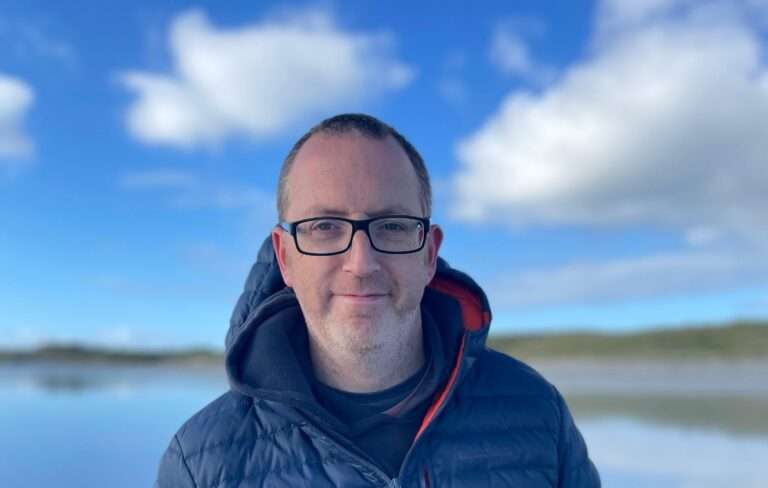
Emily’s Story – Ischaemic Stroke at 28

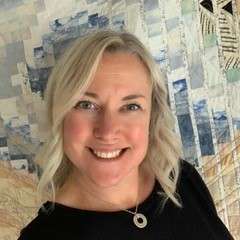
Picture of Emily who survived a stroke at just 28

When I was 28, I was healthy, in reasonably good shape (even had some semblance of a six-pack), good cardio health, a healthy weight (shouldn’t matter, but was discussed a lot at the time so relevant to me), low blood pressure, non-smoker, no history of drug use, social drinker and seemingly no other underlying issues. It’s also important that I was (and still am) very educated with regards to strokes. I’ve been a CPR & First Aid instructor, a Lifeguard and had a grandmother who sadly had and ultimately died as the result of many strokes, both minor and major.

On that morning, I woke up and felt ‘off’. I was wobbly (unbalanced) and my face was tingly. I dismissed it all and assumed I had ‘slept funny’ or even pinched a nerve. I had been achy the few days before and thought it may be related. I also had a bout of strep throat the week before, but I was feeling better. All of this checked out in my mind as justification to how I felt at the time.

Luckily, my partner Ryan wasn’t as dismissive and suggested I needed to get it looked at. I ironically had a morning appointment with my GP already, due to having had strep throat the week before and was meant to be going in on my way to work. I naively thought I would be in and out quickly and back at work, at the latest, by 9:30am. We got ready, did our normal commute to downtown Toronto & he dropped me off, heading up the street to the university he worked at to park and begin his day.

I don’t remember waiting for my turn or even the chit-chat with the receptionist, but I do remember that my doctor took one look at me, asked me some simple questions (with her frown increasing). She gave me a letter in a sealed envelope and gently told me to take a taxi to Toronto General Hospital (it was 2 blocks away). No real explanation was given to me, for which I am became very thankful for, except for saying I needed to be checked out at Emergency ASAP.

I didn’t even clue in to worry about the whole hospital thing, but I do remember that I was annoyed that she wanted me to try and hail a taxi on a weekday morning in the busiest part of the city, so I did what I do best, ignored her, and decided to walk. Curiously, something did tell me to walk a path that took me via another hospital, just in case (to be fair I was on a street that was all hospitals but, somehow, I knew sticking close to them or even via them on my walk was important). I apparently called Ryan and told him I was being sent to the hospital and he said he would meet me there. I was again, thankful for his instincts and that he ignored my dismissive attitude. I don’t even remember doing this.

I arrived at the ER with a sealed note from my GP, gave it to the very busy triage nurse who took my name and details and asked me to sit down. I do remember feeling silly being there amongst the seemingly much more sick and injured people. I didn’t look or feel (in my own mind) like an emergency. I don’t remember how long I was there, but do distinctly know I was feeling “off” and confused with how my actions and words seemed like everything was happening to someone else.

Ryan arrived at some point and was surprised to see me still sitting there. He inquired at triage and asked if they had read the note. The nurse did so and suddenly there was a flurry of activity, and it all became even more blurry from there. I vaguely remember it feeling chaotic and busy, with a lot of people for just me and I was rushed into a room. I was asked questions that I am sure I didn’t really answer, again thankful for a calm and aware Ryan, and they started to hook me up to various monitors and prep for an IV.

A fun fact about me, I am absolute rubbish with needles, always have been and likely always will be. I get lightheaded when they even pull out the alcohol swab to clean the site. I can’t watch and will even ask to lie down for basic blood draws if it’s a bad day. So, as I was saying, there were people putting leads on my chest, a pulsometer was put on my finger and another person jabbing at me with sharp things to put an IV in. What happened at that moment? I did what I usually do; my blood pressure dropped, and I fainted (or came close – not sure). That dip in pressure didn’t help the chaos and apparently some alarms sounded as the leads and pulsometer weren’t quite “on” yet (Oops). Sorry for the added stress!

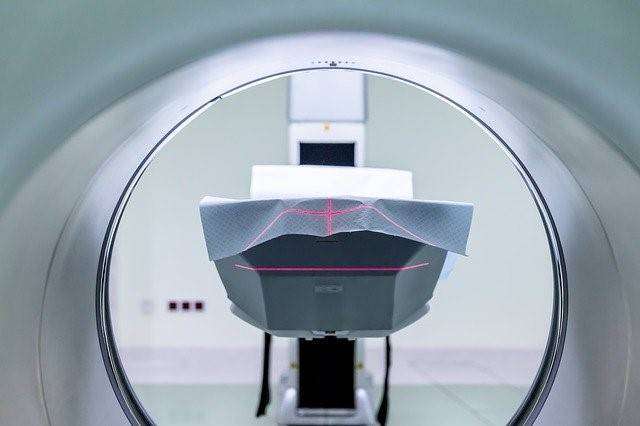
Picture of a MRI about to be taken

 Once they determined I wasn’t in fact dying then and there, the tests and such continued. I don’t remember all the tests but there were a lot of types of scans including the first of many MRIs, a lot of blood drawn, various things added to my IV and more.  At some point, a brusque ER doctor came in and apparently rhymed off a list of potential causes – each one scarier than the last. I only vaguely remember this and have Ryan to verify the account. 

At some point had then called my parents, who did what they always will do, and they dropped everything  and rushed to my side, probably breaking speeding laws as my dad drove the distance from our sleepy small hometown outside of Toronto.

At some point I also called my friend Zia who is a doctor at a hospital close by and frankly, the best person to help me understand any of the gibberish they seemed to be saying. What happened then was a battery of tests, specialists being called in and lots of debate as to what the hell was wrong with me. At some point, they also decided that I needed to be sent to another hospital nearby which is where the top neurologists were.

I was transferred over the short distance via ambulance. I remember that the ambulance attendants were very funny, in my opinion, at the time and that they kept cracking jokes about me losing my blanket. What an odd memory that has stuck with me.

They placed me in a private room (I know the privilege I had to have had access to corporate benefits and living in a country with great public health care) in the section/area for epilepsy patients. I remember that first night when the fear was setting in, the horror of hearing the horrendous noises of other patients having seizures or whatever else, the chill that seems to be standard in most hospitals, the confusion and, funnily enough, the frustration of me trying to do basic things and realising that things just weren’t working the way my brain was supposed to make them work.

Even with all this, it turns out I was one of the lucky ones. I was lucky to have two of the brightest neurology minds at the time at a top hospital debate my cause and diagnosis. The damage trail shown on the MRI was faint which is a good sign and my symptoms, while unmistakable, were mild. My symptoms back then were slurred speech, some memory issues, weakness in one side, some facial paralysis, balance issues and the slight executive function issues. I would and I did recover.

After only a couple of short weeks in hospital, I was discharged and back home to heal. I even went back to work quickly (thank goodness for a brilliant team and CEO who believed in flexible working, even back then). I was even driving again after a few months. I was medicated for some time and had regular MRIs for a decade and since then, just a quick annual check-up.

In the end, my diagnosis was an ischaemic stroke, which I understand is a blood clot restricting the flow blood to my brain. It was likely due to the combination of various factors, but the best guesses by the experts were that it was due to my long-term use of the birth control pill coupled with some clear family history that we never clocked as problematic. I am at least the third generation of this kind of medical history on my maternal side. I’ve had no “incidents of concern” since that day. That’s a really great thing and likely my own personal lotto win.

Since that day, I’ve gone on to live a very full and healthy life; I’ve been able to walk down the aisle to get married, I’ve given birth (despite being very high risk) to two amazing and healthy kids, I’ve travelled the world,  I’ve been a runner and even shuffled through several half marathons and even a couple of triathlons.

So why am I sharing? Oct 29th was World Stroke Day. I know I am a little late to sharing all this, but that’s because today, on 3rd November, I am a 20-year survivor of stroke. What a crazy anniversary to have to remember. I have so many reasons to celebrate. So why am I sharing? Oct 29th was World Stroke Day. I know I am a little late to sharing all this, but that’s because today, on 3rd November, I am a 20-year survivor of stroke. What a crazy anniversary to have to remember. I have so many reasons to celebrate. 

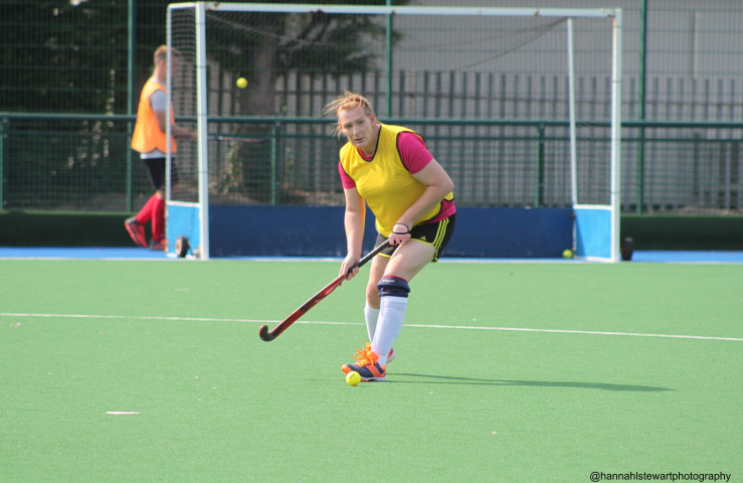
Picture of stroke survivor Emily running a half-marathon

I’ve made a career doing what I love with no real restrictions. I can do what many who suffer from strokes still sadly can’t do, including being mobile, thinking, listening, speaking publicly – and being creative and strategic. I do still have some very slight aphasia (which I explain as ‘mixed up language’), a bit of vision-perception issues, a slight deficiency/weakness on one side and, to my children’s endless amusement, the inability to make a “fishy” face. I do have bouts of exhaustion but that’s manageable and, frankly, could be perimenopause, stress, general life, or anything really. I think there are some neuropsychological effects as well but, again, those could also be from many things and the human body complex. I’ve been told my resulting symptoms are called latent symptoms and can come and go my whole life and I do know they show up more when I am stressed or tired.

If you’ve gotten this far, thank you for your patience and here is why I am sharing. My experience was a good one; a lucky one. Many people don’t have such luck. But it wasn’t only luck. It was privilege, access to world class medical facilities and doctors, medicine (and innovations in pharmaceuticals), my general health, my age, my race, and my nationality.

What can you do? My call to action is this: I ask and encourage every person reading this to not only learn more about what to look for but to be brave, bold and to look for these symptoms in yourself and those around you- and not to dismiss things, especially in women.

It’s  not-so-fun statistic that one in five women will have a stroke in her lifetime. Among women, women of colour have the highest chance of having a stroke. Stroke kills more women than men and is the number four cause of death in women, killing over 80,000 women each year (Mayo Clinic – Oct 2022).

Women also experience different symptoms and ones that are often dismissed. This is important. It’s also important to remember that strokes can happen to anyone, at any age, with any health background and the symptoms can be easy to deny or even ignore. Any youngers stroke survivors in the UK, please check out Different Strokes supporting, educating, and creating a community for those who have had or those supporting younger stroke survivors.

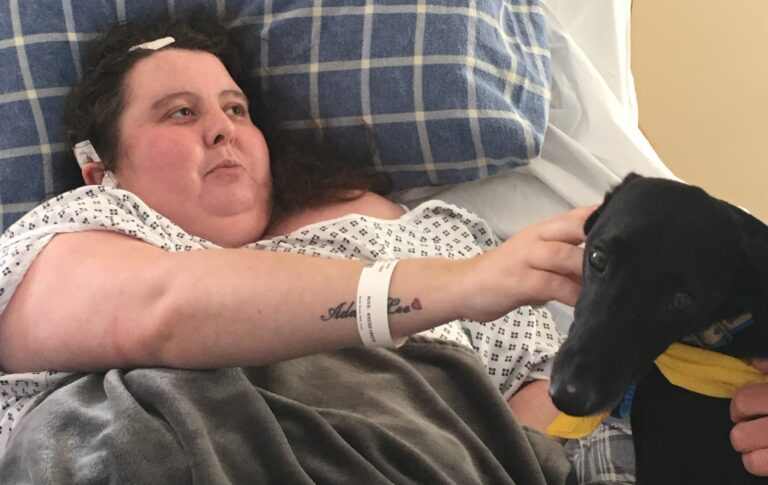
Your donation helps others like Emily on their journeys

There are 100,000 strokes in the UK each year with 1 in 4 happening to somebody of working age or younger. Different Strokes aims to promote independent stroke recovery and help these younger stroke survivors reclaim their lives.

Facebook
Twitter
LinkedIn
Facebook
X
LinkedIn
Pinterest
Reddit
WhatsApp
Email

Join Our Mailing List

This field is for validation purposes and should be left unchanged.
Name
Email(Required)
Would you like to join our postal mailing list to receive physical newsletters in the post twice a year?
Address