Five games to help your brain recover after a stroke

Picture of Written by Amber Sunner

Written by Amber Sunner

Amber is a 'two time' childhood stroke survivor, journalist and Different Strokes Volunteer. Here she explores games to aid stroke recovery

A stroke affects the brain, with a part of the organ usually being cut off from the blood supply. Without blood, cells can get damaged or even die. After a stroke, your brain tries to recover by making new neural connections. There are ways you can kick-start this recovery that will challenge your brain and keep it active at a crucial time.

A stroke can make you feel low also, so games are a great way to boost your happiness! Game playing can be an effective way to rehabilitate after a stroke, especially if the weaker areas post-stroke are engaged consistently. For example, if you’re having trouble with your memory, chess could be a great game to grasp as you have to recall how each piece can move.

Also if you are struggling with your fine motor skills post-stroke there are many valuable aids you can try out to help make your gameplay more enjoyable. Many of these games will also work on dexterity and brain recovery.

Using household games, like the ones in this list can help you to find an easy way to aid your brain in recovery. Some suggestions may be in your house already, making it a perfect way to get your brain connections working to their capacity.

Rehabilitation after a stroke is also aided by therapists. These games offer fun at-home suggestions, rather than a fix-it-all method. Be sure to attend therapy appointments, and practice the exercises given to you. These will ensure a guided recovery is taken. Games are simply an addition to the rehab, not the rehab itself.

Here are some game suggestions to help aid your recovery:

1. Card Games

Card games encourage strategic thinking such as memory use, attention and concentration. Canadian researchers discovered card games such as snap, can aid in recovery after a stroke.

Snap is a simple game where 2+ players put cards down and concentrate on the numbers. Snap is called out if two players lay cards down that have the same number. A simple yet effective game that gets the mind thinking.

Plus it involves verbal communication, therefore if the stroke affected your verbal communication, this will also be engaged.

A ladies hands are pictured holding some playing cards in each hand. There is a table in fron of her with two piles of playing cards. Five games to help your brain recover after a stroke

2. Video Games

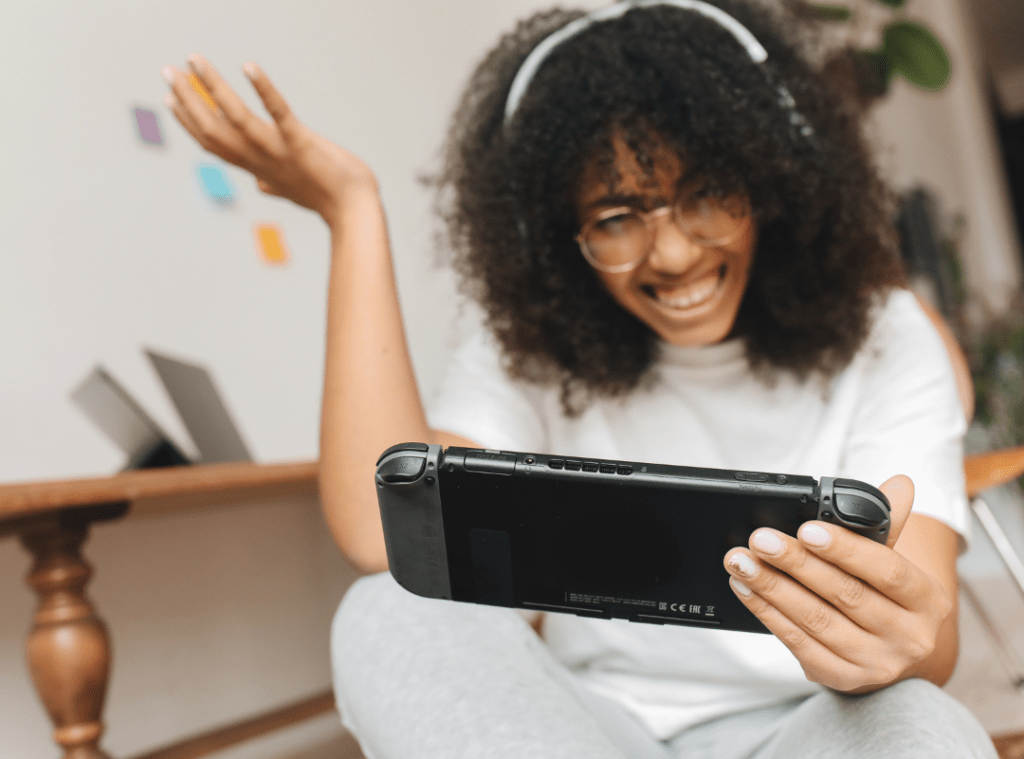
A young girl with black afro hair and gold rimmed glasses is sitting on the floor. She has on a white Tshirt and grey jogging bottoms. On her head are headphones and in her hands is a games console. She looks excited and perplexed by the game she is playing.

Video games that exercise cognitive skills such as memory and concentration can help improve critical thinking after a stroke. Games like BrainAge are a great way to get your mind working. BrainAge involves completing a variety of puzzles, including maths problems, word memory and Sudoku puzzles, all of which are designed to keep the brain active.

A hospital in Surrey said that stroke patients playing the Nintendo Wii helped improve balance and coordination showing the extensive rewards that could be gained from video games.

10-pin bowling and golf were two games played on the Nintendo Wii which helped people on the road to recovery. Video games have been proven to be an effective method to rehabilitate stroke survivors

3. Puzzles

Puzzles are a fun way to get your mind into gear and are said to encourage neuroplasticity in the brain. Neuroplasticity means the brain’s ability to reorganise connections after injury, for example, a stroke. 

Puzzles can also help in repairing communication skills after a stroke if it is put together with another person. Aphasia is the term for slurred speech after a stroke, and can make it difficult for stroke survivors to communicate, therefore encouraging talking and engaging that part of the brain if aphasia is present is a good way to help recovery for this side effect.

A close up of a mans thumb holding a puzzle piece that is entirely light blue - it looks like it could be sea or sky. Behind him is laid out a puzzle with a piece missing. Looks like it could be the piece he has in his hand!

4. Scrabble

ScrabbleTM incorporates many skills. Math skills when adding score tiles up and language skills when figuring out which words to put down on the board. It requires a significant amount of concentration from the brain

Scrabble is usually a 2+ player game, prompting talking with your opponent, therefore, engaging the verbal area of the brain.

5. Chess

Chess challenges your memory since you must remember what each piece does, making you use your brain more. It also allows you to think ahead for your opponent’s possible moves, therefore engaging the brain in a forward-thinking manner.

One article found: “Research has shown that problem-solving training has improved higher-order functioning following a traumatic brain injury.”

Two dark haired male opponents sit oppisite each other at a table. In front of them is a game of chess in progress. They both look pensive - thinking over their next move.

So, are games good for stroke recovery?

There is mounting evidence that games can be a useful tool for recovery. Before jumping into any games, consult with a doctor if you are feeling apprehensive about playing games. Stroke recovery comes in small steps so take your time with each one. Remember to not exhaust yourself; your well-being is the most important part of recovery after a stroke.

Tailor your rehabilitation to your needs and to when you feel strong enough. 

Remember every stroke is different, and therefore every recovery is different. Full recoveries are not always possible, but the consistent practice of each exercise given by therapists will help in your recovery journey. 

Facebook
Twitter
LinkedIn

Join Our Mailing List

This field is for validation purposes and should be left unchanged.
Name
Email(Required)
Would you like to join our postal mailing list to receive physical newsletters in the post twice a year?
Address