Chris’s Story – Haemorrhagic stroke at 61
- Greg Hollingworth

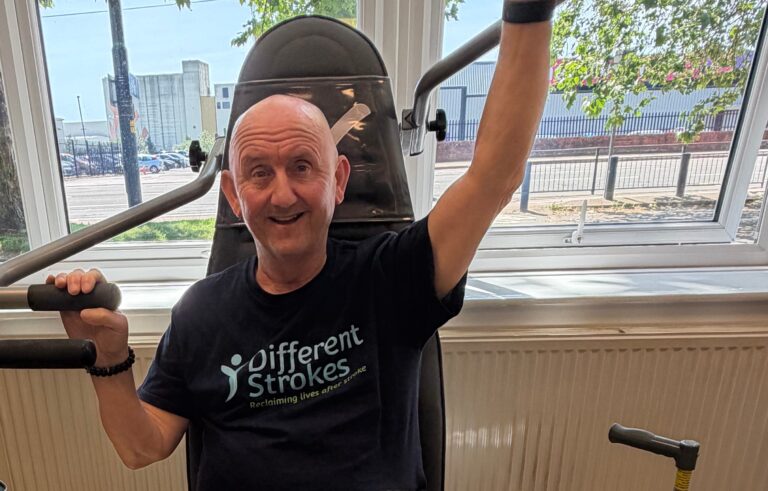
Chris was 61 when he had a haemorrhagic stroke in 2022, and he is now 65. He lives in Bolton, where he set up and runs the local Different Strokes group. This is Chris’s story, in his own words.
“Before my stroke, life was extremely full. I’d retired, but I was still working part-time as a freelancer in the construction industry. I played golf and sang in a choir, I was a school governor, and I was involved with the Society of St Vincent de Paul, which supports people who are sick and lonely at home. It was a busy life, and I had plenty to keep me going.
What happened
In 2022 my wife and I were on holiday in Whitby with our touring caravan. It was the last evening and we were heading out for a meal at a pub. I was running a bit late, so I decided to drive the short distance and collect the car the next morning.
Going down the lane, I started to weave a little. In an almost empty car park, I struggled to reverse into a space. My wife gave me a few funny looks. Then I began to wobble walking to the pub and was leaning to one side as I tried to get through the door. By the time we sat down, it was obvious something wasn’t right. I was leaning more and more, and my words were slowing down.
An ambulance was called and it arrived around seven in the evening. Whitby doesn’t have a stroke unit, so I was taken to York Hospital, nearly an hour away. There I was told I’d had a haemorrhagic stroke, a bleed in the brain.
The weeks I don’t remember
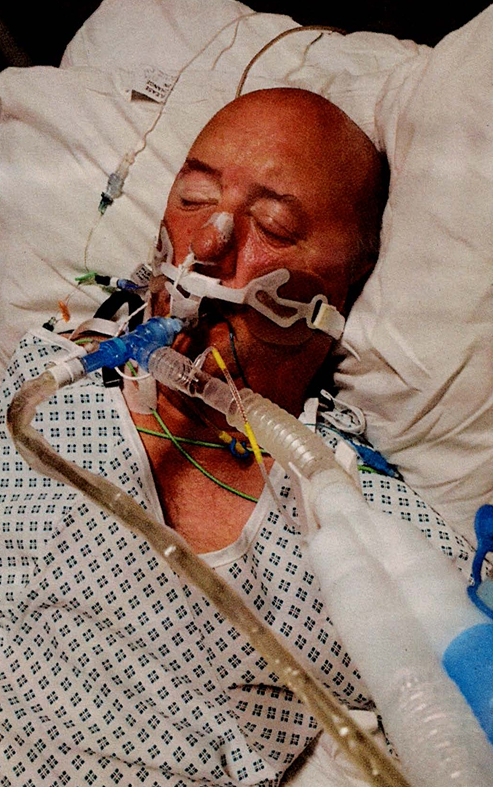
I got worse after I reached hospital. They tried to do another MRI scan, but I couldn’t keep still in the machine, so they couldn’t complete it. For the first few weeks things weren’t looking very bright, I had pneumonia and was in a coma twice.
I don’t remember a thing from sitting in the pub on 15th September ’22 until about six or seven weeks later, by which time I’d been moved to Bolton Hospital, closer to home. I was literally out of it, so there was no time for reflection. I came home in February 2023.
To this day, nobody has been able to pin down why it happened. The hospital checked everything, and nothing untoward turned up.
Recovery, and two more strokes
At home I had physiotherapy and worked with the community speech and language therapy team in Bolton. My speech was pretty much normal after the first stroke, but I’d lost a lot of my cognitive ability, so I couldn’t go back to freelancing.
Then, around December 2024 and January 2025, I had two more strokes. The third did the damage to my speech. A consultant at Salford Royal Hospital changed my medication, and since then I haven’t had any further problems.
I can’t fault the care I’ve had. I was extremely happy with it. I know plenty of people are angry about their treatment, but I always think, what can you do about it? If I get angry, I’m not doing anybody any good, including myself.
Living with it now
The whole of my right side is still affected. My walking is affected and I use a wheelchair for most of the day, though I try to be as independent as I can. I get myself washed and dressed and ready for the day, with the exception of putting my prosthetic on. My ankle turns in on itself when I take the weight off, so I come down on the side of my foot.
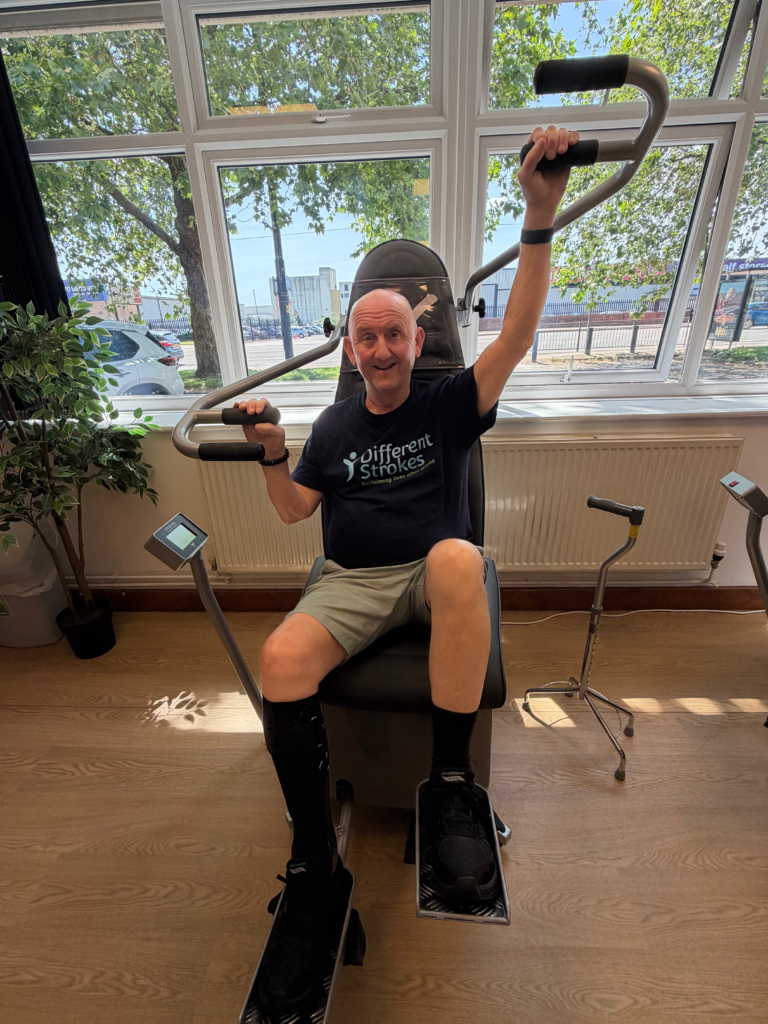
I’m four years in, and I know recovery goes on for a long time. At my local gym, which has assisted equipment, there’s a man who had his stroke 25 years ago and still goes. It took him five years to walk properly, and he walks the way a survivor does. That gives me cause to be positive, because I’ve probably got at least another year to go.
Finding Different Strokes
After my third stroke I thought, what can I do? I couldn’t carry on with the school or the St Vincent de Paul Society any more. I came across Different Strokes on Facebook and then on the website, and I saw an advert for an area meeting in Manchester. Caroline Saunders came and gave a presentation. I met some other survivors there, and four of them are now in my group in Bolton.
After my third stroke I thought, “what can I do?” I couldn’t carry on with being a school governor or the St Vincent de Paul Society any more. I came across Different Strokes on Facebook and then on the website, and I saw an advert for an area meeting in Manchester. Caroline Saunders came and gave a presentation. I met some other survivors there, and four of them are now in my group in Bolton.
The nearest group to me was in Altrincham, a 25-mile round trip, so I thought, why not set one up here? We held the first meeting in June and around 20 people turned up. A few haven’t come back, but others have joined, so we’re still at around 20, which I’m told is quite high. I also went to the annual conference for the charity’s 30th anniversary.
Running the group keeps me busy and makes me feel useful. It also helps me cognitively, because it gets me thinking about things in a logical way.

Hearing other people’s stories makes you realise yours isn’t so bad. And it’s through Different Strokes that I’ve heard about research. I’ve applied for and taken part in a couple of studies. One was with Warwick University: every week for ten weeks, survivors did exercises together. They were beneficial, and still are.
How I look at things
I’m no different from anyone with cancer or any other life-threatening illness. None of us deserves it. I can still function and I can still communicate, so I’m lucky compared with a lot of other people.
I was generally a positive person before, but I did look at some things negatively. Now I try not to, because you don’t know what’s behind things. Waking up after the stroke was a very good time for me. My advice is to put things in perspective and think how lucky you are, not how unlucky.
My family have been wonderful throughout, though I won’t pretend I don’t sometimes feel a bit of a burden. I also have a new excuse when I can’t remember something. I tell my wife it’s my “stroke brain”, and then I think to myself, it’s probably just old age.
Your donation helps others like Chris on their journeys
There are 100,000 strokes in the UK each year with 1 in 4 happening to somebody of working age or younger. Different Strokes aims to promote independent stroke recovery and help these younger stroke survivors reclaim their lives.

Make a smile lottery is a weekly fundraising lottery. A fun and exciting way to help Different Strokes raise vital funds that will secure our future.
It only costs £1 per play, and you can choose to play every week or whenever you feel like taking a chance and doing something good. For more information click here.