Tom’s Story – Haemorrhagic Stroke aged 32

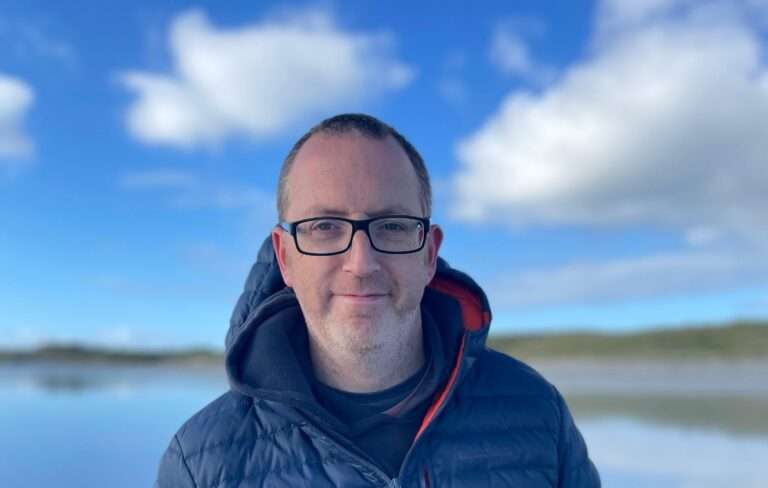
Picture of Tom in hospital after surviving a haemorrhagic stroke aged just 32

I was 32 and living in in Brighton, South East Sussex, when I had a stroke in August 2022. Before it I played a lot of sport; basketball, badminton, golf. rugby, etc. There was absolutely no warning anything like this was going to happen. I was playing seven-a-side football with friends at Preston Park, where anyone can turn up and play. The ball was thrown in from side into the forward part of the pitch and the centre midfielder had a shot at the goal, when I headed the ball.  

This is when I lost consciousness – and which is when everything changed.
“Yes” and “No” were the only words that would then come out for a while after I regained consciousness.

I couldn’t even remember the names of any of the other members on my team! Admittedly I’d only known quite a few of them for about fifteen minutes before we started, but even then I’m not used to my memory being that bad.

Thankfully I did remember a friend who was also there, and who I’d known for years. When I started to try to talk to him he noticed that my speech was slurred and ‘different’. I can’t quite remember exactly how it was different – but he and I both noted that it wasn’t the same. I wanted to go home to ring my mum and I got my mobile phone and tried to ring her, and wanted to say,

“Help, my speech has gone” – but I couldn’t.

She only lives about 100 metres from where I was playing anyway, so I went there in person to get help. I knocked on the door, and then had to use a mobile phone to help me, because I could type out what I wanted to say instead. Things in my brain seemed OK at that time, apart from the fact I just couldn’t manage my speech. I knew something was wrong, and eventually my speech seemed to come back a little before I went to sleep and after I went to hospital for tests, after which they sent me home.

I went home and went to sleep again and I assume this is when the stroke actually happened. Again I had no speech and no hand or leg movement on one side. This is when I fell out of bed, and thankfully my mum heard that happen. I wanted to say that I needed an ambulance but I just couldn’t say the words. I would love to be able to suggest some way of communicating this without speech, but even now I can’t think of the best way to do that! I wasn’t confused at all, but just couldn’t speak properly.

I was dizzy – but I could sit down. I was at hospital for about 22 hours in total in fact, having lots of tests. It seemed most of my time was spent I corridors there, and I find it bizarre that I wasn’t frightened.  The tests had shown that that I’d had a TIA (transient ischemic attack) about ten days before. Thankfully there was a bed available on one of the wards, where I spent about two and a half weeks before I was moved to the Princess Royal Hospital in Haywards Heath.

In my time in hospital I had intensive SLT (speech and language therapy), physio and occupational therapy.

I was happy I seemed able to perform most of the tasks set  out for me during this time. I was in hospital for ten weeks, unlike the six weeks that seem standard for most people, and I’ve now idea why this was, but I’m really grateful for it. I’d spent a few years as a strength and conditioning coach (a bit like a personal trainer) so I knew a lot of what I had to do was get the right attitude, take responsibility for my own recovery and just get on with it!

Before all of this happened I did used to drink Thursdays, Fridays and Saturdays and I did wonder if this contributed to the stroke, as I was a higher risk anyway, with high blood pressure. Sadly I’m unaware if there’s a family history of it since I’m adopted but I’m grateful for the loving family I was adopted into. My dad really helps out by helping meet the costs of a gym at least once a week and speech and language therapy at least twice a week.

But, I realise it’s my recovery and that I have to take charge of it. Sometimes it’s felt like whatever happens that I drive myself to keep going forward with everything. To my fellow survivors one of the most important things I learned is that it’s my recovery and I get out of it what I put into it. I’ve had help, but nobody was going to ‘save’ me – and I had to find the drive to do what I could do to help myself.

Picture of Tom who survived a haemorrhagic stroke aged just 32 in recovery.

The other advice I’d offer is to laugh when you can. I’m sure most of us know that sometimes if you don’t laugh, you’ll cry – so I know which one I’d prefer. Find the positives.  Whatever doesn’t kill you makes you stronger! Aphasia was a main problem for me, but I found the right organisations to help with that, and especially Say Aphasia and they have a really helpful and interactive website.

Different Strokes, Say Aphasia, Headway and the Stroke Association have ALL helped with my recovery. The help is out there, but you have to ask for it – and accept it. Use whatever services you can. Sleep was also really important for my recovery, especially in the early days. If I don’t sleep a well I feel it sets me back. An average week for me start with a 10am gym – and then a sleep. Then on a Tuesday I’ll probably have a 9:30am speech and language therapy session, then gym in the afternoon, and maybe another sleep!

Looking at next week, and as with a lot of recovery after stroke that I’ve found a lot of it to be about successful repetition and it’s pretty much the same, but I have a doctors appointment before I do my best to make sure I can take part in the Different Strokes Virtual Meeting on Wednesday.

The help is out there, so use it – connect! I wish you all well with your recoveries and hope to get to meet some of you on your journeys too. We’re not alone and in this together!

Your donation helps others like Tom on their journeys

There are 100,000 strokes in the UK each year with 1 in 4 happening to somebody of working age or younger. Different Strokes aims to promote independent stroke recovery and help these younger stroke survivors reclaim their lives.

Make a smile lottery is a weekly fundraising lottery. A fun and exciting way to help Different Strokes raise vital funds that will secure our future. It only costs £1 per play, and you can choose to play every week or whenever you feel like taking a chance and doing something good. For more information click here.

Facebook
Twitter
LinkedIn
Facebook
X
LinkedIn
Pinterest
Reddit
WhatsApp
Email

Join Our Mailing List

This field is for validation purposes and should be left unchanged.
Name
Email(Required)
Would you like to join our postal mailing list to receive physical newsletters in the post twice a year?
Address