Jon’s Story – Ischaemic Stroke at 43

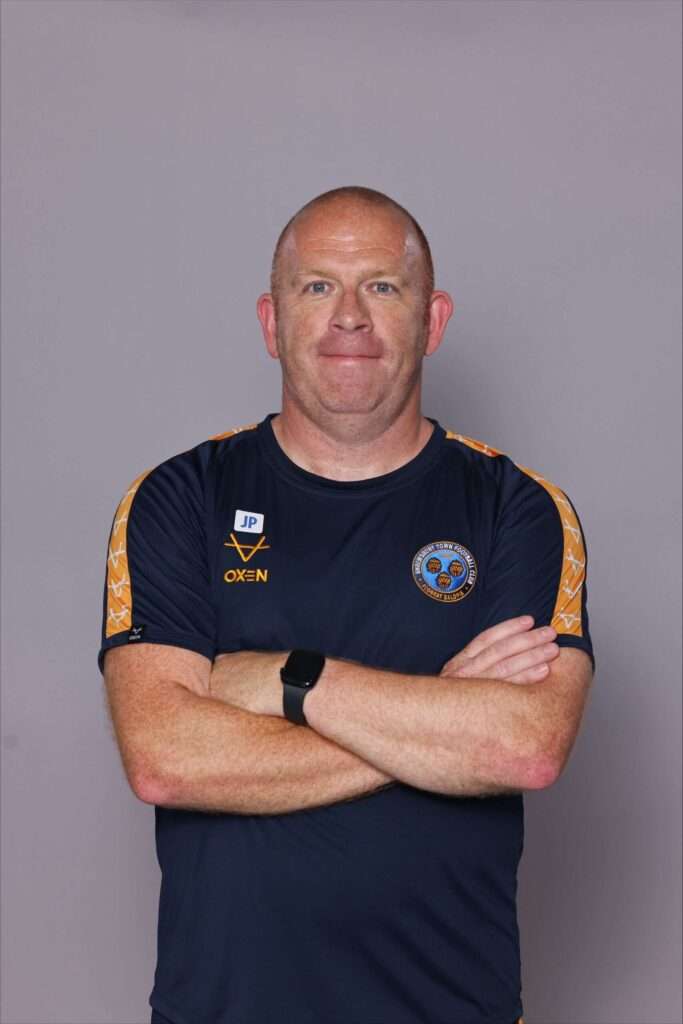
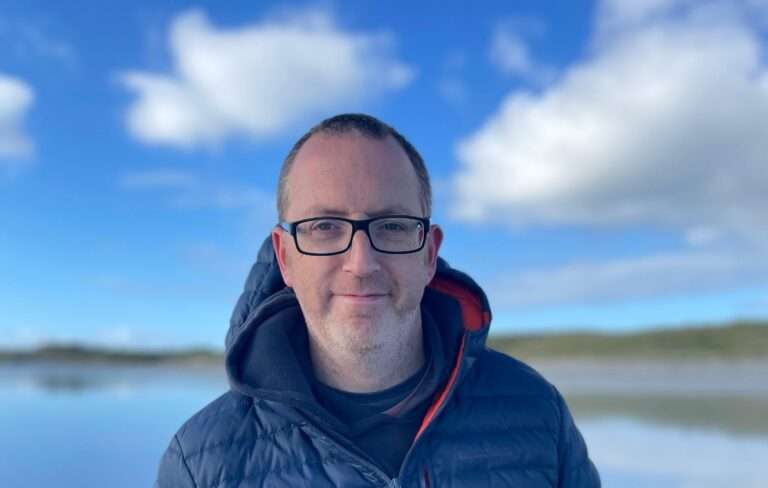
My name is Jon Pearce, I’m 44, and I live in Telford. I had an ischemic stroke on New Year’s Eve morning in 2023 at the age of 43. As I recently marked my first stroke anniversary, I reflected on how my life has changed. It’s a day etched in my memory, filled with fear, confusion, and disbelief.

Picture of Jon Pearce who survived a stroke at just 43

Life Before My Stroke

Before my stroke, I was always on the go. I’d only ever been out of work for two weeks since leaving school. I’ve been married to Gemma for over 15 years, and we have two children, aged 14 and 8. I moved from London to Telford for work as Kit Manager for Shrewsbury Town Football Club; a role I’ve loved. Football has always been a huge part of my life—my dad worked for West Ham, and I was previously Kit Manager at Birmingham City.

I had no significant health concerns. I was slightly overweight, but I had taken up running during the pandemic and felt fitter than ever.

The Morning of My Stroke

It started like any other day. The alarm went off at 5:20 a.m., and by 5:30 a.m., I was up, dressed, and ready for work. As I kissed Gemma on the cheek to say goodbye, I had no idea how drastically my life was about to change. I made my way downstairs, careful not to wake anyone.

As I reached the bottom of the stairs, I felt an electric shock-like jolt and pins and needles spread across the entire right side of my body. It stopped me in my tracks. My immediate thought was that I’d slept funny. I carried on to the kitchen, toothbrush in hand, but I couldn’t seem to get it in my mouth properly—I was brushing my face and eyes instead.

Something felt terribly wrong, but I didn’t want to worry my wife. I tried running around the garden to shake it off, hoping to “wake up,” but the fuzzy feeling wouldn’t go away. With no pain and no idea I was having a stroke, I decided to drive to work and see Chris, the physio at Shrewsbury Town.

Getting to the Hospital

The drive to work is twenty minutes. About halfway there, the sensation on my right side persisted, and I couldn’t clench my fist properly. I used the palm of my hand to call Chris on speakerphone. When he answered, all I managed to say was “Skitty, something’s wrong.” – I didn’t realise it at the time, but my speech was slurred. Chris immediately recognised the signs of a stroke.

Chris asked me to pull over and wait for help, but I said I would drive myself to A&E. He called ahead to Shrewsbury Hospital to let them know I was on my way. The 5-mile journey from that point felt like a 50-mile struggle. Even now, I can’t explain how I managed to park perfectly in the hospital car park, but I did. As soon as I walked into A&E and they called my name, and I collapsed.

The Hospital Experience

Chris arrived at the hospital shortly after I did, advocating for me throughout the day. Thanks to his insistence, I was given a thrombolysis injection to break up the clot. I remember a nurse asking if I felt nauseous, but I didn’t know what she meant. I asked Chris, “What is nausea?” and then promptly vomited.

After an ECG, I couldn’t hold myself up anymore and had to use the walls for support. My wife joined me at the hospital, but it was an incredibly distressing day for her. She overheard a doctor suggest it was “probably just a migraine,” which left us both confused and uncertain about what was happening.

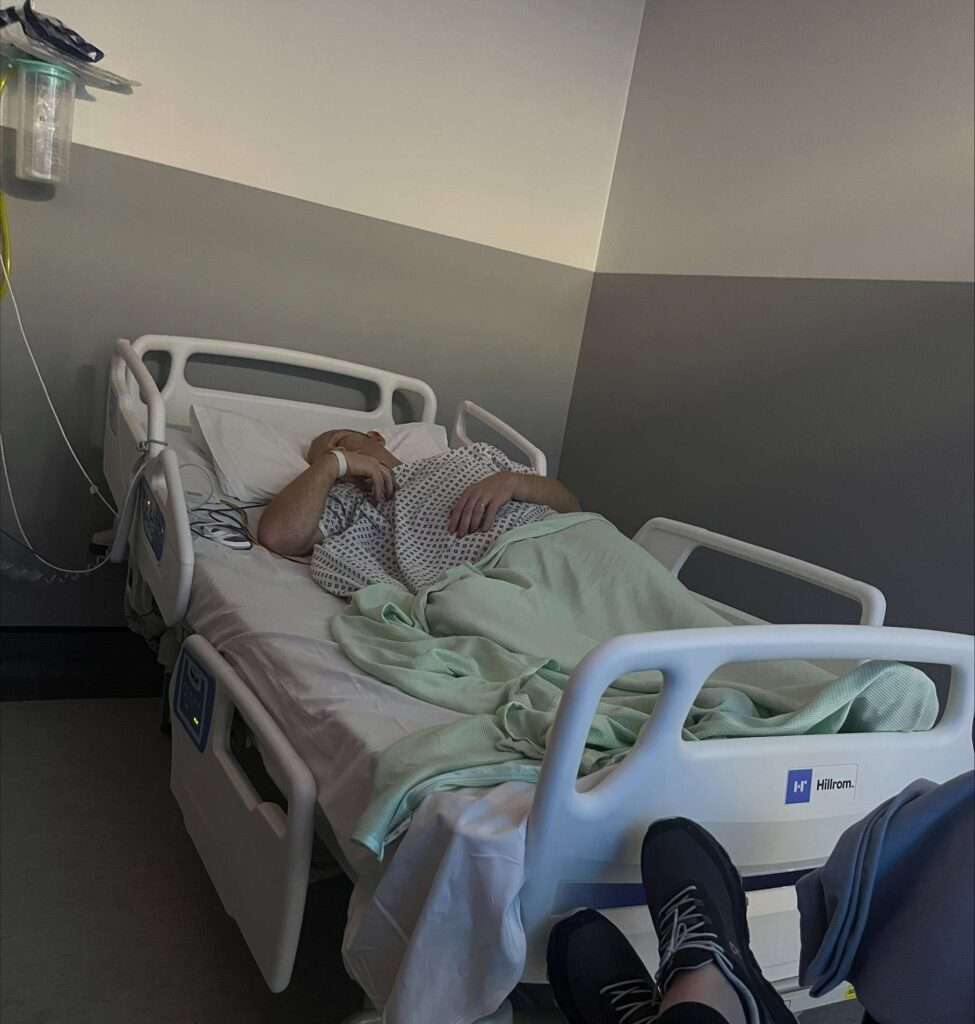
The next day, they tested my mobility by asking me to put one foot in front of the other—I couldn’t. In hospital Gemma had to help me do everything from dressing me, putting my socks on and even bathe me as the initial fatigue meant I was unable to do so. It was the first time in my life I had felt so utterly helpless in not being able to do such basic things. After a few days, I was able to move more, albeit very slowly. I was discharged after just a few days and sent home with plans for outpatient care at the Telford Stroke Unit.

Picture of Jon Pearce who survived a stroke at just 43 in hospital

Outpatient Appointment and the Truth

A few hours after getting home, I received a call telling me to attend an outpatient appointment the next morning at the Telford Stroke Unit. It was during this meeting that the reality hit me: I had suffered a massive stroke. The consultant showed me images of my brain and explained the severity of the damage. She was shocked I had been discharged and told me I needed to stay in hospital and wouldn’t be returning to work for months.

At that moment, my world collapsed. All I could think about was my family, my job, and what the future would hold. But that conversation also made me realise what truly mattered – my health and my loved ones.

Recovery and Life After Stroke

The road to recovery has been tough. I had six months off work, and while it was difficult to come to terms with my limitations, Shrewsbury Town Football Club were absolutely amazing. Their support was unwavering throughout my recovery, and they have continued to be understanding as I’ve adapted back into my role.

I resumed running by May, but I still get fatigued easily. Simple tasks like getting out of bed feel exhausting, and my balance wavers when I’m tired.

I’ve had to adapt my life. Some days I manage to exercise, but the next day, I might be too drained to do anything. My communication isn’t what it was—I often miss words in texts or emails. It’s a constant battle between pushing myself and knowing when to rest.

The Emotional Impact

My stroke has affected my entire family. My youngest child now has anxiety about me being away, and she struggles to fall asleep in case something happens to me. Gemma has been my rock—her strength has been incredible, especially with no family nearby to support us. Chris, the physio who saved my life that morning, continues to check in on me and reminds me that recovery from a brain injury is no small feat.

The experience has been life-changing. It’s like our world came crashing down, and we’ve had to rebuild everything with the stroke in mind. Every decision feels more cautious, more considered.

Reflections and Advice

I’ve learned that health is everything. You can get caught up in the day-to-day, but when your health is at risk, nothing else matters. My advice to other stroke survivors is to lean on your support network. With a strong foundation of people around you, you can face anything.

Looking ahead, I want to maintain my health and prevent another stroke. I’ve also realised how precious life is and how important it is to listen to your body.

I discovered Different Strokes through a friend and have found their resources and community invaluable. Knowing there are others who understand what I’m going through has been a great source of comfort.

Chris saved my life that morning, and Gemma has been my tower of strength throughout this journey. Together, they’ve reminded me that even in the darkest moments, there’s a way forward.

Picture of social media post about Jon's stroke wishing him well

Your donation helps others like Jon on their journeys

There are 100,000 strokes in the UK each year with 1 in 4 happening to somebody of working age or younger. Different Strokes aims to promote independent stroke recovery and help these younger stroke survivors reclaim their lives.

Make a smile lottery is a weekly fundraising lottery. A fun and exciting way to help Different Strokes raise vital funds that will secure our future. It only costs £1 per play, and you can choose to play every week or whenever you feel like taking a chance and doing something good. For more information click here.

Facebook
Twitter
LinkedIn
Facebook
X
LinkedIn
Pinterest
Reddit
WhatsApp
Email

Join Our Mailing List

This field is for validation purposes and should be left unchanged.
Name
Email(Required)
Would you like to join our postal mailing list to receive physical newsletters in the post twice a year?
Address