Ian’s Story – Two Ischaemic Strokes At 52
- Greg Hollingworth

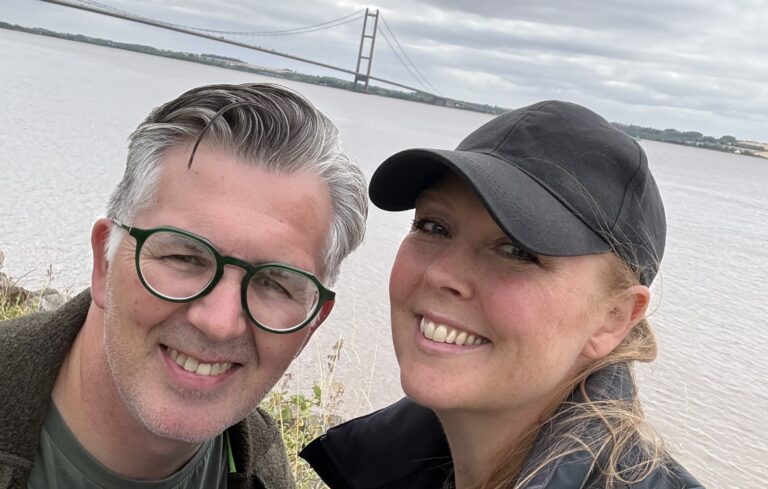
Ian was 52 when he had his first stroke in July 2025. He was living in West Sussex, at the time, and he now lives in Yorkshire with his wife Claire and their young son Ethan.This is his story, in his own words.
Life before
“I was a marketing director, running marketing, sales, parts of compliance and, latterly, the operations team. Before that I was a consultant in change management and managing director of a consultancy. I loved my career. It was stressful, but I woke up thinking about work and went to sleep thinking about it, alongside my wife Claire and our son Ethan.
I’d had a burnout in January 2025, and my way of dealing with it was to train for a 10K, which I ran that spring. Looking back, I was a victim of my own drive. There were no physical warning signs, and I wasn’t expecting anything like this.
The first stroke
It was a Monday in July 2025. The day before, I’d spent a lovely day helping at a friend’s open day, had a beer with everyone and come home for dinner. Claire and Ethan were about to go to Yorkshire for a few days, and I was staying behind for work and to look after the cats.

I don’t remember that morning at all. Everything I know comes from Claire. I’d had a shower and got ready for work, and she thought I was getting one of my migraines because I was acting oddly. She says my face had dropped and that I was walking around as if I ‘just wasn’t here’. The next thing I remember is walking out of the bathroom into the bedroom and collapsing.
Claire said, ‘I’m calling an ambulance, I think you’re having a stroke.’ She managed to lift me onto the bed. I couldn’t talk, though I thought I was. The ambulance arrived within 20 minutes and the crew were phenomenal. They plugged me in and linked by video to the stroke team in Brighton. By then I could talk again, not well, but I insisted on walking down the stairs. I now call that my belligerence.
I remember being wheeled out of the ambulance at Brighton, seeing the sky and the seagulls. I was born in Brighton, so I love the place. I had two CT scans, and the doctors explained to Claire that I’d had a stroke caused by a blood clot in the front left side of my brain. They gave me a clot-busting injection, but it was serious, and they told us they needed to operate.
I didn’t know what they were going to do. I remember lying there thinking I could die. There comes a point where you give in to the medical people and put your faith in them to do everything they can. I remember the mask coming over my face, and then nothing. I think the stroke happened at about 7am, and I was in Brighton just after 8. They tried three times to clear the clot and couldn’t. I only learned that a few weeks later.
Waking up
I woke on the high dependency stroke unit, with six of us in there. I had lost my speech. A lovely man called Alan, who had worked on the unit for years, told me straight: ‘You’ve had a stroke, mate, but you’ll be fine.’ He had a reassuring authority. He wasn’t going to panic me, but he wasn’t going to pretend either.

My first stroke was mainly cognitive. My hands and arms were fine, but everything else was off. Both my eyes worked, but they weren’t connected in my brain, so I had one eye covered to see properly. I could write my name, but I couldn’t say ‘cup’. The only word I could say clearly was ‘epiphany‘, which is ridiculous. Everything felt like an out-of-body experience. This was my body, but it didn’t want to work the way it used to, and even the colours looked different. Claire said I was walking like a Thunderbird.
Simple things took huge effort. I had to work out how to use the toilet, how to be washed, how to move one leg in front of the other. I was independent, and suddenly I felt like a baby learning everything again. I’d spent my life thinking I might make it to my 90s, and now I was wondering whether I’d make it through the next hour. This wasn’t a broken leg, where they say six weeks in plaster and you’ll be fine. Nobody could tell me how it would go.
I went into fight mode. I walked the corridors and talked to the nurses.
I thought that if I did nothing it would go one way, and it wasn’t good. I refused to be a victim. On day one I had about 30 people working to keep me alive in the first 12 hours, and I will never take the NHS for granted again.
Rehab on the ward
Claire came every day and smiled and laughed the whole time. I still can’t fully appreciate what she went through. On the Saturday she made me put my glasses on and use both eyes. It took about two hours, but my eyes settled.
I watched Ghostbusters and Back to the Future until I fell asleep. I was better in the mornings and tired in the afternoons. I tried the breakfast club, but there were only three of us and I ended up running the drinks round. I lasted two days.
The therapists tested what I could do. They asked me to make a cup of tea and a coffee in the ward kitchen, and it was gruelling. In the gym, pedalling the exercise bike took everything I had, and I did it because I knew if I got all the ticks they’d let me move on. That’s odd for someone who used to play polo and drive fast cars.
Then they sent me to a shop to find a newspaper, a magazine and a can of drink in half an hour. It felt like the Crystal Maze for stroke survivors. When I opened the hospital door, I felt the wind and heard people walking along the seafront, and I thought, ‘I’m going to do this.’ I could be me again.
After 11 days I asked to go home. It took about seven hours to sort the medication, and I kept my eyes on the door at the end of the ward. Stepping outside into the noise, the cars and the colours was overwhelming, and that’s when the chaos really began.
The gap after hospital
Those first months are a blur. The care you get in hospital is superb, but then there’s a gap before rehab picks you up. One day Claire and I went to the beach at Brighton. I could walk on the flat, but I hadn’t realised I couldn’t cope with hills. Halfway down the beach I said, ‘I can’t get back.’ I was determined and I couldn’t, both at once, we were going round in circles.
Recovery isn’t linear. You have good days, bad days, and days when you say no to everything. Some days it was hours rather than days. My dreams were weird and my sleep was out of joint. I learned to say that tomorrow is another day.
Finding Different Strokes
I found another stroke charity, and they were very helpful. However, the group I went to was mostly retired people, and I wasn’t ready for garden centres, tea and coffee. I wasn’t going down without a fight.
I found Different Strokes around December. In November the heart consultant had found a hole in my heart, a PFO, which they thought had caused my stroke. Different Strokes explained what that meant, and it gave me hope. I met people who were 20, 25, 30, and I discovered that stroke doesn’t only happen to the unlucky or the old. At the other charity I felt young. At Different Strokes I felt young again.
The books they sent for Ethan helped us explain everything to him. He now goes to school and tells people, ‘This is my daddy, he’s had two strokes.’ I do think there needs to be more help for family members. The NHS kept me alive, but families need support too.
A second stroke
The PFO closure was planned. We’d also sold our house and were about to move to Yorkshire to be near Claire’s family.
Then, six months after the first, at Christmas, I stood up to go downstairs to help Claire with breakfast and my legs collapsed. This time I could speak. I said, ‘Claire, I’m having another stroke.’ I knew exactly what it was. She was in tears.
It was the same ambulance and hospital process. My left arm and leg weren’t working, but the CT scans showed nothing, and it was less clear-cut.

There was a five-day wait for an MRI and they said I was better off at home. I went home, kept up my speech therapy and had the MRI on the Saturday. On the Sunday the consultant called me himself. It was another ischaemic stroke, a small one, with two clots at the back of my head.
The PFO closure went ahead at the end of January, and those four weeks were the longest of my life. Every morning I woke up thinking, ‘I haven’t died.’ I walked a small loop every day to keep my heart moving and my legs working. When the day came, the procedure took only a few hours out of a day. I was awake, and they put a 30-millimetre device in through a vein in my leg. They showed me my heart on the screen, the bubbles passing through the hole, and then the bubbles stopping. I was home by mid-afternoon.
So in about seven months I had two strokes and a heart operation. I think I need therapy just to understand what’s happened. We’ve joked about a T-shirt: ‘I’ve had two strokes and a heart operation.’
Where I am now
The second stroke has hit me physically. My legs and left arm don’t work properly, and the fatigue is huge. My speech therapist, Belinda, pushed me every week for nine months, and I’m grateful, because without her my speech would be dreadful.
I had to leave work. Selling the house was a nightmare, we lost the house we were buying, and we ended up staying with Claire’s parents and in Airbnb’s. But we’ve now found a better, cheaper house in Yorkshire.
I can’t cope with noise and confusion, so when Ethan’s cousins visit I go and sit somewhere else. I can’t manage money any more. Claire deals with it, and I ask her if I can buy a coffee. I used to fish for days, and now I can manage about four hours on a good day, but I do it. I’ve taken up photography, which I never thought I’d love. I do things for half an hour and then rest.
I think of it as three things. Some parts of my brain died and are gone. Some parts will come back. And there are things I can now do that I never could before. The brain doesn’t stop looking for new routes, so keep trying, but on some days you lie down and sleep, and that’s fine too.
I’m climbing the mountain. The biggest thing I’ve learned is that you give in when you give in.”
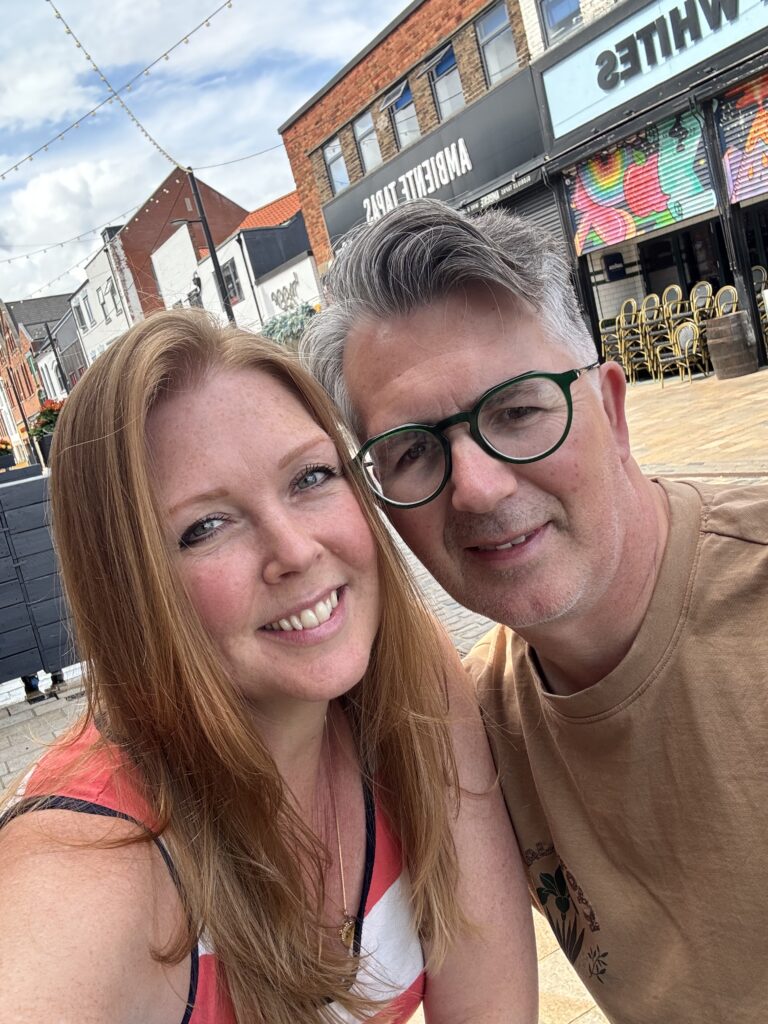
Your donation helps others like Ian on their journeys
There are 100,000 strokes in the UK each year with 1 in 4 happening to somebody of working age or younger. Different Strokes aims to promote independent stroke recovery and help these younger stroke survivors reclaim their lives.

Make a smile lottery is a weekly fundraising lottery. A fun and exciting way to help Different Strokes raise vital funds that will secure our future.
It only costs £1 per play, and you can choose to play every week or whenever you feel like taking a chance and doing something good. For more information click here.