Gemma’s Story – Ischaemic Stroke at 40
- Greg Hollingworth

Gemma is 42 years old and lives with her husband and eight year old son in Northampton.
This is her Survivor Story:
I was 40 when I had my stroke, which came completely out of the blue. I was fit, healthy, didn’t drink or smoke but I was very stressed out at the time. The day before I had my stroke, I attended my boxing training class first thing as usual. I hadn’t been home long when I suddenly felt very dizzy to the point that I had to sit down. I thought that I had just over done it a bit, the dizziness passed but a dull headache remained.
I woke up on 17th September 2023 still with a dull headache, but just took some paracetamol and got on with it. I had a horse-riding lesson in the afternoon and had just started trotting round the indoor school when I suddenly felt a wave of pins and needles down the left side of my body. I told my instructor who thought that wasn’t right and that I should go to hospital. I was then aware of weakness in my left side as I couldn’t get off the horse on my own. I just remember feeling weird and breathing heavier than normal; it had never occurred to me that I was having a stroke.

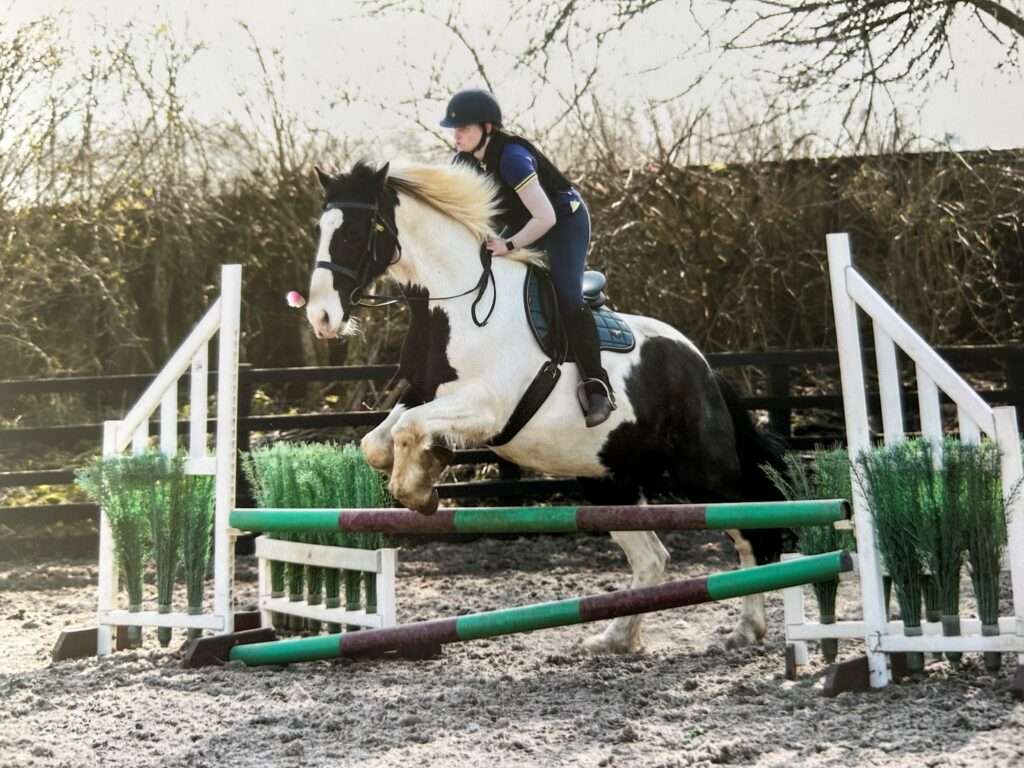
I didn’t feel scared, as I don’t think I was consciously aware of what was going on or the full extent of my symptoms at that stage.
I remember thinking this is so weird as I didn’t feel any pain, but had lost control of the left side of my body. My instructor helped me off the horse and sat me on the mounting block outside the school to wait for another instructor to bring her car round. They had called an ambulance, but it was going to take two hours! They decided to take me in the car, which I am very thankful for. I was sick all the way to the hospital. I think this was due to the fact that I had lost the left half of my peripheral vision in both eyes – I was unaware of this at the time. My instructor parked her car outside A&E and I believe a porter took me into hospital. I don’t really remember much about resus, just telling the people who were treating me that there was no need to cut my riding clothes off as they were expensive, and that I hadn’t broken anything.
I guess at least I didn’t lose me in all of this. I have always had a cheeky nature and I do cut quite close to the mark sometimes! I think having a stroke may have made me even more blunt and to the point, but I like to have fun – ask any of the doctors and therapists that have treated me! They will have got it in the ear at some point or been made to compete against me.
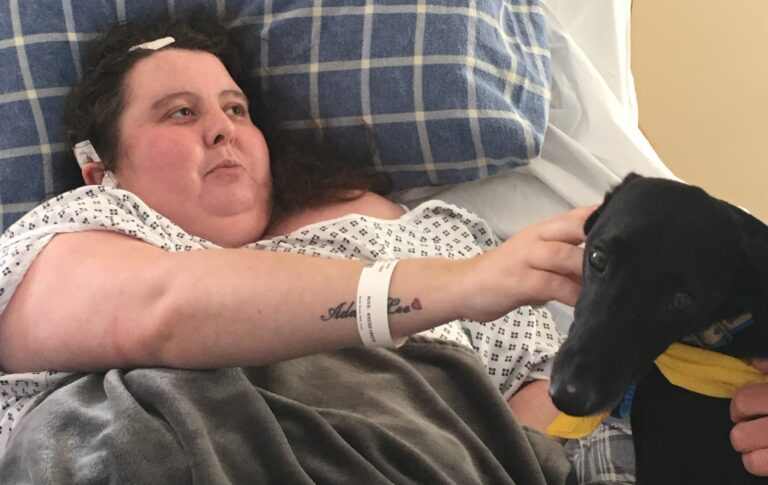
I must have had a head CT at some point and was diagnosed with having suffered an ischaemic stroke of the right thalamus, which I am told controls sensations in the body. When my husband arrived in resus I didn’t know he was there, as he was standing on my left side, until he spoke – at which point I started crying. I couldn’t lift my left arm or leg higher than a couple of inches off the bed. I also had slight facial droop. I was thrombolysed, which thankfully broke down the clot so I didn’t need surgery. I was then admitted to the stroke ward. The nurses were fantastic but I just had to get out. I was constantly hot and couldn’t sleep because of the noise of bleeping machines and people calling out. As soon as they told me the physio was coming to see me, I was determined to prove that I could walk well enough to get out of there! I was only in hospital for five nights in the end.
The day after I was discharged the community stroke team came to assess me. I was very fortunate in that the area where I live has a community stroke team. They supported me for eight months until I reached my goals. I think I had people coming out to me every day in the early stages; either rehab assistants, the nurse or the physio, which was fantastic. The community stroke team in Northamptonshire was amazing and helped me so much – from emotional support when I finally got back on a horse – to helping me ride a bike again to cycle with my family at a holiday village. I had an occupational therapist and a specialised vocational therapist assist me with the process of getting back to driving and in deciding what to do about my employment. The vocational therapist continues to help me, even now, and is happy to be involved when I secure employment in terms of discussions regarding any adjustments I may need.
Several weeks after my stroke, I also started having regular neurological physiotherapy once a week at Physiofunction. This is where I heard about Different Strokes. I started following them on Facebook and read all the amazing stories of other stroke survivors.
Stroke is so unique to the person that it is so difficult to find someone who has exactly the same symptoms as you. The stories are an excellent way of trying to find the similarities and possibly other treatments which may improve symptoms.
Physiofunction are incredible. They gave me the confidence to push on, the knowledge to understand why my body was reacting the way it was and what I could do to try and change that. I still continue to have treatment there and would highly recommend them to anyone who has had a stroke or neurological condition.
When I first got out of hospital, I was so happy to be home and I just assumed that I would get better straight away. After a couple of months when that didn’t happen, I crashed. I still remained dedicated to my rehab, but was not able to cope mentally. I started to put a brave face on and hide my true feelings. I suffered constant anxiety of having another stroke when I felt dizzy or had pins and needles which resulted in me ending up in A&E again. This happened numerous times in the first couple of months after my stroke. I was convinced I was having another one- because the stroke all started with pins and needles and have never found the reason why I had it in the first place. I have had numerous investigations including a bubble echo, no hole was found, and a 14 day tape to monitor my heart in case atrial fibrillation caused my stroke. Despite the fact that they found no evidence of this, as a precaution, they put a loop recorder in my chest to monitor my heart for 3 years. I had this fitted in April 24 and to date no AF has been identified.
Fatigue was really hard to manage initially. This has improved significantly over time, but I still have to manage myself and I am constantly making lists of what I have to do on a daily basis to structure my week. In the beginning, I was having a proper rest where I would lay down upstairs and close my eyes with no light or noise for an hour in the morning. I gradually reduced this down to nothing at all from April 2024 – which I liken to a toddler dropping their nap! Striking the balance was hard and still is, given the goals that I set myself.
Two occasions that I remember clearly was firstly when I tried to do our online shop in the evening like I used to do. It just got to a point where I couldn’t process, or look at it anymore. I passed the iPad that I was using to my husband and said he was going to have to do it, because I couldn’t! I wasn’t really even able to explain why I couldn’t, it was just like I had hit a wall. On another occasion with me being the determined stubborn person I am, I was trying to do everything that I did pre-stroke in the morning i.e. getting up, having a shower, emptying the dishwasher, making my son’s breakfast and his lunch for school. Again, I ended up in a heap on the floor after doing too much, but this would be an ongoing trend and to a certain extent still is! I always push myself to do more. I remember having an interesting conversation with the nurse at the time about spoons and that I had used all of mine by 9:30 in the morning!
I used to use electrical stimulation to calm my muscles on my left side, which I know sounds insane, but it provided such relief to start with, I remember when my physio first used it on me, I just felt a sense of calm in my body.
I have always been a super competitive person and a bit of a perfectionist which is probably both a good and bad attribute to have as I am so hard on myself. I have become a lot better at being kind to myself and telling myself that I don’t have to push myself to the limit every time I do something. Although, I do still do a lot of things that people who haven’t had a stroke wouldn’t do.
Stroke recovery is an absolute rollercoaster, you go from one extreme to the other, but have to be kind to yourself and allow yourself to grieve the old you. I am one of the lucky ones to have survived my stroke, although I didn’t used to be able to say this as I didn’t feel lucky to have had a stroke at 40. After my stroke I had to re learn how to walk and train my brain to move my body the way it is supposed to. I am a very determined person who will not be told I cannot do something. This determination has driven me to challenge myself to get as much of my old life back as possible.
Thankfully most of my vision has returned so I have been able to return to driving. I continue to have sensitivity to noise and light, especially when I am tired. Loop earplugs have helped tremendously with this. The ones that I have just lower the decibel of the noise, but you can still hear everything clearly. I used to love going to concerts and to the theatre. Having these earplugs has allowed me to return to going to these events and shows.
I still have physical limitations with control, high muscle tone and areas of my left side, which feel like a mixture of cement and numbness. I also experience a variety of sensations (like burning, swelling, pressure, pins and needles, fizzing – or what feels like a small static shock) – these sensations can happen on my unaffected side as well, and get worse if I am tired, emotional or stressed. To look at me you wouldn’t realise there was anything wrong with me. I have found compression garments help with sensations, stability and control.
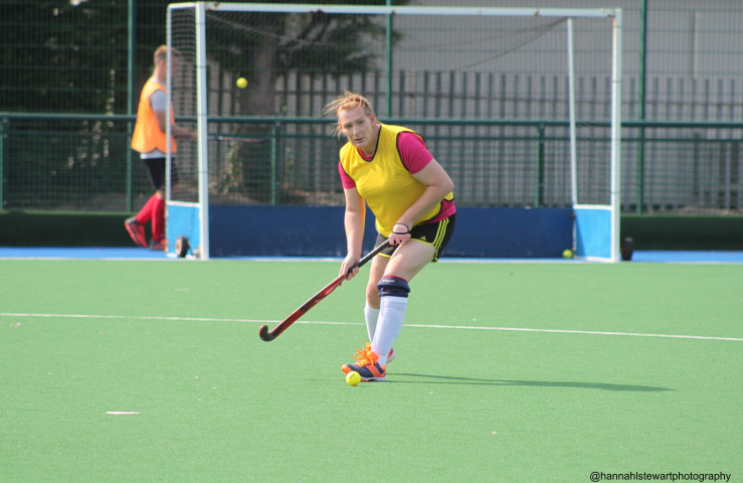
When the sun is out, I often still look at my shadow to see how I look when I am walking as it feels completely different to how it looks. With the help of my family, friends, coaches and therapists, who have provided tremendous support, I have been able to return to cycling, boxing, horse riding and running.
I had an amazing day running the London Landmarks Half Marathon on 6th April 2025, which was actually my birthday! I am still absolutely buzzing from the event. It was an experience and a birthday that I will never forget. I feel so privileged and proud to have run for and raised over £1,700 for Different Strokes so they can continue to provide invaluable support to other survivors. This time last year I couldn’t even run a mile!
It was quite emotional when I crossed the finish line and I must admit I did shed a tear as I have been so focused on this for so long, to have finally completed it was a fantastic feeling. Time to decide what the next goal will be!

People call me crazy to want to do these things, but I have the mentality that you can do anything you put your mind to.
It is really important to have goals no matter how big or small they are. Make realistic goals but also challenge yourself to push on. My husband used to take me out in a wheelchair, and then I used to walk a little using lamp posts to measure my progress. Take loads of videos to help track your progress so you can look back and see how far you have come. I wish I had taken more. I also tried to incorporate a lot of my rehab into daily activities. Finally do what you love to do even if the activity has to be adapted.
I quit my job in October 2024 and have started volunteering at a local rehabilitation centre, which I am really enjoying. My next goal is going to be getting myself back into employment and embarking on a new career, hopefully in rehabilitation – which I am so excited about! It has made me turn having a stroke into a positive, in that I now feel I have found what I love to do and I am so passionate about making a difference.
My advice would be to never lose hope, don't stop trying and be kind to yourself. Eighteen months post stroke I am still pushing myself and seeing improvement. Be mindful and present; concentrate on what you can change instead of thinking about the past or future.
Donate to Gemma’s London Landmarks Fundraiser
There are 100,000 strokes in the UK each year with 1 in 4 happening to somebody of working age or younger. Different Strokes aims to promote independent stroke recovery and help these younger stroke survivors reclaim their lives.