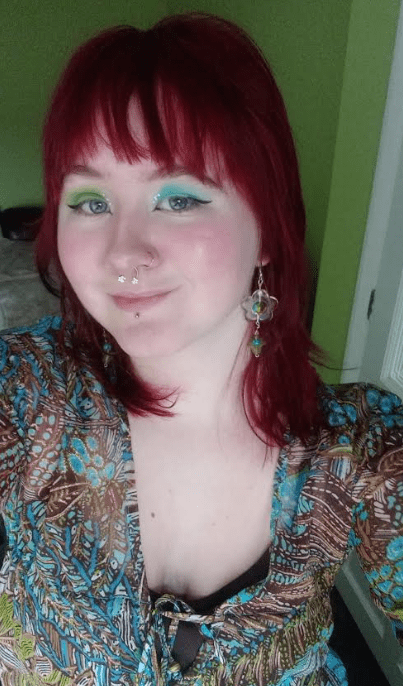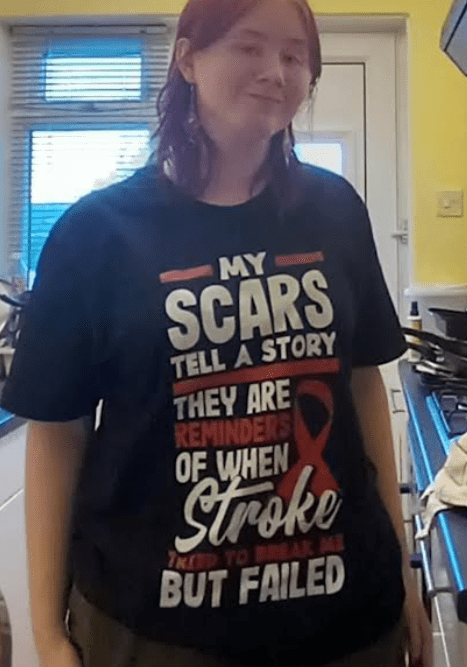
Evie, 18, from West Yorkshire, had a stroke on the 15th December 2024.
Here, she shares her Survivor Story.
“As a 17-year-old, I never could have imagined having a stroke. Life before it was going well—I had started going to the gym and was enjoying it, while also running a small jewellery business alongside my A-Levels. I was becoming more independent, taking bus rides by myself just to have some “me time.”
In 2018, I had a seizure that was dismissed as a one-off. In the lead-up to my stroke, my mum, two friends, and I went on an overnight mystery tour, which took us to Derby. The night before, we were having a party in our room—I had a couple of drinks to celebrate, and we were all dancing and laughing. I went to bed as normal, but the next morning, I woke up with a splitting headache. Assuming it was just the alcohol, I took a shower and got dressed.
Suddenly, I experienced severe chest pains and went to lie down. I told my mum, “I feel like I’m going to pass out.” She reassured me that it was probably nothing to worry about, but then I said it again.
Just seconds later I went into a tonic clonic seizure—my body stiffened, and I bit down hard on my tongue. I also lost control of my bowels. It seemed like I was starting to come out of the seizure, but then it happened again before I suddenly went limp.
My mum and her friend put me in the recovery position while our friend’s daughter ran down to reception to get them to call an ambulance. As we waited, I couldn’t see anything—only hear the voices around me. In my mind, I had screamed, “Am I going to die?” and “Help me!”—the words sounded clear to me, but to my mum and her friend, they came out as loud, animal-like groans.
I grew frustrated, thinking they were ignoring my question. I tried to sit up, but my body fought against me—I couldn’t move. The ambulance arrived within fifteen minutes, and almost immediately after, a helicopter landed to administer vital medication. Apparently, I was ‘dead’ for ten minutes following a cardiac arrest, but the paramedics managed to restart my heart with a defibrillator.
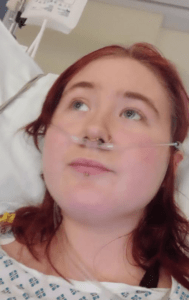
When I arrived at hospital, I still couldn’t see anything but they had me in ICU on high oxygen, attached to IV drips and a catheter. My dad rushed to Derby to be with us, and my parents were told by a nurse to prepare for the worst, as my body was struggling to take in the oxygen.
Throughout my fight for life, I was still cracking jokes with the nurses—just being my usual self. It felt better to laugh about it than to cry. Incredibly, I was discharged from the hospital just nine days later, after being visited by an occupational therapist and physiotherapist in my side room.
I’m now on medication for life and have a vision impairment called hemianopia, which means I’ve lost the vision in the left half of both of my eyes. I use an aid out in public (white stick).
I had initially felt terrified in hospital, especially since my parents couldn’t stay at night and had to go to a hotel across the road. I was terrified something would happen again but as time went on I started to feel more normal again.
When I first returned home, I was terrified to go to sleep, but over time, that fear faded. Now, I’m back in my own bedroom and no longer worrying. I still struggle with my vision, and my memory processing can be very slow at times—my brain gets delayed.
Despite this, I’m making jewellery again and celebrating my 18th year. The stroke has affected both my vision and memory, and we are still waiting for answers. I currently have a heart monitor on for a week, and then a bubble ECG in a couple of weeks, as it is believed I very possibly have a patent foramen ovale (PFO), so we need to check. If confirmed, I understand the procedure to close it will be a minimally invasive operation.
I would like younger stroke survivors to be taken more seriously, especially when it comes to mobility aids. If someone is using a stick or wearing a lanyard, more attention should be given so survivors feel respected and safer in public—without the anxiety of people barging into them or doubting their need for priority seats on a bus.
One key lesson is that strokes do not only happen to older people—they can occur at any age, and more people need to be aware of this. It’s also important to understand that just because someone looks able, it doesn’t mean there’s nothing wrong. Many people have invisible disabilities.
I’ve also learned that you should step out of your comfort zone and live life to its fullest, no matter how scary it seems. Spend as much time as possible with loved ones—you never know what’s around the corner. I first heard about Different Strokes through a nurse at Derby Hospital, and seeing similar stories to mine has made me feel less alone.
My aims and plans are to regain full independence, return to doing what I love, and inspire and help others by spreading awareness.
My advice to anyone who has recently had a stroke is to never give up and stay strong, no matter how scared you feel—because you’re still here, and you will get there! Don’t feel alone—reach out to others.“
Your donation helps others like Evie on their journeys
There are 100,000 strokes in the UK each year with 1 in 4 happening to somebody of working age or younger. Different Strokes aims to promote independent stroke recovery and help these younger stroke survivors reclaim their lives.
Make a smile lottery is a weekly fundraising lottery. A fun and exciting way to help Different Strokes raise vital funds that will secure our future. It only costs £1 per play, and you can choose to play every week or whenever you feel like taking a chance and doing something good. For more information click here.

Different Strokes Glasgow Peer Support Group Returns
Different Strokes is delighted to announce the return of its Glasgow Peer Support Group, providing a welcoming space for working-age stroke survivors, their families and

30 Years of Different Strokes:A Day of Connection, An Evening of Celebration
On Saturday 18th July, over 100 people gathered in Northamptonshire to mark 30 years of Different Strokes. Reclaiming Life After Stroke The day opened with

Upcoming Webinar: Looking After Yourself While Caring for Someone After Stroke
Free Webinar | Wednesday 22 July | 11:00am When someone you love has a stroke, life can change in an instant. Partners, spouses and family

Bringing the Stroke Community Together in London
During June we hosted a Community Event in London at the offices of Bolt Burdon Kemp.

Free Webinar: Medical Negligence & Rehabilitation After Stroke
Different Strokes is pleased to be partnering with specialist medical negligence law firm Fletcher’s Solicitors to offer a free online webinar for stroke survivors, families and carers.

Mike Caines Wins the 2026 Different Strokes Outstanding Contribution Award
Mike Caines Wins Different Strokes’ Outstanding Contribution Award 2026 For the past 14 years, Mike Caines has been a quiet constant behind Different Strokes. He