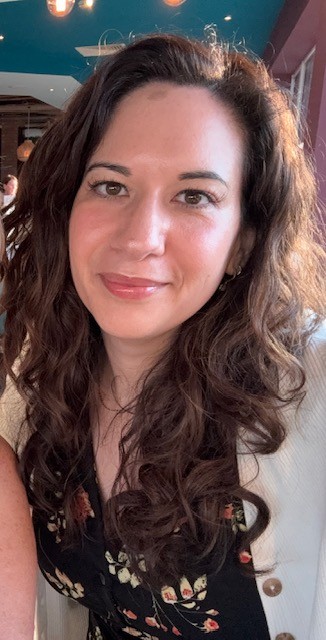
I was 26 when I had a haemorrhagic stroke caused by a cavernoma. It happened on 21 November 2016, just two months after my 26th birthday.
Before my stroke, I was working in education and getting on with life. Looking back, there were things that didn’t quite make sense, but at the time I had no reason to think anything serious was wrong.
For around 13 days before my stroke, I had a nagging headache. It wasn’t the “worst headache of my life” that people often talk about. It was just there. I was also bumping into things and struggling with my balance, but I put it down to feeling unwell.
My partner had a cold, and I genuinely thought I was coming down with something too.
As the days went on, I became more tired. I started struggling to process what people were saying. I could hear the words, but I couldn’t put them together. Then my speech started to change. I began stuttering and finding it difficult to get my words out.
I eventually went to my GP. She took one look at me and told me I needed to go straight to A&E.
Getting to hospital after my stroke
I went home first. I remember thinking, “Why would I go to hospital for a headache?” But when my speech deteriorated further, I got a taxi to A&E. That decision probably saved my life.
After a scan, I was admitted to hospital. Late that night, a doctor came to my bedside, looked down at his clipboard and said, “We’ve had the results of your scan. You’ve had a bleed on your brain. Goodnight.” Then he left. That was how I found out I’d had a stroke.
Because of the way it was delivered, I don’t think I understood the seriousness of it. The next day I texted my mum saying, “I’ve had a bleed on my brain. How are you?” Meanwhile, everyone around me was panicking. I wasn’t. I didn’t realise what had happened to me.
The emotional effect after my stroke
The physical effects were obvious. I had weakness on my right side, speech difficulties and problems with balance. But what nobody prepared me for was the emotional impact. The focus was very much on surviving and recovering physically.
Nobody really prepared me for grieving.
After leaving hospital, I discovered that recovery wasn’t about getting back to the person I had been. It was about learning how to live as somebody new.
I couldn’t do things I had always taken for granted. I struggled to read. I struggled with numbers and money. I struggled with memory. I couldn’t work in the way I used to.
Every day felt like failing at something that had once been effortless. That was incredibly difficult. I became very depressed.
I spent a lot of time in bed not wanting to wake up. I felt as though I had lost my purpose. I didn’t know who I was anymore. I couldn’t do the things that had defined me before my stroke, and I didn’t know what was left.
I tried to return to work too quickly after brain surgery and became unwell. I pushed myself and ended up having a TIA. Everything seemed to reinforce the message that I couldn’t be who I was before. Eventually I realised I had to stop comparing myself to the person I used to be. That version of me no longer existed.
I had to acknowledge her, thank her, and let her go. Then I had to learn who I was now.
The turning point came when I discovered pottery. At first it was simply something to get me out of the house. I signed up for a weekly course and suddenly I had a reason to get dressed on a Wednesday morning.
Other survivors can help you with your journey
Then something unexpected happened; I realised I could do it!
After so many experiences of feeling like I couldn’t do things anymore, finding something I could do was huge. I found a passion I didn’t know existed. I don’t know whether the old version of me would have enjoyed pottery. I can’t ask her, but I know I do.
Pottery gave me purpose when I didn’t have one. It gave me confidence when I had lost mine. It became something that belonged entirely to me.
Today I work in Human Resources, having retrained after my stroke. I work remotely because I’ve learned what my limits are and what I need to stay well. I’ve also restarted my ceramics business.
The stroke still affects me every day. I live with fatigue. I have hearing difficulties. I struggle with processing information when people need answers quickly. I sometimes talk over people because I can’t always judge social cues or recognise when it’s my turn to speak. I still have speech difficulties.
My confidence has taken a hit and there are still days when I give myself a harder time than I deserve. But I’ve learned something important, I don’t have to keep forcing myself into a version of life that no longer fits.
I can adapt, I can do things differently – and different doesn’t mean worse.
One of the biggest lessons I’ve learned is that worth doesn’t have to come from work, productivity or doing things the way you always did them.
Sometimes it comes from finding something that gets you out of bed in the morning. Sometimes it comes from creating something with your hands. Sometimes it comes from simply being kinder to yourself.
My advice to other stroke survivors
If I could say one thing to the version of me sitting in that hospital bed, it would be this: You are still worthy, and if I could say one thing to other stroke survivors, it would be this: Stop being so mean to yourself. You’re doing the best you can with something you never asked for. That deserves compassion, not criticism.
Recovery isn’t about becoming the person you were before it’s about learning who you are now, and that’s OK too.
“Longing for those who have forsaken you diminishes the beauty of the soul.” That quote has stayed with me throughout my recovery.
So has another lesson: If at first you don’t succeed, redefine success, because after stroke, success might look different than it did before, but it still counts.
Your donation helps others like Emily on their journeys
There are 100,000 strokes in the UK each year with 1 in 4 happening to somebody of working age or younger. Different Strokes aims to promote independent stroke recovery and help these younger stroke survivors reclaim their lives.
Make a smile lottery is a weekly fundraising lottery. A fun and exciting way to help Different Strokes raise vital funds that will secure our future.
It only costs £1 per play, and you can choose to play every week or whenever you feel like taking a chance and doing something good. For more information click here.