Dan’s Story – Stroke at 31 due to Arteriovenous Malformation (AVM)

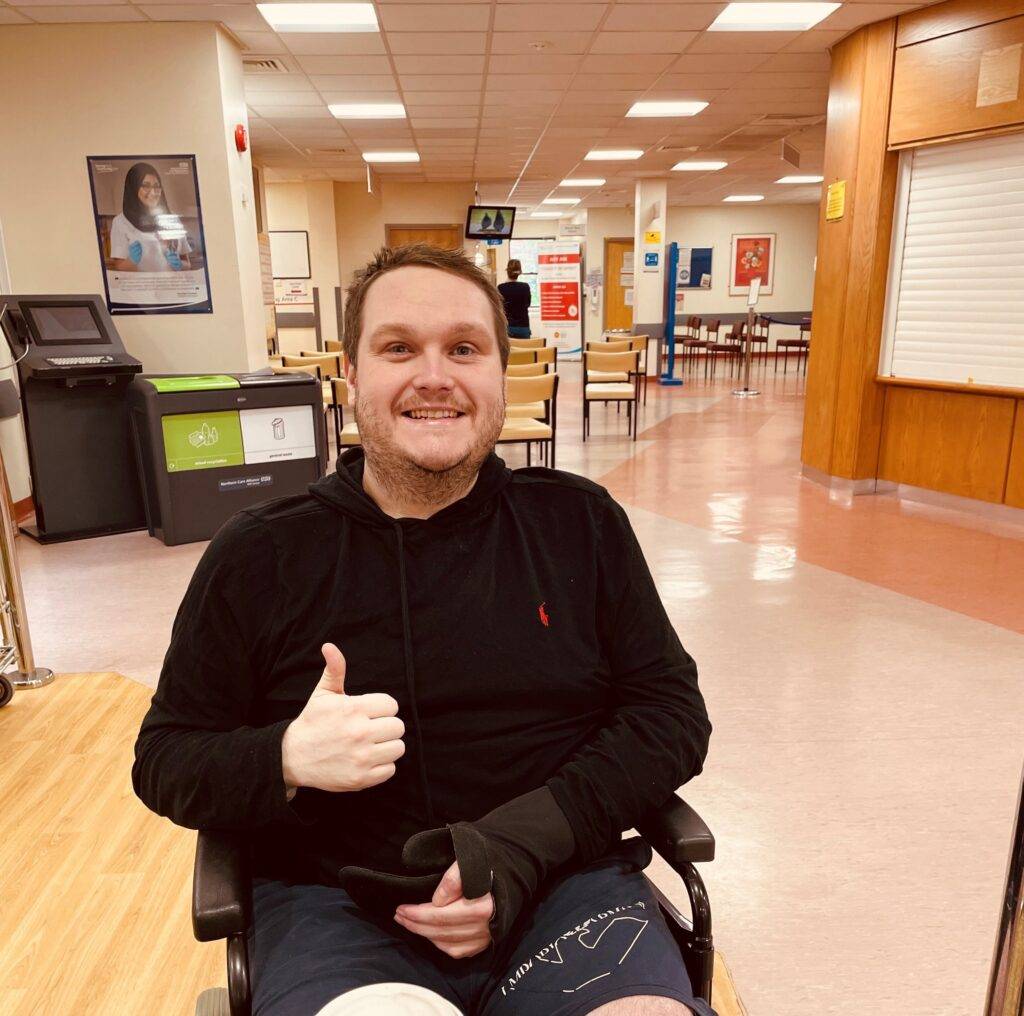
Picture of Dan who survived a hamorrhagic stroke at 31

“I’m a 32 year old gent, who lived a relatively active lifestyle. I’m a proud father of an eight year old daughter and a lover of attending live music. Prior to March 2022, I was working full time and in my spare time, enjoyed running, walking and swimming, as well as being a regular ‘football match goer’.

14th March 2022 seemed a day like any other. I logged off my laptop and finished work for the day and headed to do the school run. What proceeded that evening really was the stuff of nightmares.

All I remember was feeling a little dizzy and flustered. I thought I was beginning to have a panic attack. 

I’d suffered with them before and I took myself to the bathroom to try and cool down. After about twenty minutes or so I started to feel very faint; it was very blurry but I remembered stumbling onto the bathroom floor. This wasn’t a panic attack!

My whole left side went numb. I had no sensation or feeling in any of the left side of my body. I rang 999 and told them I thought that I was having a stroke or heart attack, I didn’t know which, but I felt like I was about to die. My daughter heard this and brought me in a bottle of water and left it next to me on the floor. All I could hear was

“Daddy please don’t die!”

I can still hear those very words and the fear in her voice as clear as day, even almost a year on. Whatever happened after that I don’t remember. I completely passed out and collapsed against the bathroom radiator.

The next thing I remember is a few weeks later waking up in a hospital bed. I was told what had happened and where I was. I think even now, it hasn’t quite sunk in properly.

I’d had a very serious life threatening haemorrhagic stroke caused by an AVM. An AVM is an arteriovenous malformation in the brain. A vessel in my brain burst and caused the stroke.

I tried to make sense of this for weeks. I didn’t drink or smoke, and I led a fairly active lifestyle. The neurosurgeon that saved my life explained that the AVM was there since birth. It was treated by being coiled up in my brain during surgery and then followed by a stint in intensive care to recover.

For the next few weeks and months, I really was experiencing a grieving process. After around three months in an acute head injury ward, I was itching to get up. The only problem was the damage the stroke had caused. I was fully paralysed down the left side of my body. I couldn’t even hold my head up straight anymore!

I cried for weeks at the realisation of it all. This felt like the end of my life. What do I do now? I had to be helped by a full-body hoist and two nurses just to get out of bed. I couldn’t use a toilet anymore. I can’t even put into words how that felt, realising that new reality. That was even before it hit me that I wouldn’t be able to do ‘dad things’ anymore, like push my daughter on a swing in the park – that broke me.

Around May, I arrived at a stroke rehabilitation ward and was greeted by two members of staff that helped me settle in. They explained how they’d seen people come in like me, who had eventually walked out by themselves – this gave me some optimism.

The first few weeks I was really eager to try and get walking again. I needed to calm down. I couldn’t even stand up. I was still learning to just about sit up on the edge of the bed without falling back down.

When I got my phone back, the first thing I started to do was research as much as I could. I figured the more I could understand about the situation, the greater chance of recovery I had. I stumbled across something called neuroplasticity. If you haven’t read up on this, please do so for your own recovery. It’s very insightful and gives a good understanding of stroke recovery. I read books and articles, and I joined all sorts of groups globally.

They informed me back in the acute ward that there was no guarantee after my surgery that I’d ever walk again. I eventually took some steps in physio and I cried for days after that. I was so determined to prove people wrong. With that focus and determination and the research behind me, I focused all of my energy into my rehabilitation.

I was discharged from the hospital in August 2022 and joined the Community Stroke Team to continue my rehabilitation. Almost twelve months on I’m walking very short distances with the aid of a stick. I still have no movement in my left arm, but I’m working on that every day. I have very severe spasticity, but I’m not giving up hope on that.

In the next few months, I’ve got goals of being able to walk unaided and get some movement back in my arm. I’m hoping to look at the possibility of getting back to driving and to give me that independence and freedom back and I’d absolutely love to get back to work.

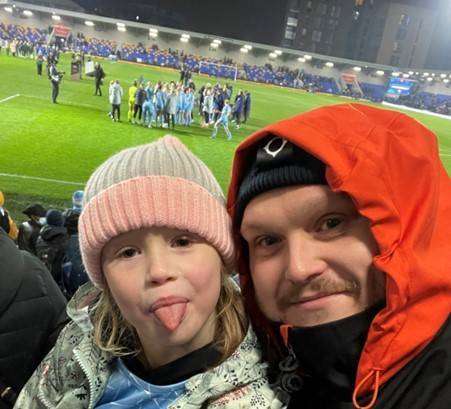
Picture of stroke survivor Dan with his daughter at a football match

If I could give any form of advice from my situation, it would be to not give up hope. You’re going to have down days, you’re going to have days of grieving your past self… and whilst that’s OK, it’s also important to have just as many good and positive days. Harness as much of that into determination and focus on reclaiming your life. My thoughts were that if it can be done, then with the right attitude it will be done. Listen and put into action everything the physiotherapists say.

It might seem that your life is over but with the right mindset, it might just be the beginning.”

What is Arteriovenous Malformation (AVM)?

An Arteriovenous Malformation (AVM) is a tangle of blood vessels in or on the brain that causes blood to bypass the network of capillaries. This means that blood flows directly from arteries to veins

Currently, there is not a lot of information about why AVMs occur, but people are usually born with them. They are not thought to be hereditary and are typically discovered in people between the ages of 20-40.

An Arteriovenous Malformation Stroke occurs when blood quickly rushes through the altered path because it isn’t slowed down by smaller blood vessels. The surrounding brain tissue can’t easily absorb the oxygen from the fast-flowing blood. Without enough oxygen, brain tissues can then weaken or may die off completely.

More information: https://www.mayoclinic.org/diseases-conditions/brain-avm/symptoms-causes/syc-20350260

Your donation helps others like Dan on their journeys

There are 100,000 strokes in the UK each year with 1 in 4 happening to somebody of working age or younger. Different Strokes aims to promote independent stroke recovery and help these younger stroke survivors reclaim their lives.
Facebook
Twitter
LinkedIn
Facebook
X
LinkedIn
Pinterest
Reddit
WhatsApp
Email

Join Our Mailing List

This field is for validation purposes and should be left unchanged.
Name
Email(Required)
Would you like to join our postal mailing list to receive physical newsletters in the post twice a year?
Address