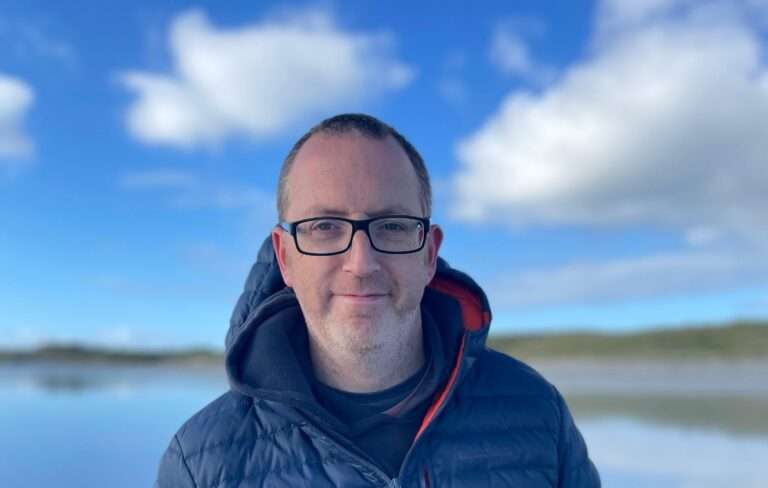
Chris’s Story – Ischaemic Stroke at 39
- Greg Hollingworth


Leading up to my stroke I was a General Foreman working on a flood defence scheme in Hebden Bridge. I was also completing a 5k-a-day challenge for Calder Valley Cares (a local charity) and as part of my training for the London Marathon the following year. I trained every day and lived an active life, playing football regularly. I worked away from home during the week, so I spent a lot of time away from my family.
From the start of December 2020, my eyesight had began to go double. On 7th December, I had an accident during one of my runs, where my bowels became uncontrollable — something that had never happened to me before. I also had toothache, and when I called the doctor, they said it could be due to the painkillers I was taking. On 10th December, I had the tooth removed, and the dentist commented that the bleeding stopped immediately — which was unusual. Around this time, I had a weird pins and needles sensation (possibly numbness) down my whole right-hand side, which I had mentioned to both the doctor and dentist. I trusted the professionals and carried on with work
By the middle of December, I was rapidly declining. I did a 10k run with a local running group in Hebden Bridge and felt like I was going to collapse. The next morning, I woke up feeling like I’d been on a beer session. Something urged me to go to the shop to buy aspirin — I still don’t know what made me do that. Thankfully, I managed to get home from Hebden Bridge. My vision had worsened — I was seeing four of everything. My wife called 111, and they advised going to Arrowe Park Hospital.
I was admitted on suspicion of a stroke, which was later confirmed by CT and MRI scans. Some symptoms for me were double vision and a numb sensation down my right-hand side, and like I mentioned I’d experienced uncontrollable bowels, which was completely out of the ordinary for me. Even though the double vision started around the 6th of December 2020, I didn’t get checked out properly until the 18th of December — ‘Black Friday’. I’m so grateful that, due to Covid restrictions at the time, the hospitals were quieter, and I was treated quickly.
As soon as I arrived at hospital, a stroke nurse came over to speak to me. I remember asking,
“How come a stroke nurse is talking to me?” — and she replied,
“Because we believe you’ve had a stroke.”
That night, I had a CT scan, which didn’t show anything. The following day (Saturday), I had an MRI scan along with another CT to rule out a neck injury. The MRI confirmed I had a blood clot in the pons region of my brain, which had affected the muscles around my left eye — explaining the double vision. I was still in denial and even begged them to let me go home as I’d just broken up for Christmas. I was really confused – physically and mentally, I was in the best condition of my life — I had a good job, I was fit, active, and training every day! I remember asking the consultant if I could still have a drink over Christmas, and he replied,
“Mr Bedford, you’ve had a lucky escape. If I were you, I’d never drink again.”
That moment stuck with me — and I haven’t touched a drop of alcohol since. It’s now been over four years.
In the words of the Vengaboys — my recovery’s been ‘up and down’! It’s been very frustrating at times, but I’m also incredibly grateful to have a second chance at life. So many people, including young people, sadly lose their lives to strokes – or are left with life-changing disabilities. I’m one of the lucky ones. I’ve been told I should make a full recovery and live a normal, healthy life — and I don’t take that for granted.
Having a stroke has made me much more aware, and I won’t lie – I’ve been scared at times, especially worrying if it might happen again. But it’s also made me far more grateful for life. One of the hardest parts for me has been the loneliness. After the stroke, I had thoughts and feelings that I’d never experienced before. During my recovery, I know of two people to we lost to suicide — one family, one friend — and that had really hit me mentally. I suffered with anxiety, depression, OCD, and PTSD, along with some truly hellish intrusive thoughts that I found myself listening to.
The hardest part was that people — even my own family — didn’t really understand what I was going through mentally. I put on a lot of weight because I couldn’t bring myself to leave the house. It was a scary and dark time… but I’m still here. And I’m so, so grateful that I’ve made it through and learned so much from the experience.
I think more support groups specifically for younger stroke survivors would make a massive difference. At the time, I felt so lonely — and while I was grateful for how quickly I was treated (especially with Covid keeping hospitals quiet; the isolation was really tough. Because of the pandemic, I couldn’t see anyone, and that pushed me to rush back to work too quickly – which led to a failed return.
Any support groups I came across were mostly filled with people much older than me, in completely different circumstances. I would’ve loved the chance to meet people closer to my age — like-minded people — and have open conversations about what we were going through.
Looking back, I’ve never felt so lonely. There were support groups out there — like Different Strokes — but nothing seemed to be made public to me at the time, and at the time everything just felt incredibly hard for me to navigate personally.
If you go to the doctors —you might learn from my experience – and don’t just accept the first answer you’re given. When people think of stroke, they always seem to use the FAST symptoms (Face, Arms, Speech, Time), but I had none of those. I had double vision, numbness down one side, and bowel issues — and at one point “Dr Google” had me convinced I had MS. The doctors thought it was down to painkillers for a toothache. But I kept pushing — and thank God I did. If something doesn’t feel right, trust your gut and insist on proper tests like a CT or MRI scan. You know your body better than anyone.
I think I came across Different Strokes too late in my journey. Early on, I was pointed toward the Stroke Association, and to be fair to them, they did suggest I try Different Strokes — but I put on a brave face and tried to “man up” and just get on with it, thinking it would all pass. Looking back, that was probably one of the most idiotic things I could have done. Maybe I was in denial that I’d even had a stroke — or maybe I just didn’t want to face the reality that something could threaten my life like that. Eventually, I found Different Strokes on Instagram, and reading some of the stories, I found myself thinking, :
“That sounds like me.”
That connection has been massive — just knowing I’m not the only one feeling like this has really helped me feel less alone.
I’m now back in full-time work, which was a huge goal of mine after being off sick for just over two years. I’ve changed roles and I’m actually enjoying it. I’m now part of a group that’s trying to change the culture in the construction industry for the better, which feels meaningful. Physically, I’m getting stronger every day. I’m back running again (not as fast as before, yet) but I’m getting there! I’m also working out to lose some of the “junk in the trunk” after falling into junk food and comfort eating during my depression. I’m now on a journey of understanding what heals me and what harms me. Mentally, I’ve come back even stronger. I’ve started cold showers and ice baths and they’ve helped me focus and find calm, through breathwork. As for future plans… who knows?
I joked to my line manager recently during my Professional Development review (PDR),
“I still don’t know what I want to be when I grow up!”
It’s funny how when you’re younger, you have all these goals and dreams — and then boom, a critical illness like this makes you question everything. But I’m excited to keep moving forward.
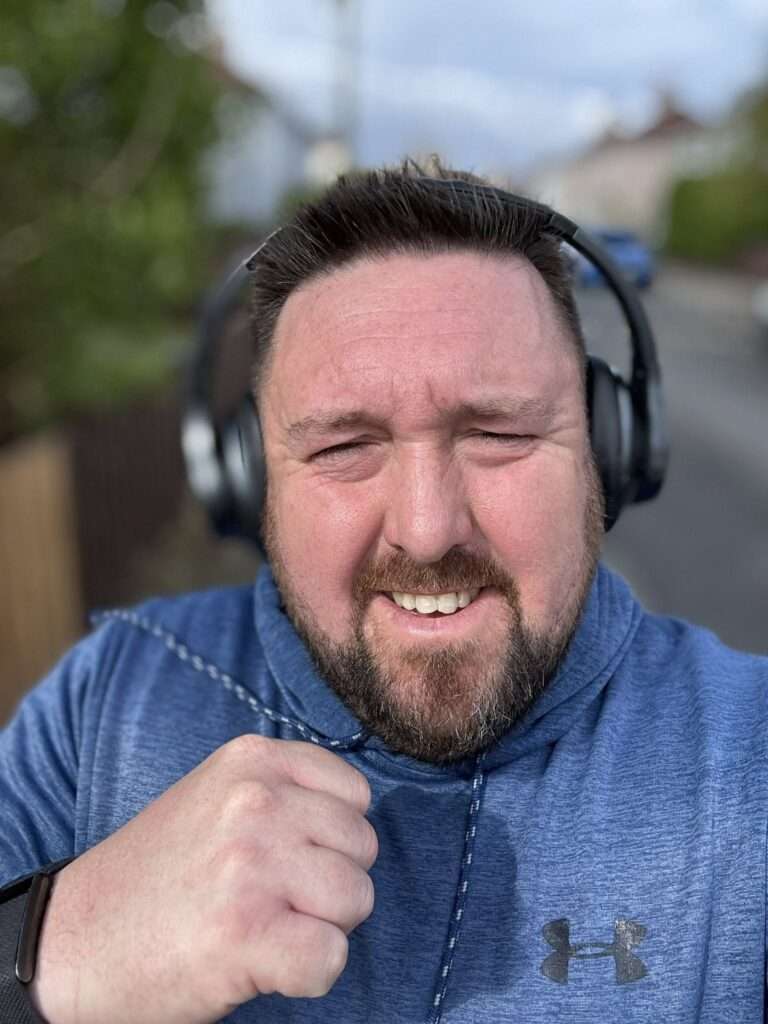
One quote that’s stuck with me is from the film World War Z “is “Movement is life.”
– and that’s something I live by now.
If you’re a recent survivor, then please be kind to yourself — physically, mentally, and emotionally. Stroke recovery isn’t a straight line ore most. Some days will feel like progress, while others like a step back — and that’s OK. Also, don’t try to tough it out on your own like I did; reach out, speak up, and connect with people ‘who get it‘ (you’ll be surprised how many of us are out there) – and how much it helps.
Take your time; rest when you need to, move when you can – and remember: it’s not about getting “back to normal” — it’s about creating a new normal – and one that works for you. If you’re been advised mediation then please make sure you take you take it — I’m pretty sure hat part really matter; stay positive, even in your darkest moments. It might not feel like it, but the light will shine through; but above all, never forget: Movement is life.
Your donation helps others like Chris on their journeys
There are 100,000 strokes in the UK each year with 1 in 4 happening to somebody of working age or younger. Different Strokes aims to promote independent stroke recovery and help these younger stroke survivors reclaim their lives.
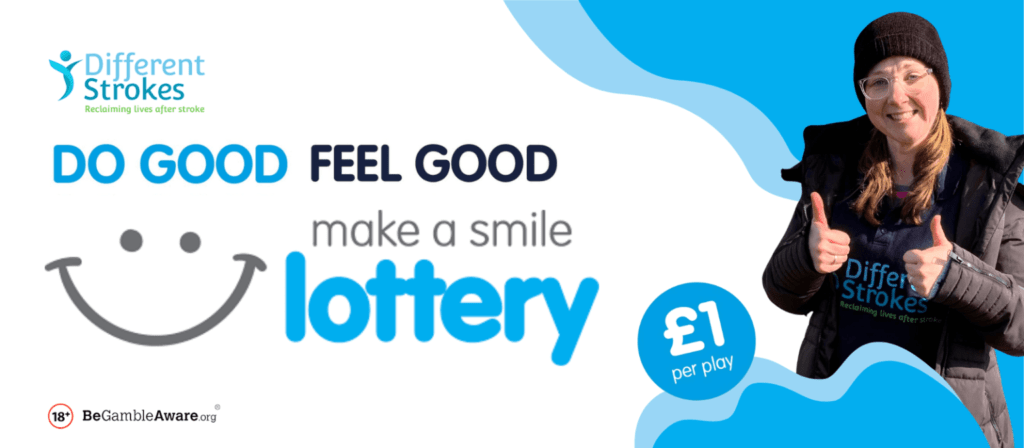
Make a smile lottery is a weekly fundraising lottery. A fun and exciting way to help Different Strokes raise vital funds that will secure our future.
It only costs £1 per play, and you can choose to play every week or whenever you feel like taking a chance and doing something good. For more information click here.