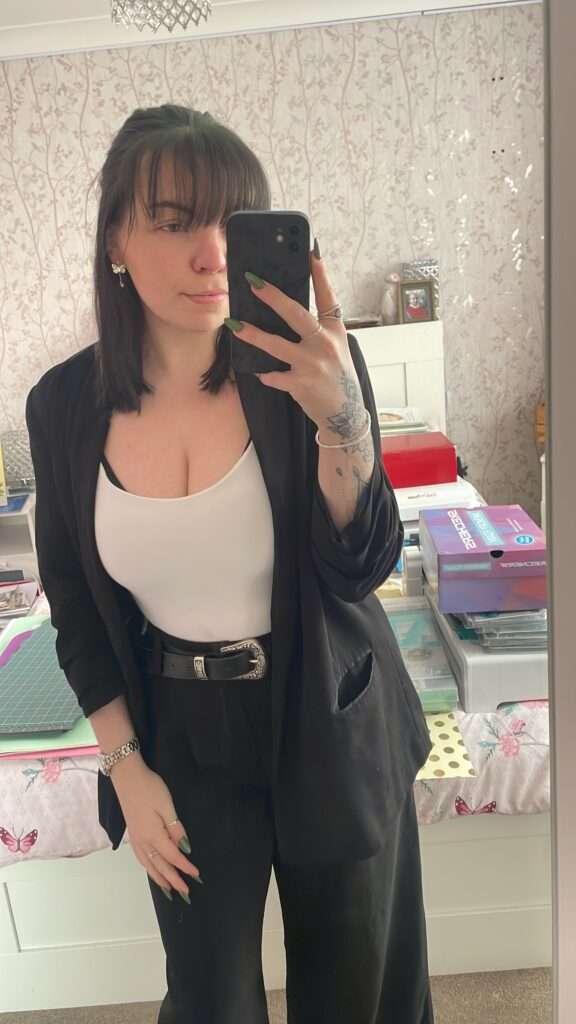
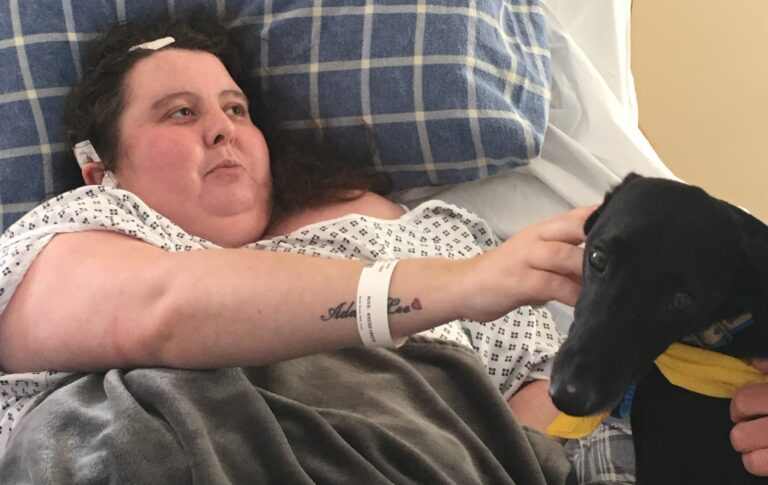
I was enjoying my 21-year-old life, going out partying and coming home in the early hours of the morning; a very normal picture of a 21 year old. The next day, I was hungover, complaining to mum how horrendous I felt; only the pain was different this time. Fast forward a few hours, and I was being rushed into hospital with DKA (diabetic ketoacidosis). Having been here before I knew what to expect. I was unconscious for much of the time so only know bits and pieces that I’ve been told. 24 hours after admission, my parents noticed that I hadn’t moved my left arm or leg. My right leg had been chucking the covers off, but the left was completely still. Mum raised this to the doctor, but was met with “She’s been lying on her arm – it’s probably just ‘dead’”.
At 11pm on Tuesday 16th May, I got a phone call from Southampton General Hospital. My parents awoke to the news that their 21-year-old daughter had suffered a right posterior cerebral arteryinfarction.
While I was floating in and out of consciousness, trying to get my head around the fact half my body couldn’t move, I was also diagnosed with a left-side hemianopia (left field of vision loss). I refused to acknowledge what had happened, and told everyone I was getting in my car and going home. One day release was all I was granted; a lunch at my old employment, and cuddles for my two dogs, but it was the best day I’d had in weeks.
The Early Days of Recovery Were Tough
It seems a blur of six hard weeks, of learning to walk again, how to make a cup of tea myself, how to make a bed etc, – but I finally got home in time for Father’s Day. I was taken home, only to be told I had a new bedroom downstairs with my own commode – ‘devastating’ was an understatement. Determination and with the help of two little dogs, I managed to crawl up those stairs; I was going to make it into that bathroom, and I was going to have a bath.
I had six weeks of physio, at home and I was off! I walked around the house and around the local baths, testing different flooring – gravel was the hardest! However, nothing was going to stop me.
It wasn’t until one year later, that my brain had finally acknowledged that I, a 21 year old, was someone who’d had a stroke and might never drive again because of that.
The care I was given was incredible, but being in a ward with five other people who were all above the age of sixty made it hard. I should have been the one helping them, not lazing around in the bed next to them. I struggled knowing that I was the youngest one there and had no support from anyone younger.
That’s when the staff told me about Different Strokes, a charity supporting working age stroke survivors and their families. Just seeing that there was a charity, solely for this, gave me that spark back. Seeing stories of people who had recovered and were still recovering helped me.
One day, I hope to be able to inspire someone else who is feeling down, shocked, exhausted with the prospect of having had a stroke. Even if just the one person, I hope that one person has a wonderful life and keeps persevering, like I had to.
There Is Life After Stroke
For those who had recently had a stroke, stay strong. I understand there’s lot of people telling you “there’s light at the end of the tunnel” or “you’ll be fine” or “you can do this”. Yes, they aren’t wrong, but I’ve been where you are; I suffered the pain, the mental health issues that arise, and the looks from other people -and I’m telling you it can be okay.
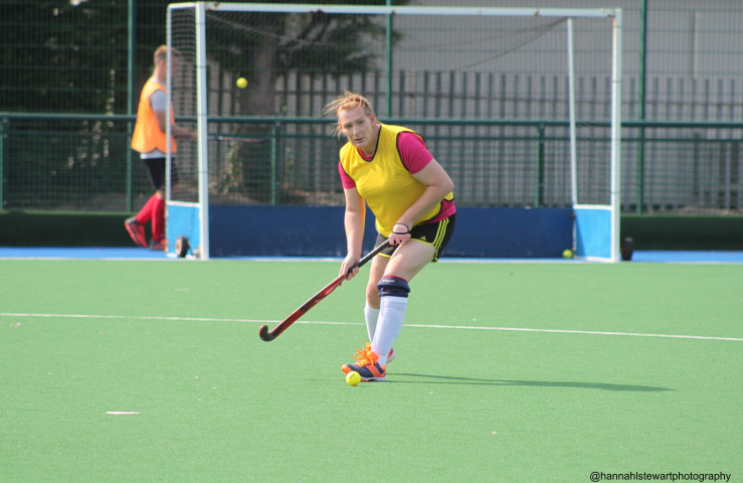
I’m now studying for a Maths & Stats degree, trying new and different exercises, shocking myself at the new things I’m still achieving ten years down the line. I mean I still walk into people every now and then, but hitting them up with a “I’ve had a stroke” really does help! It’s not all down moments in recovery – the highs are really worth every bit of perseverance.
A stroke doesn’t mean you have to stop your life, and if anything if gave me the push to live mine.
Your donation helps others like Chloe on their journeys
There are 100,000 strokes in the UK each year with 1 in 4 happening to somebody of working age or younger. Different Strokes aims to promote independent stroke recovery and help these younger stroke survivors reclaim their lives.
Make a smile lottery is a weekly fundraising lottery. A fun and exciting way to help Different Strokes raise vital funds that will secure our future.
It only costs £1 per play, and you can choose to play every week or whenever you feel like taking a chance and doing something good. For more information click here.