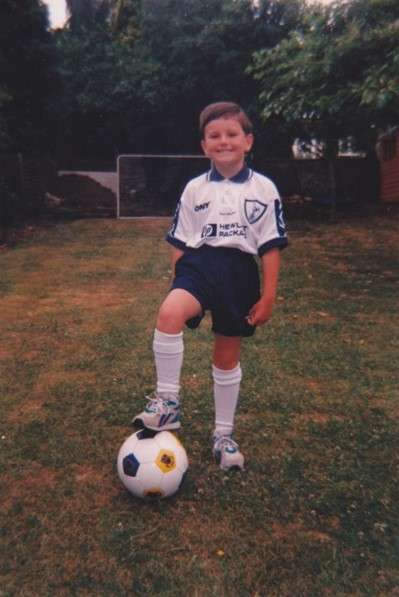
I was your average sparky child; I loved playing football, running around and super active, but when I was six I started to get severe headaches. I’d be curled up on the sofa, holding my head in my hands.
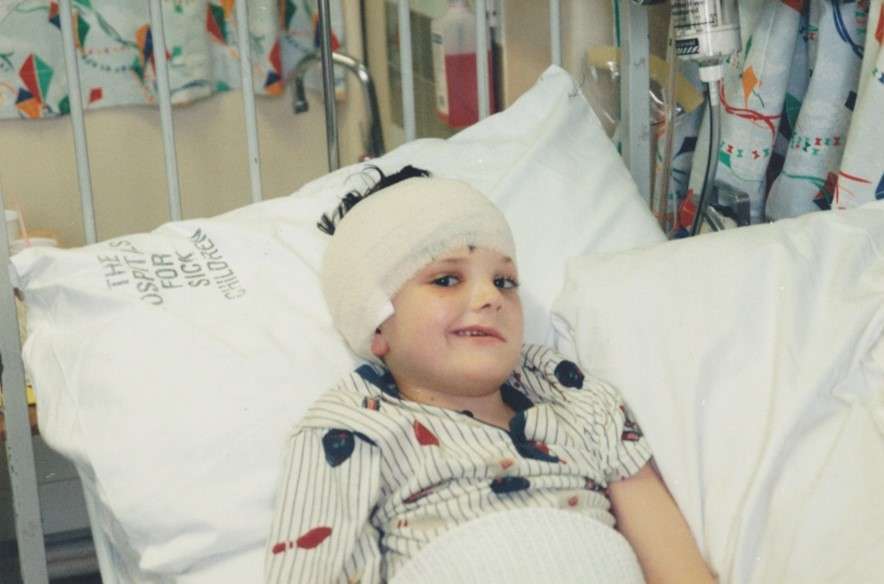
The doctors thought it was migraines at first, but my Mum kept taking me back until they ran a brain scan and found a tumour the size of a golf ball. They said the tumour was damaging my liver and kidneys and I needed an urgent operation to remove it.
During the operation I suffered a stroke, leading to left sided hemiplegia. The doctors told my parents I’d never run or be very active again. I spent the next year wheelchair bound and bed bound – I was off school for a year, had physio and endless injections and blood tests.
When I went back to school, I wasn’t allowed out to play with the other kids, because the staff were worried in case I fell over and bumped my head. So I had to sit indoors doing physio exercises, looking out the window at all my friends running around outside playing football.
I hated being disabled. I was the only student in the school with a disability. I was ashamed and embarrassed by it. I used to wear a big coat to cover up my arm and I would sit at the back of the class where no one could see me. I hated doing my physio and I hated myself. I used to wish that I’d never survived the operation – and I used to think
“Why am I still here?”
At that time there was not a lot out there for fitness for stroke survivors but my mum found Different Strokes. It had only started recently and one of the things they did was run fitness classes for young stroke survivors.
The instructor was this massive guy called Baz. Baz was a body builder who’d had a stroke in his twenties. He was awesome! To know that this massive muscly guy was a stroke survivor like me changed everything for me. I wanted muscles like him – I’d found a role model! Even though I was the only kid in the class, I stuck at it. I went to his class every week and I listened to Baz.
He used to say stuff like “No pain no gain!” and “When you feel the burn … that’s when you’re building new strength”. Until I met Baz I’d had no one to look up to. After I met him, if I needed any encouragement to do my exercises, my Mum would say “Be like Baz”.
Baz taught the classes until I was about ten, first in Stanmore, then at the YMCA in Central London. After Baz stopped teaching the classes I stopped going, but that had lit the fire in me for fitness training that would stay with me. Baz literally changed my life. Twenty years later, guess where I was ? I was back at the YMCA in Central London TEACHING fitness classes to stroke survivors with Different Strokes!
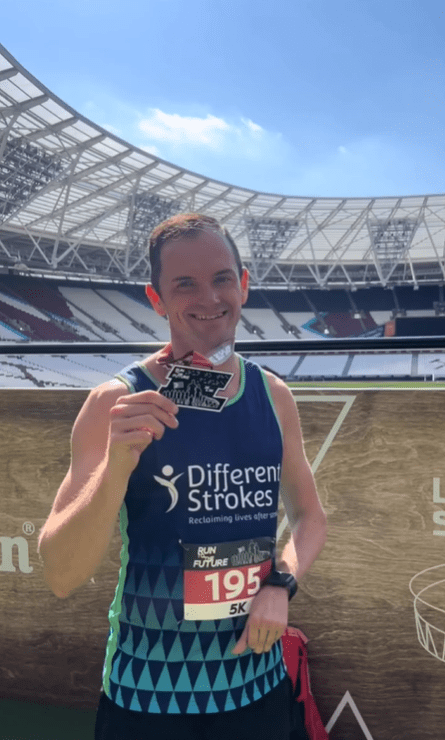
Along the way, I’d been part of Tottenham Hotspur’s title winning disability football team, discovered the power in the right side of my body and how to use that. At first I was scoring goals for Spurs, then after my football coach told my parents to “get that boy to a running track”, winning gold medals for Team England in the Cerebral Palsy World Championships in Barcelona in 2018. In 2024, I broke the London Marathon world record for fastest time by an athlete with cerebral palsy running in my first marathon.
Training with Baz also inspired me to pursue a career as a personal trainer. My Mum told me I should be the Baz for young people; to be the role model that he was, when I needed one as a child.
It wasn’t easy! I was turned down for over forty jobs in gyms; at interview after interview, being told I didn’t have “the image they were looking for”.
But I stuck at it, and put in lots of hours running classes as a volunteer for Different Strokes and other groups until (after ten years) I got my chance at a gym, covering for another instructor who was off sick.
I was working there on reception at the time. When I ran the first class, twenty out of the thirty people in the class left the room when they saw I was disabled – but that spurred me on to give the ten that stayed the best class they’d ever had. I went for it, high energy – I really cranked it up. At the end of the class people came up to me and said,
“That was incredible, I’m coming back next week!“
And they did. Word spread around the gym about how good my classes were and pretty soon they were fully booked . I haven’t looked back since.
When the Covid pandemic hit and gyms were closed I saw the amazing stuff Joe Wicks was doing for kids, but no one was doing anything for people with disabilities – so I started doing seated chair exercises live on YouTube every day. We had 2,000 people tuning in every morning. Austin Willett, the chief executive at Different Strokes got in touch and asked me if I’d do some videos for them.
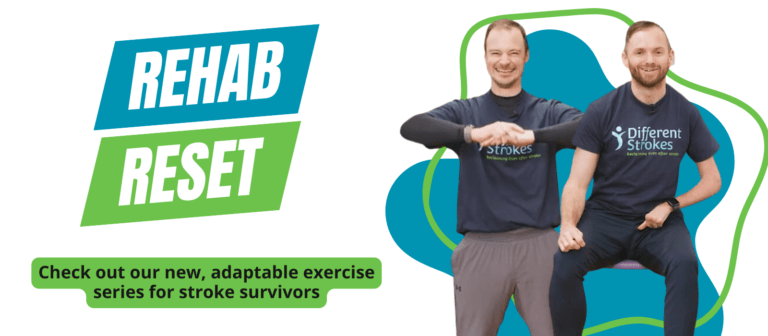
Since then, with a team of fitness instructors, we’ve produced three series of videos together. The first ones were the rough and ready ones that went out live in the pandemic. Then we did a series of 30 minute exercises and now we’re launching Rehab Reset; a series of short exercises that people can look at anywhere.
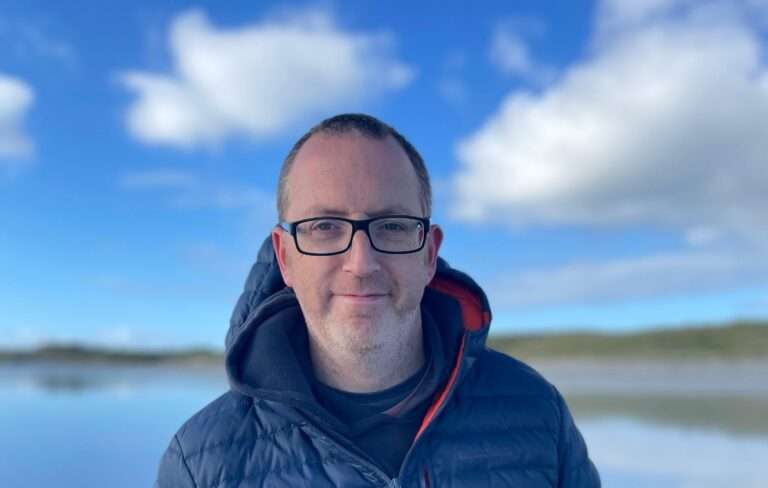
My aim now is to share what I’ve learned to inspire other stroke survivors and people with a disability. I work at a gym now running six seated exercise classes a week. We run the classes in the middle of the gym where everyone can see them.
The regular gym goers watch sometimes and love it, then they go and tell their mums and dads about it and they come down and sign up. I’m also doing talks in schools about my journey, inspiring young people to be the best version of themselves they can be. I tell them what my football coach said to me aged 16,
“Don’t focus on what you can’t do, focus on what you can do.”
He helped me recognise that although I couldn’t use one side of my body , that meant I had to develop a super strong right leg, and a super strong right side.
I’ve learnt to work with what I’ve got, keep focussing on small improvements, do what I can do each day and value the strength I have developed because of the challenges I’ve faced due to my stroke.
When I was twenty I volunteered at the London Olympics and Paralympics in 2012. I stood on the track next to Usain Bolt in the Olympic Stadium and heard the crowd cheering. But when I was at the Paralympics I noticed the crowd cheered even louder.
I asked one of the other Games Makers about it and he said it was because the Paralympians were doing more than the Olympians. They both had the same commitment, trained hard, put in long hours, but the Paralympians all had to overcome a lot more to get to where they were.
We can’t all be Paralympians and we can’t all run marathons, but as stroke survivors we know what that’s like. We have to do more than others every day just to do the basic stuff. But if we work steadily, small steps at a time, give it commitment and patience and lean on others for support, we can surprise people.
Don’t let doctors tell you that you’ll never do this or that again. They told me I’d never run or be very active again!
The Rehab Reset videos we’ve created are designed to give people some bite sized first steps in improving their mobility and fitness. I love it when people let me know how they get on with my exercises.
And if anyone has any idea where Baz is, it would be amazing to meet him and tell him what a difference he made to that six year old boy.
A stroke is absolutely life changing! But this doesn’t mean it is the end of your life! It’s just a new way of living, yes you can still live an incredible life! Just in a different way.
Be sure to check out Rehab Reset! Designed specifically for stroke survivors at any stage of recovery, these exercises focus on mobility, strength, and balance. They are fully adaptable, ensuring that anyone—regardless of mobility level—can take part.
This series was created in direct response to community feedback, addressing the need for accessible, engaging, and effective home-based rehabilitation.
Your donation helps others like Anthony on their journeys
There are 100,000 strokes in the UK each year with 1 in 4 happening to somebody of working age or younger. Different Strokes aims to promote independent stroke recovery and help these younger stroke survivors reclaim their lives.
Make a smile lottery is a weekly fundraising lottery. A fun and exciting way to help Different Strokes raise vital funds that will secure our future.
It only costs £1 per play, and you can choose to play every week or whenever you feel like taking a chance and doing something good. For more information click here.

Different Strokes Glasgow Peer Support Group Returns
Different Strokes is delighted to announce the return of its Glasgow Peer Support Group, providing a welcoming space for working-age stroke survivors, their families and

30 Years of Different Strokes:A Day of Connection, An Evening of Celebration
On Saturday 18th July, over 100 people gathered in Northamptonshire to mark 30 years of Different Strokes. Reclaiming Life After Stroke The day opened with

Upcoming Webinar: Looking After Yourself While Caring for Someone After Stroke
Free Webinar | Wednesday 22 July | 11:00am When someone you love has a stroke, life can change in an instant. Partners, spouses and family

Bringing the Stroke Community Together in London
During June we hosted a Community Event in London at the offices of Bolt Burdon Kemp.

Free Webinar: Medical Negligence & Rehabilitation After Stroke
Different Strokes is pleased to be partnering with specialist medical negligence law firm Fletcher’s Solicitors to offer a free online webinar for stroke survivors, families and carers.

Mike Caines Wins the 2026 Different Strokes Outstanding Contribution Award
Mike Caines Wins Different Strokes’ Outstanding Contribution Award 2026 For the past 14 years, Mike Caines has been a quiet constant behind Different Strokes. He