

Different Strokes Glasgow Peer Support Group Returns
Different Strokes is delighted to announce the return of its Glasgow Peer Support Group, providing a welcoming space for working-age stroke survivors, their families and

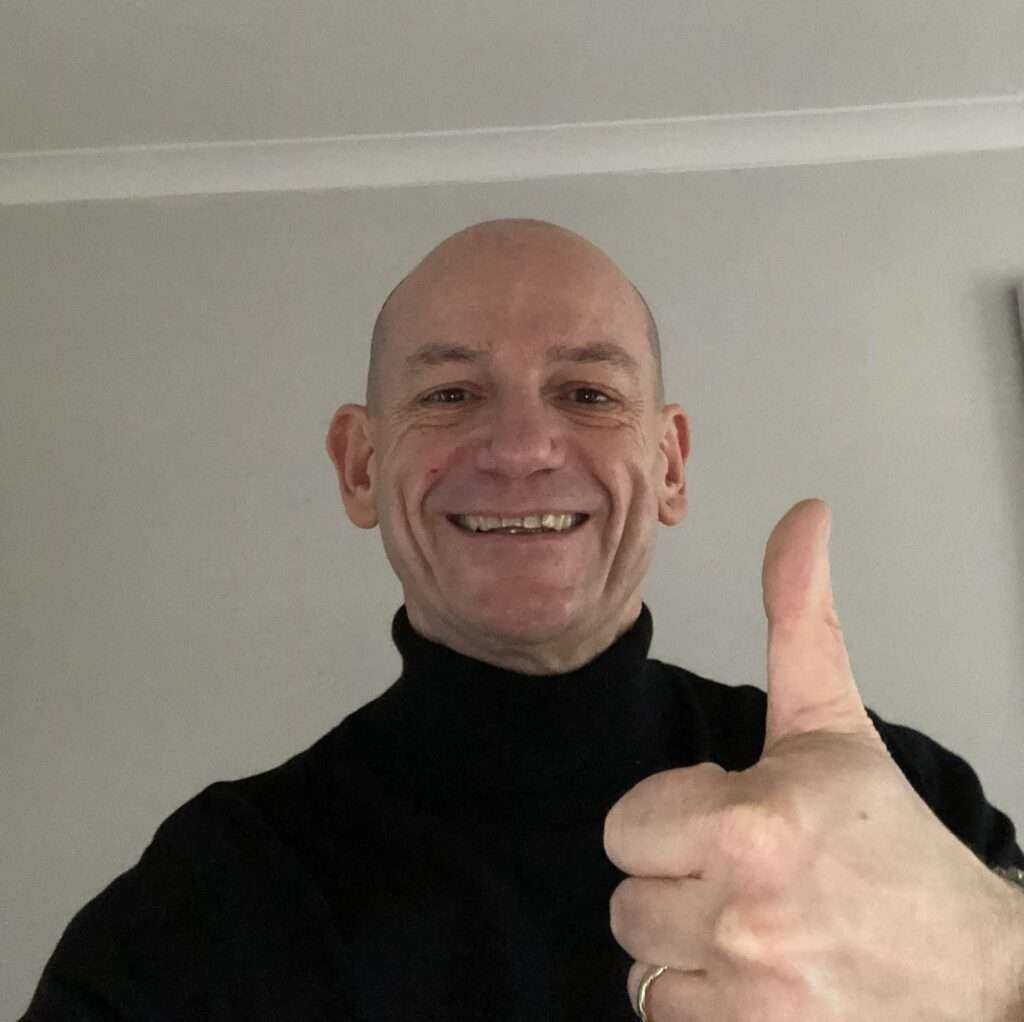
Wednesday 10th June 2020 should have been a day just like any other but for me it was about to take me on a journey like nothing I had encountered before.
I remember waking at about 2am and my hips were aching and as a result I was quite restless. This was not that unusual as this sometimes occurred due to exercising the day prior. It was a little more unusual that I had a headache and had gone to bed with one. Also although I am not normally one to let these things bother me. I stumbled out of bed and bumped into the mirror making my way to the bathroom, but didn’t think too much of it as I was half asleep.
My wife asked me what was wrong when I came back and I said I had a headache and asked her if she would get me some paracetamol for the pain, which she duly did. I remember thinking perhaps I will have a day off exercise that day as I felt a little strange and went back to sleep. I woke at what I thought was 6am and time to get up, but later discovered it was 5am. I again stumbled to the bathroom and attempted to brush my teeth but each time I tried to hold the electric toothbrush in my left hand and add the paste I dropped the brush. I kept picking it up, but each time dropping it again, I was totally confused and I was stumbling around the bathroom in my efforts to brush my teeth. I knew something wasn’t right but could not understand what was happening.
I recall hearing my daughter run down the stairs. It turns out she had heard the noise and had been watching me from the open door. She returned a few minutes later with a phone saying mum wants to speak to you. My wife was now at work as she had started early that morning. I cannot recall exactly what was said but in what seemed like seconds she had arrived back home.
Things are a bit of a blur at this point but I remember hearing her on the phone asking for an ambulance. She told them she thought I was having a stroke, but at this point I recall thinking ‘what is she talking about?’ – I was still trying to convince them and myself if I’m honest that I was OK. “Really, I’m fine don’t worry about me, I’m OK”
I remember saying.
A short while later an ambulance arrived, the two-man crew came into the bedroom and proceeded to ask me and my wife questions and ask me to attempt some movements. The details are a little sketchy, but I do remember hearing them talk about me being FAST positive; a phrase I was later to come to understand. They reached the conclusion I had to go to hospital deciding it was likely I had suffered a stroke. They brought me down the stairs and loaded me into the ambulance. I looked out to Bev my wife and Kallie my daughter standing on the drive as they shut the doors. I felt low and as my eyes welled up I felt confused and alone, but I knew we were in lockdown due to the COVID-19 pandemic and they couldn’t come with me. My mind raced ahead
“When would I see them again or would I see them again?”
This seemed impossible to me I was too young, fit and healthy – I didn’t even get colds as a rule and hadn’t had a day off work sick in twenty plus years’ service! I had become aware that I had weakness in my left arm and leg, and it seemed to be getting progressively worse. The left side of my face had dropped, and I was having some difficulty communicating. Could this really be happening to me?
Much later in my recovery I discovered that one of the ambulance crew told my wife as I was being prepared to go into the ambulance, she must remove any jewellery. She enquired
“Even his wedding ring?”
The response was
“Well put it this way if he catches Covid and dies you won’t get it back“
All of this was within earshot of my 17-year-old daughter. How must they have felt in that moment and in the hours that followed during a pandemic where they were already scared and now had this to torment them as they waited for updates? Due to the restrictions, they of course were not allowed to visit.
The journey to hospital was a bit of a blur and I do not recall much of the detail, I guess I arrived at hospital about 20 minutes later and was taken in to A&E. Very quickly I was asked lots of questions and sent for a brain scan. Then I lay there waiting to see a doctor. Eventually a doctor arrived and said in a very matter of fact way
”Andy I’m sorry to tell you, you have had a stroke “
and simply walked away.
I was stunned and at that moment, I didn’t really understand what this meant for me. My world felt as though it was falling apart.
Was this the beginning of the end?
Was the weakness and paralysis I felt in my left side permanent?
Was I going to lose the use of my arm and leg totally?
Will I be able to walk again?
Was this my future, and did I even have a future?
My brain was racing ahead, calm down, calm down, I tried to tell myself I felt so alone and scared as I stared around this busy ward full of nurses all rushing about with their own emergencies. Here I was alone in my own little world, full of emotion with only my thoughts for company. I could not contain it any longer and the tears began to roll down my cheeks as emotion took over. I broke down and sobbed uncontrollably as I contemplated my future.
After some time, a kind nurse spotted my distress and came over and tried to comfort me a little before finding the doctor and asking her to return. The doctor arrived back shortly afterwards and said
“Andy “she then paused for a moment “I’m so sorry I upset you but please know you can come back from this – people do recover”.
I have always been a positive person, but the shock of what was happening had hit me hard and these were the words I needed to hear. Suddenly I thought I’m now able to try and take back some control. This was the trigger I needed to ignite the flame in me that would spur on my recovery.
The doctor went on to explain that I would need to stay in and would shortly be moved onto a ward where a doctor would explain more about next steps, but she asked me to be patient as it was very busy, and it may be some time before I was moved.
I was scared and confused. My life had been turned upside down in an instant. Thoughts rushed in and out of my mind but in a moment of clarity I thought I must call Bev (my wife). I need to hear her voice. Fortunately, I had my mobile phone with me. Bev had the foresight to send it with me, and thank God for technology I thought! I dialled the number and she answered.
“They said I’ve had a stroke” I said, and although obviously concerned this didn’t seem to be a surprise to her as she had suspected this to be the case. I can’t recall much else that was said in those moments but I do recall being overwhelmed with emotion and confusion, something I was to experience a lot in the coming weeks and months ahead.
My focus was brought back to reality when a nurse came and told me I would be moved to a ward shortly. I lie there waiting and my mind wandered.
Could I fix this? Would I get back to normal or would my life be altered forever? Would I be able to work and support my family?
So many questions – and no answers – I was filled with uncertainty; my mind was strong, but was there a limit to what I could do in terms of my recovery. All this thinking time was starting to make me anxious, so it was a blessed relief when I was told a short while later, I was being transferred to a stroke ward. Now I had something else to think about and the distraction was welcome. It was a short trip to the ward and on arrival the nurses all seemed very nice and tried to make me feel at ease. A bay had been allocated to me and the porter manoeuvered the bed into position in the bay and locked on the brakes. The nurses got me settled in and explained a doctor would be along in due course. Whilst I waited, I began to look around and familiarise myself with my new surroundings. There were six bays in the ward, and I had a bay next to the window, result! I could at least break the monotony of staring at the wall opposite by looking outside. I’ve always said in life there is always a positive to be found if you look for it, so here was the first I thought and I would try to look for more as time went on.
So, I lay there and looked around me at the other bays. The first thing that became very apparent was everyone seemed much older than me.
‘How can this be’, ‘Why am I here’, I thought?
But I came to realise in time just how naive I was in terms of stroke awareness. I thought this is something that happens to older people more like those I saw around me. I was relatively young I thought; no medical issues, took care of myself with regular exercise, I have never taken drugs, did not smoke and drank very little. I should not be I here. I was confused and it just made no sense at all to me.
It took a little time, but right now all I had was time to think, and eventually I came to the realisation that I could not change what had happened to me. These are the cards I had been dealt but what I can control is what I do going forward. I have always been a strong believer in a positive mindset and this I thought is now an opportunity to prove that I can practise what I have always preached.
Despite thinking this way those first hours were really difficult. It felt as though my brain had become disconnected from my left leg and my arm and no matter how much I tried to move them, I didn’t know how to. I tried time and again without success and I was looking for any small sign of movement, but it was not forthcoming. The frustration was overwhelming and my eyes welled up again. They told me people come back from this I remembered, but in these moments I just could not see how. I was full of frustration and emotion; my thoughts went from super positive “I will get through this” to “How will I ever get movement back?”
‘When would the doctors come?’ I thought, but I would have to wait. This was something I could not control I reminded myself, but at the same time I was impatient to understand what happens next. At least once the doctors had been I would have a better understanding of what had happened and perhaps more importantly what the plan was for recovery – and then I could get to work and get myself back to normal, or so I thought.
I don’t recall exactly the timescales involved as I reflect, but the doctors arrived and explained that I had a clot in my neck that had caused the blockage of blood supply to my brain and had subsequently caused the stroke.
The clot had formed in the artery on the right-hand side of my neck. I was advised this fed the right-hand side of my brain, but it affected the left-hand side of my body. So, after being asked to try various exercises as part of an assessment, the doctors were ready to advise me of the situation. The doctor explained had had an ischaemic stroke. I had had a major stroke that had caused extensive damage to my brain, I had weakness in my left leg, left arm, my left hand, and the left side of my face had dropped. At this point there was no indication as to why this had happened but the plan, I was advised at this stage, would be to try and break down the clot using medication. At the same time, it was important to get started with physio work as soon as possible. Now you’re talking my language I thought; and this was very much something in my control, ‘OK let’s go’ I thought – give me the exercises and I will get to work. Now I can take back control.
I can’t recall how much later but a physiotherapist came to see me. His name was Dan, he was a quite young , very friendly and likable and I took to him straight away as he explained he was going to assess me and then work out next steps in terms of physiotherapy exercises . Great, I thought, now we can get to work. The first thing he wanted to do was to get me up and assess my walking. I struggled to get up and needed some help. Another physio arrived, a nice young lady called Charlotte, again very likeable and friendly she had with her a walking frame.
Wow – I never thought I would need one of these so soon I said to her, trying to make light of the moment. Inside though I was determined I would not be using this for any length of time. I would do whatever I needed to do to ensure this was the case. That first time using the frame was hard. I got up with support but to stand unsupported all my weight was now going through my good leg. I could barely move my left leg; I had lost most of the strength in it and I cannot begin to describe how difficult it was trying to move it. Something we all take for granted you simply get up and walk. This was no longer my experience, and it was so difficult mentally trying to understand what I needed to do to make my leg move even the smallest amount, the frustration was immense, but I was determined and was not going to give up until I have made some gains It was difficult, but gradually I was able to move my leg forward – one small step at a time.
It was the same with my left arm and hand and I remember staring at my hand; the concentration was next level. We take movement for granted, but as I stared at my hand it simply wouldn’t move and I did not know how to make it move, there was a disconnect, and I did not know how to fix it. The frustration grew and grew, it took concentration the like I have never known. It seemed to take an eternity but suddenly there it was a small movement in my fingers; the tiniest of movements but it was a step forward.
“Always a little further” I thought – if I can do this every day a little further, I will get there. “I can fix this” – I thought, I will not be beaten by this.
I tend to think in life things happen for a reason. I have always been a fan of the Television series ‘SAS: who dares wins‘ and just before the stroke had happened, I had been reading a book titled ‘The Hard Way’ by Mark ‘Billy’ Billingham, one of the Directing Staff in the show. In the book, Mark talks about his mantra of “Always a Little Further” – and this phrase really resonated with me. I figured if I could make small gains each day no matter how small, it was progress, a step forward towards my recovery. I could do that right? This phrase was not only to become the mantra that drove me day in day out through my recovery but would become my life mantra in the months and years ahead.
Being in hospital was tough. We were in the middle of a pandemic so I could not have visitors, but I decided although it would be difficult I would use this to my advantage and choose to see it as a positive. It meant I could be totally focussed on recovery. I would constantly be thinking of anything I could do to improve any aspect of my current situation. I would look for additional ways to exercise, keep my mind active which in turn helped me look after my mental health.
I would supplement the exercises provided by the physios with my own and seize any opportunity to do more. If I woke in the early hours and couldn’t sleep, I took the opportunity to do some exercise, slowly increasing. I was determined to recover as soon as I could.
My physio team were amazing – I cannot speak highly enough of them, and I got such a buzz every time they came to see me. I knew that this was another opportunity to move forward, and this was so important for me, “Always a little further“ I would remind myself. They believed in me, and I felt it; their enthusiasm was clear and helped me to believe in myself. On that first visit we were straight into it; I had lost the use of my left arm and left leg, and consequently could not walk as a result. I later became aware that one of the crucial elements of recovery is to get to work on the physio exercises as soon as possible get things moving again.
To supplement the physical activity I needed speech therapy, to aid with issues forming some sounds as well as difficulty projecting volume.
This was hard work but gave me another focus which is so important to keep your mind in the right place. I also had issues swallowing liquids and there were additional exercises provided to get certain muscles working again that stopped me coughing uncontrollably when I tried to drink something.
Recovery was going well, and I was hopeful of being discharged after about two weeks. Then I was suddenly brought crashing back down to earth with the news that a new scan had revealed the clot in my neck to be getting progressively worse, despite the medication, and I would need an operation to remove it. I can’t begin to describe how I felt in that moment. It was like going right back to stage one after all the progress I had made. Once again I felt scared, vulnerable and emotional. Negative thoughts began to get the better of me and I felt myself going to dark places (mentally speaking). I had never had any kind of mental health issues prior to stroke and found it very difficult to process the way I was feeling. I had no one to talk to, no family allowed to visit me, so again I felt alone and emotional. I did not want to call my wife and make her worry so I reached out for support from the hospital. I was assessed and was recommend an app to download with calming music etc. Perhaps this is the modern way but this was not what I needed in this moment. I had reached out and needed someone to help me understand my mental state and help me to process what was happening and accept the situation to reduce the anxiety I was experiencing. Sadly, this was not forthcoming, so I had to face the next stage alone. I won’t expand too much as I still find the memories difficult, but the operation was initially carried out under local anaesthetic and later under general as it became very traumatic and although I am pleased to say it was successful. It affected me mentally and I suffered with nightmares in the weeks that followed.
Following recovery in intensive care and a short spell on a recovery ward I was after a few days discharged with home support by way of a physiotherapist, occupational therapist and speech therapist so were all amazing, I went from strength to strength with their support and encouragement and my mantra pushing me forward day by day. I had always exercised prior to stroke and was keen to not only get walking properly and my arm working, but also to get myself back to exercising I set myself physical goals starting small and building it up gradually, I eventually started with one minute of cycling and now almost 4 years later am back to 2-hour workouts including weights, cycling, running and boxing training.
I never got to the bottom of what caused my stroke at age 51. The only indication I was given it that stress may have been a factor as I was otherwise fit and healthy, with no family history of stroke.
It was therefore important to incorporate tools in my daily life to help manage stress going forward, particularly as I was intending to return to work in a very stressful job. I am pleased to say after a little trial and error with different practices I have discovered mindfulness and the practises of tai chi and chi gung, which really help I find when practised daily. Different Strokes has recorded a series of tai chi sessions aimed at stroke survivors and those who love them.
After six months I got myself back to work as an area manager in the energy industry. Again this was done in stages, with a fully supported phased return plan gradually increasing work duration with colleague support over a period, until eventually returning to regular hours and no support.
I needed to get back to work to prove to myself that I could and to try to feel some way back towards ‘normal’ again, whatever my ‘new normal’ looked like. It was tough. I had difficulty communicating at times, struggled with sensory overload, anxiety, loss of confidence, depression, fatigue, driving, difficulty processing and memory. There were dark times, and this crept into home life too, making relationships challenging at time times. I struggled with the mental aspects of stoke that are often not really talked about. Looking back, I think the physical part of the journey in hindsight was in many ways much easier than the mental battles.
Although work was difficult on many levels, I still wanted to take a positive from it and tried to use my experience at any opportunity to educate others, as well as for my own therapy. I have found that since stroke both talking and writing about my experiences to be part of the healing process and see the importance of encouraging others in this way by sharing. Fortunately, I was able to give several talks to tell my story to a number of groups and educate others in terms of stroke awareness, but also to discuss mental health and neurodiversity. The sessions were well received and allowed me to prompt some thought around how presentations were often delivered in the workplace.
More often than not with a ‘one size fits all’ mentality and I wanted people to think how we might do things differently, as although not everyone has had a brain injury, we all process differently. To create a more inclusive environment we should be giving this some consideration, rather than doing what we have always done, which some may struggle with. Although I delivered my stroke story from the heart without slides the difficulty speaking and staying on track contributed to peoples’ understandings, so it worked really well.
When I spoke about neurodiversity in order for me to present a slide pack I had to do things a little differently to manage what I now struggled with, as I could no longer deliver in the way I had previously, so I came up with something very visual rather than ‘text heavy’ and that worked for me. I also felt could also work for everyone else. I am pleased to say the feedback suggests I was correct.
As I approached 3 and a half years on the journey, I decided I had proved to myself what I needed to by going back to work and figured I no longer needed the stress and decided to resign after 26 years in the industry and take a little time out to continue working on me.
I am optimistic that the future will lead to a job opportunity working with or to support other stroke survivors in some capacity and if there is an appetite, opportunities to continue to tell my story in an effort to help others.
My world is a very different place since stroke, and it took me a long time to come to terms with and accept the differences and difficulties it presents at times. I would like to think I am now at peace with the changes and will continue to get their one step at a time keeping true to my mantra:
“Always A Little Further “
There are 100,000 strokes in the UK each year with 1 in 4 happening to somebody of working age or younger. Different Strokes aims to promote independent stroke recovery and help these younger stroke survivors reclaim their lives.
Different Strokes is delighted to announce the return of its Glasgow Peer Support Group, providing a welcoming space for working-age stroke survivors, their families and

On Saturday 18th July, over 100 people gathered in Northamptonshire to mark 30 years of Different Strokes. Reclaiming Life After Stroke The day opened with

Free Webinar | Wednesday 22 July | 11:00am When someone you love has a stroke, life can change in an instant. Partners, spouses and family

During June we hosted a Community Event in London at the offices of Bolt Burdon Kemp.

Different Strokes is pleased to be partnering with specialist medical negligence law firm Fletcher’s Solicitors to offer a free online webinar for stroke survivors, families and carers.

Mike Caines Wins Different Strokes’ Outstanding Contribution Award 2026 For the past 14 years, Mike Caines has been a quiet constant behind Different Strokes. He