Alicia’s Story – Ischaemic Stroke at 23
- Greg Hollingworth

The difference a day makes…
On 6th August 2022 I went to my family holiday home in Portugal with one of my best friends. We spent the day relaxing and sipping cocktails on the beach. The next morning, I woke up, walked to the bathroom and collapsed; experiencing dizziness like I had never experienced before.
I was in and out of consciousness and realised I couldn’t even push myself up to reach the toilet to throw up.
I needed to call my friend for help but could hardly move or speak. Thankfully, I managed to call her with my smartwatch. She found me in the bathroom and called an ambulance, thinking my drink had been spiked.
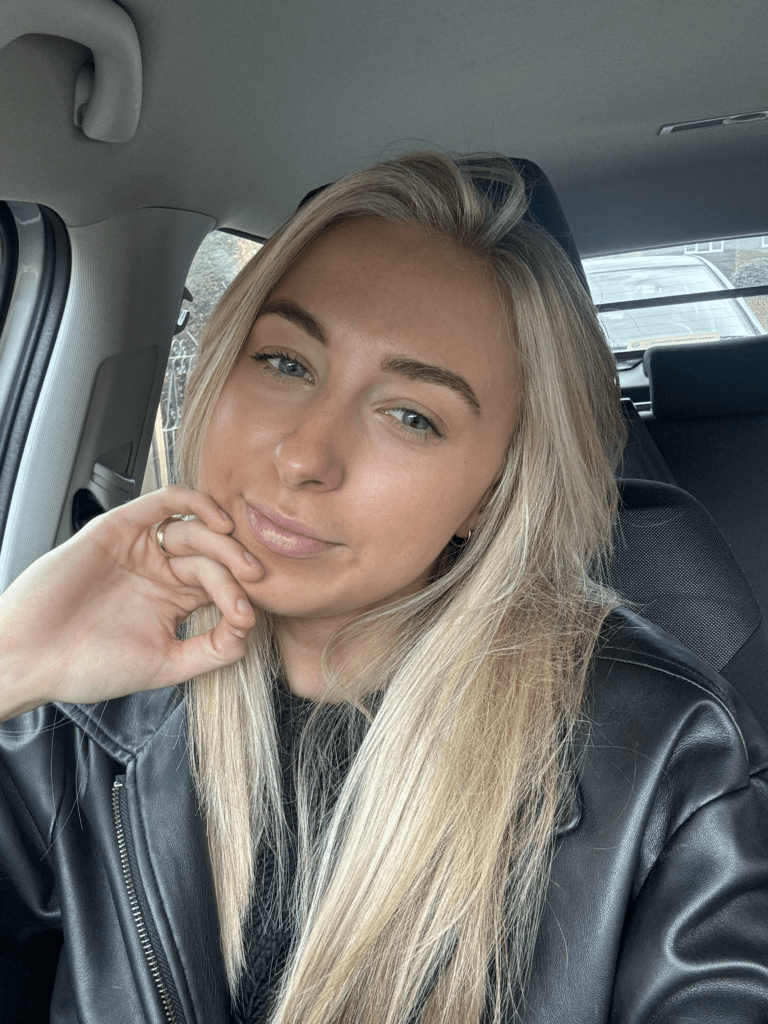
I was taken to Portimão hospital and put on a drip in A&E. I was continually passing out and throwing up but the main thing I remember is my head constantly spinning. Throughout the next six hours I had nurses asking what I’d taken and how much I’d drank…. they assumed I was drunk!
It wasn’t until the evening that a nurse realized I could not stand and suggested I had a CT scan. This came back with grey area so I was taken for an MRI. At this point I had started to feel less dizzy and was looking forward to going home. I came out of the MRI and the nurse told me I’d had a stroke.
At 23 years old this was surreal to hear and honestly, over 2 years later, it still sometimes doesn’t feel real.
I was taken to the intensive care unit where I called my mum to tell her the news. I cried a little, but really not a lot. And for a girl who cries daily over things like spilt milk, this was odd. It became a bit of a theme throughout my time in hospital. I would tear up but never fully let go. I guess my body was in complete shock and survival mode.
Throughout the next five days of ICU I had multiple tests to determine a cause, all which came back as clear, including a bubble echocardiogram, which showed no hole in my heart. I know others around me were worried about us not finding a cause, but I was just happy the tests were showing I was healthy.

I had an ischaemic stroke in my cerebellum. This is the part of the brain that controls all the adjustments your body makes to stay balanced, to speak, to move smoothly and make precise movements. The movements that you never consciously think about, and for me, the movements I had to re-learn. I spent the next three weeks in the intermediate care unit learning to walk, speak strongly, move things with my hands and to generally be able to look after myself again.
The physios, doctors and nurses were incredible. They made the days of waiting for my parents or boyfriend to visit go a lot quicker.
A lot of people say how scary it must have been being in a foreign hospital. But, for me, it wasn’t scary, I just felt sad. Sitting on Praia da Luz beach with my family was somewhere I had created so many beautiful memories and it was my place of calm. I was so upset that my brain injury ruined my happy place.
I came out of hospital at the end of August, just about able to walk without support. I was happy to be out, but so scared of stepping out into the ‘real world’. Once back home, my files were transferred to Frimley Hospital (shout out to my parents who sorted all the insurance details so that I could just focus on getting better!). We sat down with a stroke doctor who looked at me and said,
“You can’t have had a stroke; you’re too young!”.
It just goes to show that many people, including medical professionals, assume this can only happen to older people. Once he saw my scans and realized, yes, I had had a stroke, I was put on a three month home rehab program. I had a nurse, a psychotherapist and an incredible physio. Honestly, without these three amazing women I would not be where I am today. They helped me build up my confidence and start to comprehend what had happened to me.
The truth of what happened hasn’t hit me in any way I expected it might. I thought I’d come home from hospital have a big cry and then I’d be over it. Perhaps it was naive of me to think that, but it’s the only way I could see it. I spent the start of recovery just focusing on being able to walk and use my right side properly. Any mental stuff that came along I deflected into getting frustrated at my body. But the fact was, I had a stroke at 23 – that shouldn’t happen and it hurt to think about.
Despite three separate week-long attempts to monitor my heart, I reached my one-year stroke anniversary, still with no cause. Then in September 2023 they repeated a bubble echo – a test I was reluctant to do as they had performed it in Portugal and the results had come back as clear. But after this test, the doctors believed there was a hole in my heart. I then had a transesophageal echocardiogram which confirmed their thoughts.
Most people around me were happy to hear they found a cause, saying things like “Great news! You must be so happy!”. But for me, I felt the same shock as when I found out I had a stroke. A cause didn’t make the brain injury go away, and it felt like there was now something else wrong with me…something that would require surgery on my heart.

After this confirmation, we managed to get a private consultation with Dr Clapp (a surgeon in London that I know a lot of the Different Strokes community have used). He explained the risks and benefits of the operation and in June 2024 I was in for my PFO closure. I was nervous as it was my first time having any form of surgery or anaesthetic. But everything went as planned and the support from my family, boyfriend and the nurses at London Bridge Hospital helped me a lot. I stayed overnight for monitoring and went home the next day with a small scar on my groin and some gorgeous compression socks on my feet.
I felt in limbo after the surgery. There was so much build up to finding a cause and the operation, and then it was just done. I was relieved and grateful, but I can’t say I felt totally shiny and new. And, if I’m honest, maybe a part of me didn’t want it to feel “done”. I know the stroke wasn’t my whole life, but for the past 18 months it had been my whole life and I didn’t know what came next. I still have physio, medication, follow up appointments, fatigue, and fixing the hole doesn’t change that. But I know I am better off for having it done.
The hidden after effects of my stroke that I experience daily are without doubt the hardest things I have dealt with. I was lucky (and I worked hard) to get back to walking and fairly normal movement, minus some tremors, within about 8 months. I went back to work, started socializing more, travelled and even started learning to run. But what many didn’t see is that after work or socializing I would completely crash and need days to recover due to fatigue. While out with friends I would make an excuse to leave early because the lights and noise were causing sensory overload. I would be anxious about going to places with stairs because I was worried my tremors would cause me to fall. I would dread the question “how are you doing?” because I wasn’t sure of the answer.
I spent so long trying to get back to the ‘pre-stroke’ me. It has taken me a long time to realise I don’t need to do that. They say after a trauma you can go through grief, grieving yourself before the incident. That still goes through my mind a lot. I think only recently the stroke has started to feel like just one part of me, a section of one long journey.
But for so long there was the ‘me before stroke’ and the ‘me post-stroke’. I have slowly learnt to love them both but god do I sometimes miss the girl who could just say yes to any plans, stay out until 4am, got drunk, sang and danced with friends without a care. I missed the girl who was only excited about the future.


I struggled with a lot of social situations after my stroke. I have amazing friends who have been there for me throughout the good, the bad and the ugly days of recovery. But sometimes I would find myself feeling angry or upset when friends would mention going for days out, drinking or suggesting plans that I knew I couldn’t handle. It took me a while to realise I wasn’t angry with them, but that their lives reminded me of my past self. I would judge myself for feeling that slight resentment to those able to live their life freely around me. It was a difficult emotion for me to understand. But I was very fortunate and grateful to work with an incredible life coach and friend who also had a stroke a few years before me. She created a safe space where I learnt to accept and embrace any emotions I felt. Sometimes it felt quite isolating knowing no-one in my close circle could truly get it. But then I found the Different Strokes page and read a post about ‘Things you wish they knew’. I cried my eyes out. I finally felt like I wasn’t the only person who had these thoughts. The posts and articles on the Different Strokes page have truly helped me navigate this bumpy road.
Two years on and I can confidently say I am proud of myself and I am grateful to have learnt so much about myself during recovery. I will always remember something my GP said to me after I came back to the UK,
“You’ve lost the naivety that nothing bad will happen to you.”
As a 23-year-old this really hit – it is a blessing to be able to go through your life not worrying that something bad might happen, and I was sad I had lost that. But, this has made me appreciate so many fundamental things in my life. My family and the people around me, being able to move my body, being able to say yes to spontaneous plans…having these things truly warms my heart. Yes, I worry about my health a lot, and I’d be lying if I said I wasn’t nervous for my scan in June to see if the hole has closed. But I am still living my life and trying to enjoy my twenties as much as the next girl.
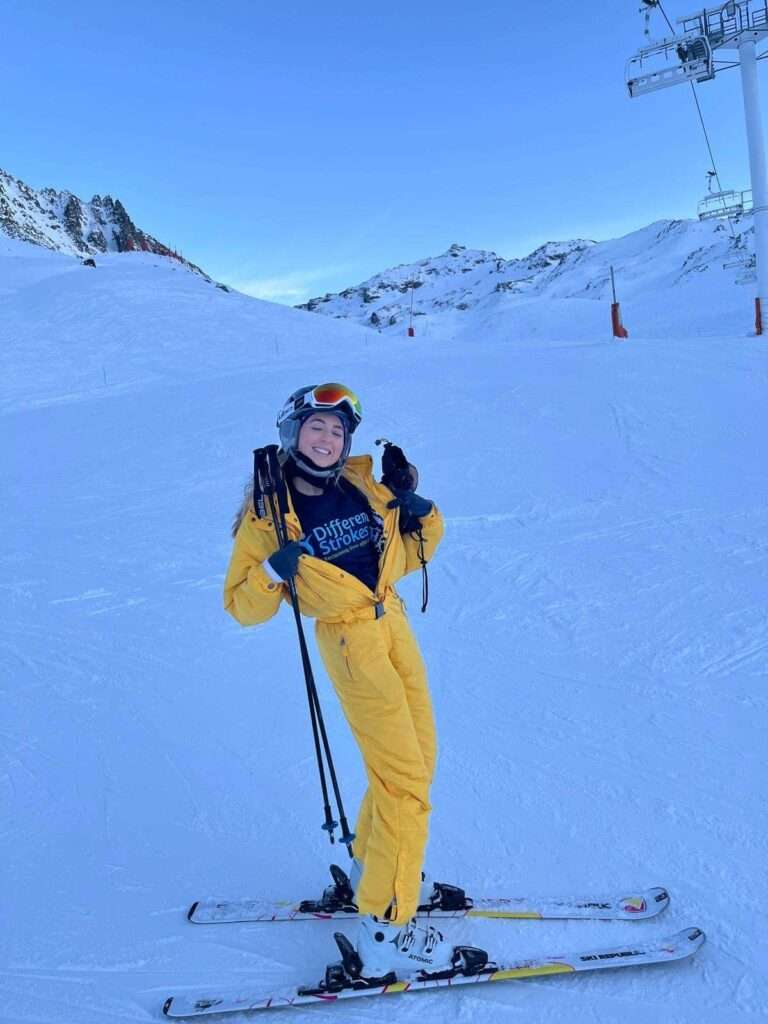
If you told little me sat in hospital two years ago, feeling exhausted after attempting to walk down four steps, that I’d soon be skiing again, drinking and going on nights out, travelling the world and moving to London with my best friend, I wouldn’t have been able to imagine it. During these times I’ve had some of the toughest days of my life but I have also had some of the best days of my life and I am determined to keep progressing. Stroke recovery is hard, and for me, the word ‘stroke’ doesn’t feel like it encompasses everything that comes with it; but recovery has also made me strong, grateful and proud, and I’m still managing to find a LOT of joy out of this crazy little thing called life.

Josh, Alicia’s boyfriend is raising money for Different Strokes
Josh, Alicia’s boyfriend, is participating in the Mallorca 70.3 Ironman to raise money for other young stroke survivors. There are 100,000 strokes in the UK each year with 1 in 4 happening to somebody of working age or younger. Different Strokes aims to promote independent stroke recovery and help these younger stroke survivors reclaim their lives.