I was a young business student, thoroughly enjoying her course; looking forward to completing it and beginning her career. I absolutely loved spending time with my friends and family, seeing them regularly to partake in various social activities. Although I was often teased for sleeping in for unusually long times, I was generally as healthy and active as your average person.
In February 2018, I turned 21. I spent the weekend of my birthday celebrating with my family and friends, and the following week went on a surprise trip to Iceland with my boyfriend. The holiday was amazing, I had wanted to go for so long and it meant so much to have the whole thing planned for me so perfectly. It finally got to our last day – when we would be going to the Blue Lagoon, which was on the top of my bucket list. My excitement got me out of bed easily that morning, although I was slightly tired after a busy few days. Fully dressed and raring to go, I sat on the end of the bed to put my trainers on.
As I leaned forward to tie my laces, I felt dizzy and lightheaded, so I sat up again thinking I had bent over too quickly, or I just wasn’t fully awake yet. I paused, closed my eyes and took a deep breath. As I opened them, I had no control over them. They were darting all over the room when I was trying to look straight ahead! I wanted to say “I can’t see” but I froze in the sheer panic and closed my eyes again. When I opened them this time, I was surrounded by doctors, with a tube down my throat and unable to move my arms.
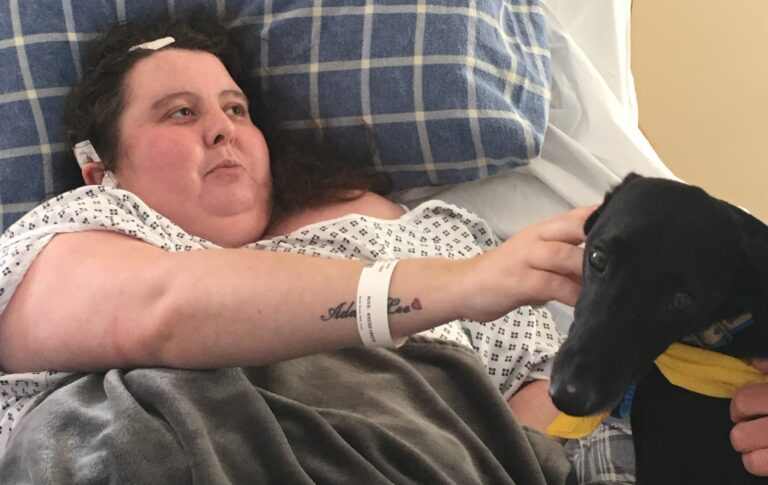
Four hours after I lost control over my eyes and I’d woken up in an Icelandic Intensive Care Unit. I physically could not move my arms as they were severely bruised from various injections and central lines. They had intubated me, as they strongly suspected I would lose the ability to breathe on my own before regaining consciousness. Thankfully, upon removal of the tube, I was able to speak and had managed to write just before. They then checked my memory, which was also fine. However, when the doctor explained that I was in ICU because I had suffered a stroke I responded with a mere “okay” – my ability to process was impaired and it was another week before I fully realised what had happened to me.
It was a week after my stroke that I was allowed to return to the UK as the initial treatments and tests had been completed. They had failed to determine a cause for the stroke, so the investigation was to be continued at my local hospital. Upon my return, it was decided that I would not be readmitted to hospital here. However, this was not a unanimous decision across all the medical professionals involved in my recovery. I was referred to the Stroke Clinic at Aberdeen Royal Infirmary for the investigation to the cause, and it was arranged for me to see a CHSS Stroke Nurse. My nurse, Fiona, played a major role in my recovery and rehabilitation; she arranged a cognitive assessment for me at Horizons Rehabilitation Centre and provided me with all the information and advice I could ask for – and I felt that the doctors had failed to provide.
At the rehab centre, I received occupational therapy as well as physiotherapy. My main difficulties following the stroke were processing, concentration, fatigue, muscle weakness (both sides), memory and communication issues – all of which incurred a huge loss of independence and confidence. My therapist Donna, worked with me to achieve my personal goals for recovery and also helped me regain confidence. During my sessions, I made a shopping list; went shopping; practised cooking; and went for a drive, once ready. Alongside these sessions, I attended some one-to-one physiotherapy, followed by a group physio/gym circuit style class, and a group core-building class with another young woman who had suffered a brain injury. Throughout my entire rehabilitation journey, this is the only other young person I met. I absolutely loved our sessions, and we are still friends to this day.
Fortunately, during my recovery, I was able to rely on my family for support and assistance. In the beginning, I had daily visits from my dad and granny to keep me company as well as look after me – making my breakfast, cleaning dishes and other day-to-day tasks. However, there was a delay in receiving outpatient rehabilitation as the initial stroke occurred out of the country – so nothing was arranged prior to my discharge from hospital, and it was primarily my nurse Fiona who made the appropriate referrals. Once my therapy sessions began, my family members were a great help as they took me to and from every appointment, attending all informative ones as emotional support and to aid my understanding of the information received.
I had originally thought that my recovery would be quick and simple, due to my lack of knowledge of strokes prior to the circumstances. I can vividly remember the moment that I learned it would be at least a year before I was back to my ‘normal’ self. My heart broke. In a brief moment on holiday, my life had been turned upside down, and it was going to take me at least a year to fix it. At this point, the doctors were yet to determine a cause. This left me feeling lost, struggling to come to terms with it all.
Thankfully, I was able to do a phased return to work at a clothing chain after being signed off for six months. My managers could not have been more supportive and accommodating. The overwhelming love and encouragement from my colleagues aided the process immensely. It was a huge confidence boost to go back to work, and gradually progress to the point of working the way in which I did pre-stroke. Although it was challenging, and I faced a lot of ignorance and inconsideration, the process gave me such a strong sense of achievement that I now feel more self-confident than ever! If I can overcome the sudden brain damage inflicted on me, better than expected, what else could I achieve, should I put my mind to it?
Although those close to me were loving and supportive from day one, there was a limit to how well they could understand what I was going through and the ways in which I was struggling. Most of my difficulties were cognitive, therefore invisible to others – making it very hard for them to grasp the severity of the situation. My closest family and friends kept open minds, which aided their understanding, but there would still be occasions where their initial reaction would seem ignorant and at times upsetting. This was worsened by the fact that I regularly encountered others who didn’t seem to have any empathy or consideration for the fact that I literally had brain damage and proceeded to treat me as if I just had the flu. They failed to comprehend that I could not process information properly, in turn causing difficulties with communication, concentration, memory and basic self-care. One quote I came across sums up my recovery and how unknowingly oblivious people can be: “You do not know what fatigue is until you’ve had to nap after taking a shower”. Usually, after explaining this the reaction would always be shock followed by a complete change of attitude. Suddenly, there was a greater appreciation for the struggles that stroke survivors face.
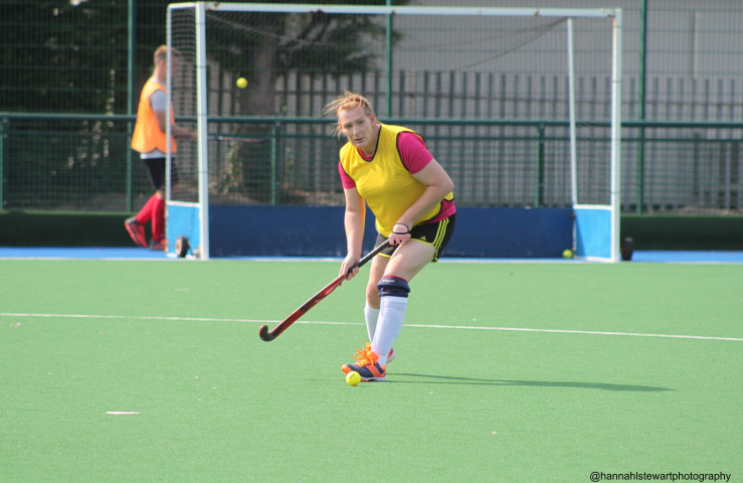
Now that I am almost 18 months on from my strokes, I estimate my level of recovery at around 95% – with just a few impairments that have little effect on day-to-day life, especially when compared to my difficulties in the beginning. The experience has definitely changed me as a person, giving me a greater appreciation for everything that I previously took for granted. I have a new and improved outlook on life, realising now what truly matters to me, and what is not worth worrying about. It has also created a passion in me to be a part of providing the care and support that I wish I had received as a stroke survivor. There is a definite lack of awareness in the general public about strokes and the effects they have on the survivors, as well as those close to them. Personally, I felt isolated as a young person, and feel that more should be done to help younger survivors get them rehabilitated, from moral support to professional therapy.
 I am excited to be involved with a Different Strokes as I know first-hand how hard it is to recover from a stroke. Having experienced this last year, I feel very passionate about improving the care available to stroke survivors, particularly those of a young age. I had my strokes shortly after my 21st birthday, and during my rehabilitation, I was almost always surrounded by older people, many of whom assumed I was fit and well – attending the sessions for research purposes or as a supporting volunteer. Their failure to understand that strokes can strike at any age is not something I blame them for, as I myself would never have thought this would happen to me. During one of my physio courses, as I said, I was paired with another young lady who had experienced a brain injury – I felt far more comfortable in these sessions as there was a much stronger sense of belonging. That is the kind of environment I wish to be a part of creating for future younger stroke survivors.
Therefore, I am extremely motivated to raise awareness and knowledge of strokes within the general public and increase the support available to survivors as they recover.