Ernie’s 60th Birthday Fundraiser
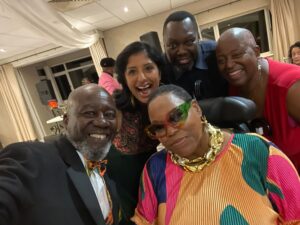
On the 10th of October 2026, BASS Ambassador, Ernie Owusu held a charity fundraiser for Different Strokes and St Christopher’s Hospice for his 60th birthday.


I am 28 now but was 27 at the time of my stroke in March last year. I had recently been promoted to Laboratory Manager within the company that I am still working at. Before this I was working as a Team Leader in a production laboratory, testing water samples. Before I was working at my first laboratory job and I was working as a Team Leader. I was constantly on my feet, attended the gym three or four times a week (lifting heavy weights, boxing and a small amount of cardio) and was very active. I used to go out on Saturday night, with my friends and drink, heavily.
 After graduating university with a BSc (Hons) in Microbial Science, I left The Co-Operative to pursue my career as a scientist. When I started my new laboratory job, I was still very active as a laboratory analyst, processing samples all day (on my feet all day). As a Team Leader at the laboratory, I was working shifts (opposite to my partner) and this made it difficult to eat proper food etc., and I was, for the most part, sat at my desk. I gained a substantial amount of weight from poor diet, sedentary lifestyle and lack of exercise. My partner and I were made redundant, adding a substantial amount of stress to our lives as we had just bought a house, and found out we were expecting our first child. My poor diet, unfortunately, carried on when I had my new job. I put this down to it being much easier to just order and collect food than cook something that was healthy for us. We were probably ordering three or maybe four times a week or eating convenience food. Personally, I believe my stroke was caused by my poor diet, sedentary lifestyle and being heavily overweight (according to my BMI I was in the obese category).
I used to weigh over 90Kg (90Kg being my first recorded weight, 2 weeks post stroke it was 88.9Kg and currently is 77.6Kg). Most people didn’t see me as overweight. I looked “normal” and “healthy” to them. However, I was carrying my weight throughout my entire body, not just on my stomach. I had a 42-inch waist and a 48-inch chest. I am still yet to find a cause for my stroke. My consultant said that there are not many more tests that they can carry out now, as all of my results are coming back as “normal”.
My interests in life, pre-stroke was raising my daughter (born May 2017) playing video games and watching films and documentaries. Before my life was mostly ‘working’. I was working long days because it was a small laboratory team, and I was also covering weekends. I was leading a very sedentary lifestyle, I sat down most of the day for work and then as my daughter wasn’t mobile at the time, I was sitting down mostly at home as well. I didn’t have much energy or much of a “get up and go” attitude. I had very little energy and just felt very lethargic and lazy most of the time. If I didn’t have to get up or move, I wouldn’t. If I wasn’t working at weekends they were very, very lazy days, the majority of the time – and the only time I was getting up was to go to the toilet or to get more food. Due to long shifts, I didn’t really feel like doing much and my attitude towards exercise or anything really was just “meh”. I didn’t even want to walk to the park that is only around a five-minute stroll, down a hill near my house. If I was walking, I felt like it was such an effort to drag my body around and often was behind my partner (or family) and complained that my legs ached and I that I was tired. My mum always used to tell my partner how much I used to love walking. We have been to the Lake District on many occasions and I have walked several different hills there – and even reversed the way we walked them too! I would always love just going off on a tangent to the walk and adventuring further. However, as I used to complain that I was tired walking to the park, my partner never believed my mum or me. She thought I was the kind of person who “had all the gear, but no idea” as I had a lot of walking gear (the clothes didn’t fit, but my boots still did).
I had my stroke at work. I was getting very excited for the long Easter weekend as it was going to be the first bank holiday that I actually had time off. My previous lab was open 365 days a year and bank holidays were just a normal day. As a manager, I was able to take the bank holidays like a normal day off. I had booked in the whole four days of activities with family and friends. At the time, I was feeling under the weather, had bad headaches and bunged up sinuses and was just generally run down. I arrived at work, with a very heavy head, just thinking “get to 4pm and it’s the weekend”. I had some painkillers and my head started to clear – I felt like it was going to be a good day…..
 I began my day as normal, checking what needs to be done for the day, with regards to processing/ reading plates and I was called by the MD to review a new HR system we had recently installed. After running through the system and how we would implement it, I started to get really hot and bothered. I thought it was just down to me feeling unwell. I started discussing quality issues with the Quality Manager when I noticed my speech began to slur and I was really struggling to try and get my words out. The harder I tried to speak, the more difficult it became. I was getting even more ‘hot and bothered’ and at this point, I was beginning to worry about what was going on. I tried shaking it off and returned to the laboratory.
Heading back to the laboratory I was very dizzy
and unstable whilst walking, I sat back at my desk, my right arm/leg started to feel really heavy and it was tingling like mad, as was the right-hand side of my face. I went onto Google and searched “the signs of a stroke”. After reading the symptoms, and scaring myself, I told myself to stop being so stupid – “You are far too young to be having a stroke. Just get on with your day!” I closed the tab and started to look for some music to start cleaning down the laboratory. My colleague from Goods Inwards dropped off a package and he asked me if I was OK, to which I said “I’m fine”, but he could tell something was wrong as I had gone very pale, my face had dropped, and my speech was slurred. He asked if he should ring 999, but I told him not to and said I was OK.
He went to get more members of staff and before I knew it, I was in the car on the way to the walk-in centre. At the time I was not aware I was having a stroke. I had contacted both my parents but could not get hold of my partner. The walk-in centre was no longer a walk-in centre so off to A&E I went. After a wait of around an hour, I was seen by the triage nurse and after a few tests, I could see on her face she was concerned something was wrong but wasn’t too sure. I had full strength in my arms; that is grip was strong, and I could do the co-ordination tests with ease. I was sent back to the waiting room and less than two minutes later I was in a small cubicle having bloods and urine samples taken and I was hooked up to an ECG. A stroke nurse was there within 15 minutes of me being in the room. She pushed for a MRI and a CT scan. The CT was first, and came back negative/clear and the MRI was sent off to a specialist to look at. At this point, I was just pacing around the hospital room, waiting for some news. After about 2 hours, my partner, daughter and mum were in the room with me. My dad followed shortly after. I yawned – a very prolonged yawn, my jaw cracked and that was it, all of my symptoms disappeared. The initial stroke nurse came down to see me again and she was shocked that I was back to “normal”.
I was admitted to the Stroke Ward at Rotherham General Hospital for further tests/observations pending my MRI. The consultant came to see me, told me that as my symptoms had resolved, it’s likely to have been a TIA. I would be on medication and have to change my lifestyle, but I would be out the day after. If not, I would be in for longer. Hours later, I was given the news that I had, in fact, had a full stroke – a small stroke, but a full stroke. I’d had an acute ischaemic stroke of the internal left capsule. The consultant described it is acute as it is 7mm (>7mm is not acute), and it didn’t appear to be in a “sinister” place. However, I would be kept in longer as I would need more tests to be carried out. I had never felt so scared in my life. Is my daughter going to be OK? How could this of happened? Why did it happen to me? What am I going to do now? Will it happen again?
So many questions and even more were flying around in my head and heart. During the 4 days and 3 nights in hospital, I had to re-learn how to hold a pen and write. However, all my tests results came back as “normal” so I was released from hospital and told to “live my life”. How could I live my life with no answers and just worries going on in my head? But recovery wise, as there were seemingly no long-lasting issues, I was just sent home. I am very, very lucky that there seems to be no long-lasting issues, other than mentally. Physically, I am stronger, and fitter now than I have been for many years.
To cope with it all I initially I was reading so much about strokes and long-term studies online, only to find that I was scaring myself something silly. All I was reading were negative things like you are more likely to have a stroke now you have had one or if you have another in the next 30 days, it will be worse than the first or you will die. I was offered psychological help, which I accepted and that did really help me. I would highly recommend for all stroke survivors to accept it, as it gives you someone to talk to and they help you see the positives and not just negatives. I also had a diary that I wrote in every day, that was strictly just for positive thoughts. This was even the smallest things; appreciating that the sun was shining or listening to a good piece of music. Classical music was really helpful and relaxing. Listening to all the instruments playing together but focusing in on one really helped me relax. My best strategy to cope was to stay off the internet, stop reading about things that might happen or have happened and to just focus on recovery. It was the best thing I did. I walked around a block once in the early days, but I quickly gained a fighting spirit and I was walking 3 to 5 miles a day. If you can, then walking can be amazing to clear your head.
Life now is tough. I am still stressed at work (if not more stressed). My daughter runs me ragged and I don’t go a day without thinking about my stroke. Some days I have a very tingly face and my eye doesn’t close as well as it usually does, but I know my triggers now. hunger, exhaustion and dehydration set off my stroke symptoms. Some days I can’t help asking my partner “does my face look OK?”; which annoys her, but I just need the reassurance some days. I say life is tough, but I am in a much better, stronger place both physically and mentally now. I have an amazing family (another baby on the way too – my son). I have a great job and I just take it day by day.
All of my results from all of my more recent tests have come back as “normal”, which means I am classed now as a low-risk patient for having another stroke. My waist is 33/34 and I love going for long walks with my family and taking my daughter to the park, even when I don’t want to. I don’t have a choice and if she wants to go to the park, we are going, and I am happy about it. There is nothing more than I want than to see my daughter and family be happy, and I am so thankful and grateful for all the support I have had to ensure that I am still here today. Life may still be tough now, but I am living my best life I can. It amazes me now, that my stroke, as strange as it sounds, might have saved my life. If I didn’t have it that day, then 1 week, 1 day or even 2 hours later, I may not have been so lucky…
I found Different Strokes through Facebook and the Stroke Association. I had a lot of reading material to go through in the early days, but I wanted to see stories from other young survivors, so I Googled things and found them. Reading other stories, seeing even younger people than me having them and recovering and just having one stroke gave me a boost. I thought “If they are OK, I will be OK.” I used to write 10 things down every day that made me happy or smile and I ended every page telling myself “You will be OK, everything will be OK”. I practised writing and smiling every day; this gave me something to focus on and move away from any negative thoughts in my head.
 Looking towards the future, my plans are to ensure that I do as much as I can to reduce the risk of having another stroke, to raise my family and give them the best life that I can – and ultimately, career progression. However, I am not sure what that entails or where it will take me yet, but for the time being, I am growing my laboratory as quickly as I can.
My advice would be to just stay off the Internet, so not to scare yourself. Do not read things online that are nothing to do with you. Each stroke is as unique and as individual as we all are, so reading something online might only make your anxiety or your stress worse. I have been there, and I have done it. Focus on the small things that make your day better. Don’t worry about things just focus on yourself and your recovery – and remember, you will be OK, everything will be OK!
On the 10th of October 2026, BASS Ambassador, Ernie Owusu held a charity fundraiser for Different Strokes and St Christopher’s Hospice for his 60th birthday.

As we approach the festive season, we want to say a heartfelt thank you to everyone who has used, supported or been part of Different
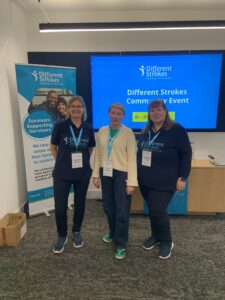
At the end of October we took our Community Event to Glasgow thanks to support from one of our Corporate Partners Irwin Mitchell. We were
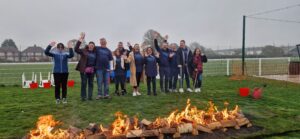
A huge thank you to everyone who took part in our Different Strokes Firewalk 2026, helping to raise nearly £4,000 to support younger stroke survivors
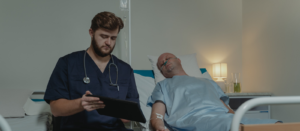
A member of the Different Strokes community, Maya Kuzalti, has co-written an important new report looking at what happens to stroke survivors after they leave
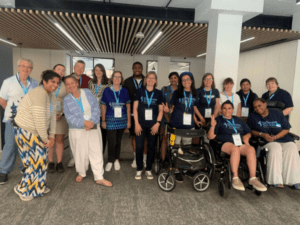
Different Strokes is bringing its Community Event to Liverpool on Tuesday 1 December, offering younger stroke survivors, family members and carers the chance to meet