

Sex After Stroke – “We laughed our way through everything”
Lydia Payne had a stroke in 2016 when she was aged 33. Here is her moving and helpful account about navigating sex after stroke with her husband Phil.
Well I remember sitting in the hospital and the consultant asking me if I had any questions … this was after they’d explained I had a blood clot in my brain which had caused the stroke. They’d already done intensive rehab & assessed my legs not working and left side numbness. Since the stroke & hospital admission I’d had no filter, so the word “sex” came straight out my mouth. I was initially not embarrassed at all because I thought I had just thought it and not said it …
The consultant was very good in not laughing at me but explained that the blood had been dispersed and when I was ready all “usual” activities could return. So, home I went. They don’t, however, explain that the affected side might hurt 24/7. It was constantly numb as in I couldn’t use it, but constantly burning or frozen. Just a gentle stroke of my hand for weeks felt like nothing. It was numb. I became quite childlike and embarrassed by every situation as if it was a first time for everything.
Noises were different – I didn’t recognise smells, sounds, people. However, as part of a loving relationship obviously, eventually sex would be part of that. Initially I felt an overwhelming sense of embarrassment about my body, my abilities – and the fact that everything seemed a new experience.
My arm didn’t work properly so I felt quite awkward – like a second wheel, a random part of me that I didn’t know how to use. Touch was extremely sensitive and in all honesty – I was terrified. One night I explained to my partner as best I could that I was terrified of any form of contact.
We literally went back to basics. I’d get embarrassed by kissing my partner and I would say anything I was thinking without warning (so that made for several giggles fits!). I found my partner, now husband, was so helpful and supportive and we laughed our way through everything. I genuinely forgot how to have sex; what to do, how to not talk all the way through! This can be normal. Due to the fact we live in a society which still thinks strokes only happen to older people there was no one to ask and no one I felt I could raise the issue with. I think it’s an important issue to discuss.
We had a few months of giggling at each other. I’d become very embarrassed, very quickly and almost shy about it. A sex scene in a film would be enough for me to hide my face, as if watching it caused severe embarrassment. Apparently, your body and brain go through so much that this is often totally normal. As I stated we laughed, chuckled, and giggled our way through it.
Months and months later we’d fumbled our way through (and my husband was so understanding every time I burst out laughing or got extremely embarrassed) and we found that talking about things does make it better. Initially, I was terrified! I wondered would an orgasm cause a stroke? Would moving about cause a stroke? Letting go enough to embrace what we were doing was very difficult. The more I talked about being embarrassed, the more my partner understood my worries and we worked through them. Talking was key here and it actually brought us closer together, exploring each other’s bodies as if we never had before. My mind literally didn’t remember a great deal, but my body did. I had to mentally let go of my worries and fears and let us simply enjoy each other.
Two years on things are “normal”. We’ve found that fatigue can be brought on by sex, due to the physical and mental high emotions sex can bring on, but it’s worth it!!
My advice to anyone experiencing this is talk talk talk, talk – about what you’re scared of, why you’re scared and how you feel. This is often not easy after a stroke, as it can often take away the ability to do this. Laughing and giggling as we’d never had before made things so much easier.
It’s only embarrassing if you allow it to be!
I was terrified initially but it went and I’m pleased it did. It’s so important to realise you are not alone and that sex isn’t a taboo subject if you don’t allow it to be. Talk to your partner and tell them how you feel. It will get easier and easier the more you bother to say how you feel! At the end of the day, your partner loves you and is much more understanding if you explain how frightened you are of something meant to be a sign of affection. We worked our way through it and as I said initially laughing was key for us; If you can’t laugh at yourself then you can’t move forward!
Lydia will be taking over our Instagram during February during our sex and relationships month. Get involved by clicking HERE
Resources you might find helpful
Sex After Stroke – (click the text and resources will open in new window)
🔗 Different Strokes Sex After Stroke booklet.
🔗 Stroke Association (America): Physical Challenges – Sex After Stroke
Couples & Psychosexual Therapy Organisations:
We offer a range of services to help you with your couple and family relationships, whether you’re young or old, straight or gay, single or in a relationship.
🔗 Click here to go to their website
College of Sexual and Relationship Therapists
Welcome to the College of Sexual and Relationship Therapists (COSRT), the UK’s leading organisation for therapists specialising in sexual and relationship issues.

Walk on Fire With Us: Join The Different Strokes Charity Firewalk
Sunday 15th November 2026, Old Saltleians Rugby Club, Water Orton For many stroke survivors, it’s a long walk to recovery, and it takes real strength.

Different Strokes Partners with Cannabis Industry Council for Patient Choice and Quality of Life Broadcast
20 October 2026 | From 11am BST | Live from British Cannabis, Wokingham Different Strokes is proud to be working in partnership with the Cannabis
FREE Webinar: Travelling After Stroke – From Planning to Adventure
Practical advice, accessible travel options and real-life experiences to help you travel with confidence after stroke. Travelling after a stroke, whether in the UK or
FREE Webinar: Sleep, Stroke and Recovery
Getting a good night’s sleep on a regular basis is something many stroke survivors struggle with. Sleep deprivation can affect both our mental and physical
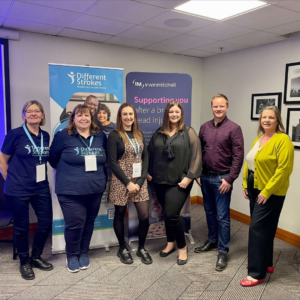
Community Events Coming to Glasgow & London
We’re delighted to be bringing our Different Strokes Community Events to Glasgow this October and London this November! These relaxed, welcoming mornings are an opportunity

Free Legal Consultations for Stroke Survivors and Families with Irwin Mitchell
Different Strokes is pleased to be working with our corporate partner, Irwin Mitchell, to offer a week of free legal consultations for stroke survivors and their families.