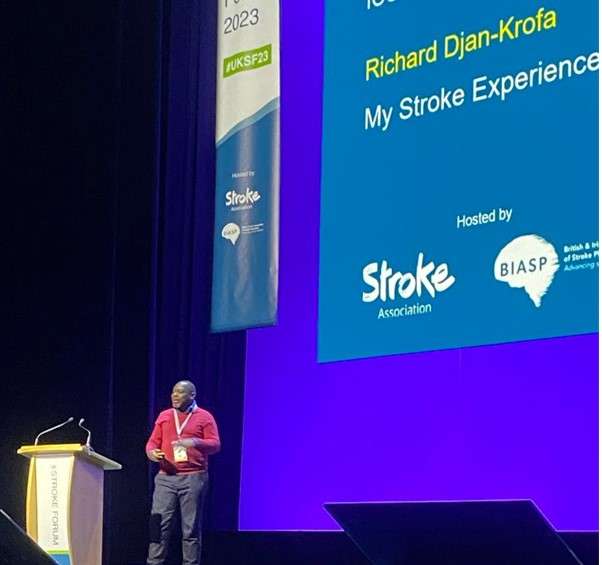
The UK Stroke Forum (UKSF) stands tall as the United Kingdom’s most significant multidisciplinary conference for stroke care professionals. This year’s event, hosted in Birmingham from 4th to 6th December, marked a pivotal milestone for Different Strokes. We had the chance to catch up with our CEO, Austin Willett, to delve into the significance of this year’s event. Here’s what he had to say:
When I arrived at the UK Stroke Forum on the first morning one of the venue staff looked at my badge and asked me what my involvement with the event was. ‘Well’, I replied, ‘everything.’ In other words, I was attending, I was exhibiting, I was chairing a session, I was speaking at a session.
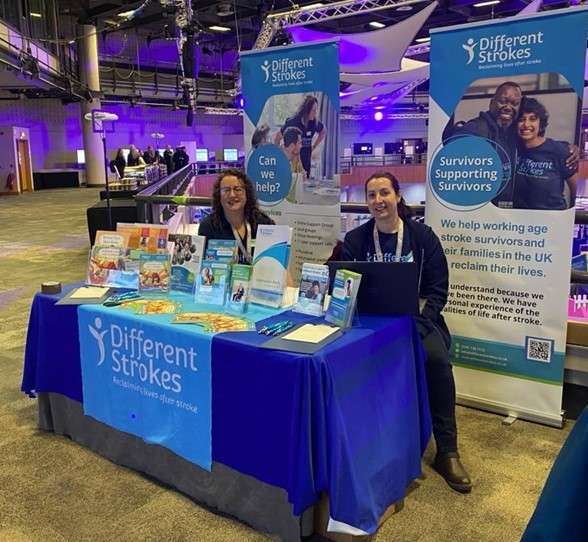
As the UKSF is the primary event for UK stroke professionals in the UK, and its essential that Different Strokes is fully involved with this. This year the event sold out, with close to 2,000 people attending, and along with my colleagues Jo and Genise, I attended for the full three days. We have been going to the UKSF for a number of years, but originally we simply attended with our exhibition stand, in the hope that stroke consultants, Speech and Language Therapists, Occupational Therapists, Nurses and anyone else in the stroke world would come and chat with us, to learn more about our charity and what we do.
This remains a key part of our presence at UKSF, and over the three days we had countless conversations with people who visited our stand, being rushed off our feet at times! We were delighted that 150 stroke professionals signed up to our mailing list, and we gave away virtually all the literature we had taken with us, including around 250 of our latest newsletters. Interestingly though, there were not that many people who said that they were unaware of Different Strokes, which goes to show that we are making progress in becoming more well known as an organisation and in getting the message out there that stroke happens to people of all ages.
But our role with UKSF is no longer just about having an exhibition stand. We also network and establish new contacts with organisations who produce products, services or devices that benefit stroke survivors, and identify where it may be mutually beneficial for us to work together. We’re always open to collaborating with other organisations, and I was very pleased to have a number of conversations with third parties.
Throughout the course of the three days there are a large number of sessions, presentations and workshops about all aspects of stroke. Over the past four years I have sat on the two steering committees that plan the event and develop the content of the programme, so this has given us a voice to promote the message of younger stroke and other areas that are of relevance to our community.
In 2021, when the forum was held online, I was delighted to chair a session on younger stroke for the first time, which was noted as one of the highlights of the conference, and included some fantastic speakers, notably Eilish, a young stroke survivor in her 20’s whose vulnerability and openness had a real impact on everyone watching. Last year I chaired a session with three young stroke survivors talking about the everyday challenges that they face and the unique needs of younger survivors.
These two sessions were highly successful, but this year I wanted to move beyond merely having one session that talked about younger stroke or that featured stroke survivors, and to embed these aspects into many more conference sessions. Feedback from delegates attending the 2022 conference was that they wanted to hear the voice of lived experience more, so the steering committee was very responsive to having stroke survivors talk in many more sessions this year.
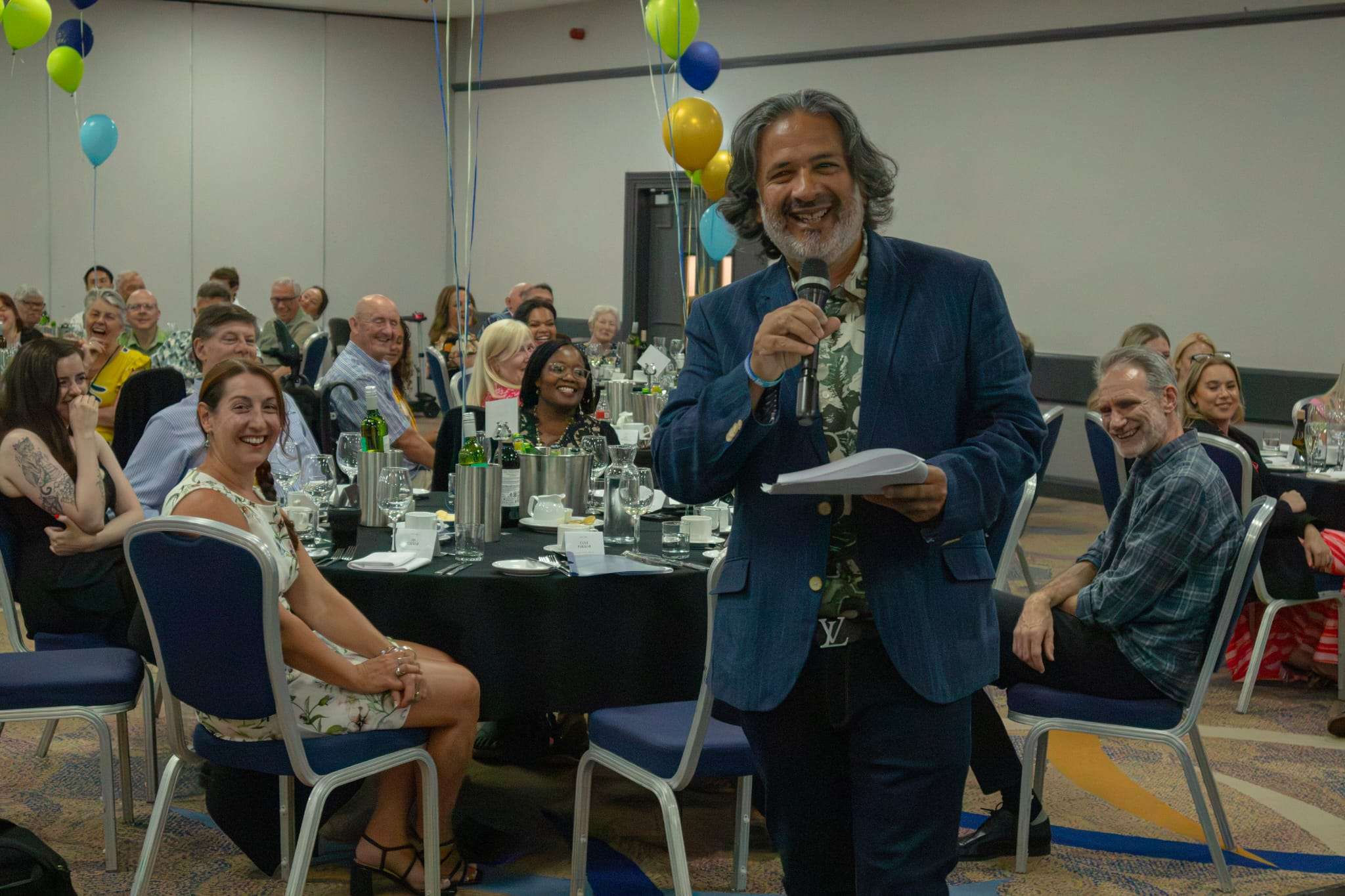
I put forward two proposals this year – one on sex after stroke, and one on stroke and ethnicity, and I was delighted that these were both selected as ‘parallel’ sessions, which are amongst the most high profile conference talks. I chaired that ‘Let’s talk about sex’ session, which featured talks from stroke survivor Diana Wong Ramos, Hayley Wright and Aimee Walker-Clarke – researchers from Coventry University, and Clinical Neuropsychologist and Couples Therapist Dr Giles Yeates. It was fantastic to be able to talk so openly about the challenges of sex after stroke, and the room, which had a capacity of around 350 people, was completely full.
The ethnicity and stroke session, designed to shine a light on both how stroke disproportionately affects Black and Asian people, and the work being undertaken to address low engagement with support services within these communities. The session was chaired by Dr Soma Banerjee, with talks from researcher Dr Suzie Wang, GP and researcher Dr Iain Marshall, Different Strokes trustee & stroke survivor Richard Djan-Krofa and me. This crucial discussion attracted around 250 attendees and highlighted an on-going commitment from many stroke organisations including Different Strokes to work to address historical engagement gaps and ensure more effective and inclusive stroke care
and services.
In both these areas, I wouldn’t pretend for a moment that we are experts at Different Strokes. We have a lot to learn, and there is still a long way to go until discussing sex after stroke becomes the norm, and until stroke services fully reflect the needs of Black and Asian people. We don’t have all the answers to what are complex and nuanced topics, but starting the conversation about these areas is so important, and I was so pleased that many hundreds of stroke professionals will have gone away from the UKSF starting to think about these two issues more. I look forward to discussing more about sex and about ethnicity in the years to come at the UKSF, at other relevant events and in everyday conversations.
I’d like to pay tribute to all the speakers who made the sessions so successful, but in particular to Diana and to Richard. Giving a talk to hundreds of people can be daunting. And even more daunting when you are talking about your own personal journey. And this is exacerbated even further when, in Diana’s case English is not your first language, and in Richard’s case you struggle with your speech as a result of your stroke. But they were both brilliant, and I was so proud of them.
And it was so important for them to be part of these sessions, so that we could give a voice to stroke survivors. Which is what we always have, and always will do at Different Strokes.

Different Strokes Glasgow Peer Support Group Returns
Different Strokes is delighted to announce the return of its Glasgow Peer Support Group, providing a welcoming space for working-age stroke survivors, their families and

30 Years of Different Strokes:A Day of Connection, An Evening of Celebration
On Saturday 18th July, over 100 people gathered in Northamptonshire to mark 30 years of Different Strokes. Reclaiming Life After Stroke The day opened with

Upcoming Webinar: Looking After Yourself While Caring for Someone After Stroke
Free Webinar | Wednesday 22 July | 11:00am When someone you love has a stroke, life can change in an instant. Partners, spouses and family

Bringing the Stroke Community Together in London
During June we hosted a Community Event in London at the offices of Bolt Burdon Kemp.

Free Webinar: Medical Negligence & Rehabilitation After Stroke
Different Strokes is pleased to be partnering with specialist medical negligence law firm Fletcher’s Solicitors to offer a free online webinar for stroke survivors, families and carers.

Mike Caines Wins the 2026 Different Strokes Outstanding Contribution Award
Mike Caines Wins Different Strokes’ Outstanding Contribution Award 2026 For the past 14 years, Mike Caines has been a quiet constant behind Different Strokes. He