Karen’s Story – mTBI aged 43 and Vertebral Artery Dissection with Cerebellum Stroke – aged 44

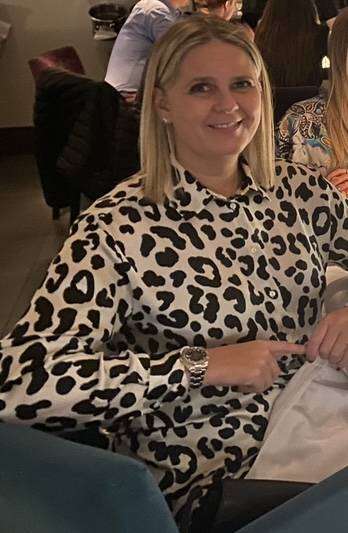
Picture of Karen on the night of her stroke

On 22 October 2020, aged 43 I sustained a mTBI (mild traumatic brain injury) – but believe me… there was nothing ‘mild’ about it!  I was diagnosed with post-concussion syndrome, all courtesy from falling through a loft hatch, two strikes to the back of the head, knocked unconscious and whiplash.

I had numerous issues from that date, which consisted of: memory issues, anxiety, sleep disorder, cognitive impairments (reading and writing was a challenge), vertigo, a lack of balance/co-ordination, fatigue, chronic migraines, emotional outbursts, photophobia (fear of lights), hyperacusis (sounds), tinnitus and auditory problems. 

This went on for 14 months, where every neurologist (there was a lot through both private and NHS means) told me I had post-concussion syndrome and that I would recover with ‘time’.

Fast forward to 30 December 2021, aged 44 and I was attending a routine appointment at my GP surgery and I felt the strangest sensation go from the back of my head to the front.  I cannot say it was an intense pain, and more like a very strong cramp and a rush of fluid.  Since my mTBI I had learnt to live with all sorts of pains in the head.  I started to get a visual aura (I have been a migraine sufferer for 25 years) and I thought really “what a time to get a migraine!” – only this time I not only had a ‘zig-zag’ aura but also a tunnel vision in my left eye.

As I sat there waiting to be called in, I started to feel pins and needles go up my legs and arms.  I knew this was certainly not ‘normal’ and my vision was getting worse.  I looked down and my arm appeared to be ‘flapping’, like the “beckoning cat!

Picture of waving lucky cat

At this point I knew I was not in a good way, so I stood up and shouted “help!”  That was the last thing I remember until I started to come round on the surgery floor.  I was trying to talk, the words were very clear in my mind, but what was coming out of mouth were not even words just an odd noise.  I could not see either and I was violently vomiting.  The one thing that stands out is that my hearing was spot on, even when I was partially conscious.  

I heard so much, but could not communicate – this was the scariest part.  I have been informed that I had a seizure whilst I was on the floor unconscious.  I had no feeling in or use of my right side.  After a period of time my speech started to return, but I was not fully coherent.

The ambulance crew arrived and at this point my vision had started to return – and the vertigo kicked in.

All medical observations seemed clear (blood pressure, sugar levels and heart) and they were saying it was a mystery.  I updated them that I had an awful headache in my forehead/eye, an earache, vertigo and suffered neck pain/stiffness around 2 days prior to this, and which no pain killers were touching.  The ambulance took me to A&E where I was given IV fluid and some anti-sickness medication and put onto a wheelchair.  All I wanted to do was sleep, my vision was still very blurry whilst still having visual aura and I was still vomiting, although this was subsiding now as the medicines worked their magic.

I was finally called in to be seen by a doctor (around four hours later) only had my blood pressure taken (ECG and bloods already done when I arrived) and was then wheeled to the A&E waiting room.  Sometime later, I was informed I was clear to leave because all my ‘obs’ were fine.  I replied, “did I have a stroke?” to which the doctor looked at me and laughed and said “God no, we believe it was a migraine”.  I quickly said “Well that was like no migraine I have ever suffered”.   With that comment he just smiled and said, “No it was not a stroke” and turned around and walked away.  That was it I was free to leave and left with the feeling ‘geez I really am a drama queen!’

The days preceding were dreadful.  I just wanted to sleep and two days after leaving A&E I lost feeling all down my right side again, but I told myself this was all part of my new migraines and to ‘suck it up’.  My cognitive functions were non-existent.  I could not understand why every time I drank or ate something I kept having a coughing fit or feeling like I was choking.  The fatigue was on another level, and my balance/dizziness/vertigo were shocking and my hands were weaker and kept dropping things.

I knew I needed help and felt so desperate.  In February 2022 I sourced a consultant who specialised in post-concussion in London.  I thank God for this chain of events; one of the referrals he made was to a migraine specialist (these were now chronic –  with more than 15 a month) and on my first consultation with the migraine specialist in March 2022, he suggested another MRI (I had numerous MRIs over the last 14 months which all came back clear).

On my follow up, he said the MRI has revealed I’d had a stroke or even multiple strokes.  At this point I went into shock and could not take any information in – it was over a video conferencing service.  After the shock wore off, there was something reassuring about being told this news; I had an answer to all these problems.  There was something inside of me that knew since the mTBI that I was not well and things were not as they should be – and that time was not being a healer for me!

From that point forward various tests ensued, official diagnosis in July 2022 I received was a right vertebral artery dissection with a cerebellum stroke – dissection was in the area where I had my head trauma.

It really upsets me to read stories of misdiagnoses, and our symptoms ignored especially in younger patients.  I had two failings by my local University Hospital.  Firstly, when I had my accident in 2020. I was admitted for head trauma and sent for CT with contrast scan, for some reason they stopped the contrast dye at the start of my vertebral artery.  My stroke consultant said that what a shame, as that could have held all the answers.  Secondly, to be taken to A&E with every FAST symptom (I firmly promote the BEFAST instead, as balance and eyes were part of my stroke as well) and be brushed off with it being a migraine.  I was angry and disappointed with their investigative approach.  I am trying to channel these feelings into something positive and have since written to my local hospital and requested a meeting to educate them.  Could my outcome have been vastly different had a different approach been taken?  We will never know.

I contacted Different Stroke’s phone line as I did not know where to turn.  This is where I received the welcome pack and this gave me all the help I needed to start my stroke rehabilitation.  It is unfortunate that I did not have the help/care plan from the beginning due to the misdiagnosis.  The online group is supportive, kind and inspirational.  Everyone has an experience, and some are similar to your own and you can really relate!

 Follow us on Facebook
 Follow us on Twitter 
 Follow us on Pinterest

I realise I am incredibly lucky that my sight and use of my right side came back.  However, I did not go unscathed … and suffer terribly from exacerbated conditions as mentioned above and some other medical problems which I will be receiving assessments and treatment for.  I have not returned to work yet, which has been extremely hard for me to come to terms with.  I loved my job as a legal PA in the Life Science sector in London.   I am fortunate to be under UCLH London (National Hospital for Neurology and Neurosurgery) and their neuro vocational rehab team, which is committed to help me get back to the job I loved!

My advice is that you are your best advocate.  You know what is ‘normal’ to you and your gut instinct is key.  It is what I now listen to – and I trust myself more now.

Do not give up or be afraid to challenge medical professionals – I had a professor in neurology once tell me I was doing this to myself and it was all anxiety – how scary is that?!

Whilst most medical professionals are proficient, remember they are not infallible.  To help with my dizziness/balance problems I have now started vestibular therapy with the most amazing lady that worked on stroke wards and she is a font of all knowledge.   I have been having Cognitive Behavioral Therapy (CBT) since February 2020 and I can honestly say I think my CBT therapist has kept me from going into severe deep depression.  I suppose I am mourning the person I was and trying to come to terms with the new me.  I think any head injury can bring anyone to a very isolating and scary place.

Where am I today?  Well, I am coming up to my one-year anniversary and I am on the path to recovery.  My life is a very different one now, but I am truly grateful that I was so lucky to regain a lot of my physical ability, as I am fully aware that others are not awarded such luxury.  I am also fortunate to have an amazing circle of family and friends that have supported me for all this time.  

These past few years have been challenging and exhausting; not only for me but for my husband Alec, my daughter Laura and my son Lewis and I am thankful to have them and their support in my life – and not forgetting my two dogs (Sullivan and Ralph), who have not left my side throughout this hideous journey and have given me the best cuddles when I have been an emotional wreck.

I have found having ‘invisible’ injuries very difficult.  People just do not understand our challenges and can be quite ignorant.  I live in fear every day of another stroke.  It does take hold sometimes, but I am really trying to learn to live with all the new symptoms and understand what is my ‘new normal’.

I was taught to believe that this was the ‘new normal’ – and for me.   Something in me was not convinced (probably because of my stubborn nature, as my husband puts; but I call it determined!) and I kept on searching for answers.  My hope is that my experience can encourage somebody else to not give up and to believe in themself.

Your donation helps others like Karen on their journies

There are 100,000 strokes in the UK each year with 1 in 4 happening to somebody of working age or younger. Different Strokes aims to promote independent stroke recovery and help these younger stroke survivors reclaim their lives.

Facebook
Twitter
LinkedIn
Facebook
X
LinkedIn
Pinterest
Reddit
WhatsApp
Email

Join Our Mailing List

This field is for validation purposes and should be left unchanged.
Name
Email(Required)
Would you like to join our postal mailing list to receive physical newsletters in the post twice a year?
Address