Maggie’s Story – Haemorrhagic Stroke at 51
- Greg Hollingworth

When My Stroke Happened
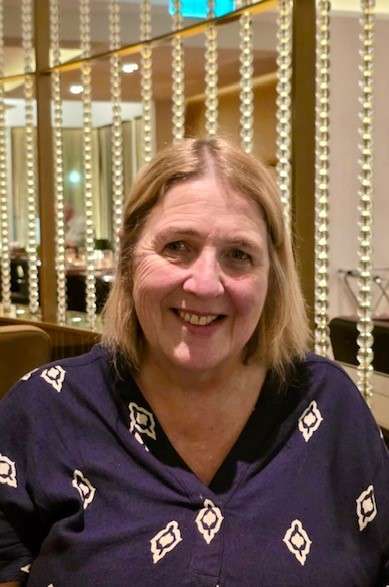
I’m originally from Liverpool, but I’ve lived in the Midlands for nearly twenty years now. Before my stroke, I worked in a large 24-hour Tesco store. I was responsible for the checkouts, the café, the tobacco kiosk, the petrol station, the pharmacy – anywhere there was a till, that was my area. If something went wrong, I fixed it. If staff needed support, they came to me. I was constantly on my feet, doing 25,000 to 30,000 steps a shift. I was busy, active, always moving.
Then 2020 happened.
Like so many people, that year hit hard. I lost my mum at the beginning of the pandemic. Work became relentless overnight. There was panic buying, staffing pressures, social distancing, people frightened and frustrated. It felt like spinning plates that never stopped spinning.
On top of that, my son, who is autistic, had been assaulted and there was a police investigation ongoing. I was trying to hold everything together, but inside I was crumbling. Eventually I went off work because I just wasn’t coping.
I’ve always been a bit of a fighter. I was a single mum for years before I remarried. I fought for my son’s funding, for his specialist school placement, for the support he needed. When you’re a parent, especially to a child with additional needs, you don’t really get a choice, you just get on with it. I thought I understood pressure – but nothing prepares you for a stroke.
My stroke happened in December 2020, the day before my 52nd birthday. Technically I was still 51 by just one day.
It was early on a Sunday morning. I woke at 7am, which I never normally did on a Sunday, but I was excited. It was my birthday the next day and, because of lockdown, I hadn’t seen my daughter for months. I went downstairs, made a coffee, and stood at the back door with a cigarette. That was my breakfast, a coffee and a smoke. I threw the cigarette into the sand bucket and went to lock the door. I picked the key up in my left hand and went to put it in the lock with my right and my arm just wouldn’t move. It wasn’t weak. It wasn’t tingling. It just wouldn’t respond. I knew instantly something was wrong. Your arm doesn’t just stop working.
I went upstairs and woke my husband. He said my face had dropped and I was slurring my words. I didn’t even realise. He went to call an ambulance and I was trying to grab the phone off him, saying, “I don’t want to go to hospital, I’ll catch COVID.” That was my biggest fear at that moment, not that I was having a stroke, but that I might catch COVID.
Our neighbour across the road is an A&E nurse. My husband ran to get her. The last thing I remember is him holding me up while she crouched in front of me, talking to me. Then I slumped. After that, nothing.
I don’t remember the ambulance. I don’t remember being transferred from Derby to Nottingham for neurosurgery. I don’t remember my husband being taken into what he calls “the bad news room.” I don’t remember my daughters being brought in because they didn’t know if I was going to survive. I had a massive haemorrhagic stroke, a large bleed on the brain. Surgeons had to remove part of my skull to evacuate the haematoma and then fix it back in place. I can still feel the indentations in my head.
I call them my battle scars. The bleed was caused by undiagnosed hypertension (high blood pressure). I’ve not touched a cigarette since.
My Time In Hospital
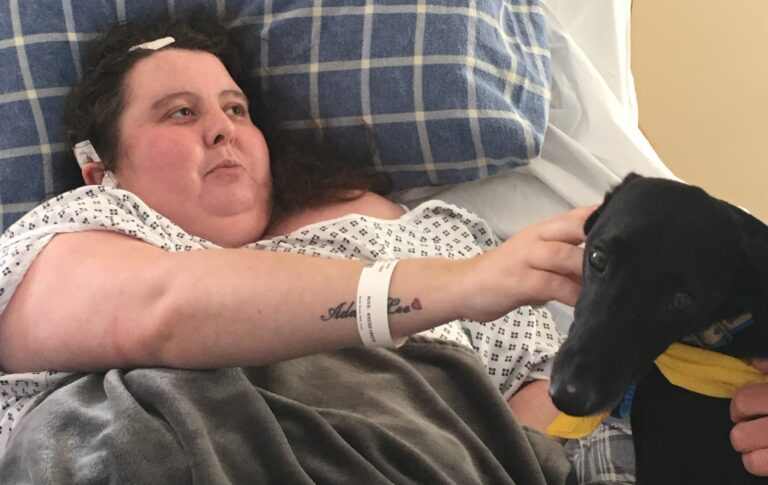
I was in hospital for months, because of COVID, I had no visitors, four months on a stroke rehabilitation ward without my family by my side. Rehab was limited at times because staff were furloughed and wards were stretched. It was an incredibly lonely experience. There were moments I genuinely believed I would never leave hospital, that this was my life now.
When I finally came home in March 2021, it was on a stretcher.
There was a hospital bed in my living room, a commode next to it, a wheelchair parked nearby. My front room looked like a ward. I hated it. I had to sleep downstairs for nearly a year because I couldn’t manage the stairs. I couldn’t sit upright without sliding down the bed. I was hoisted to use a bedpan. After physio, I would need to sleep for an hour just to recover from the effort.
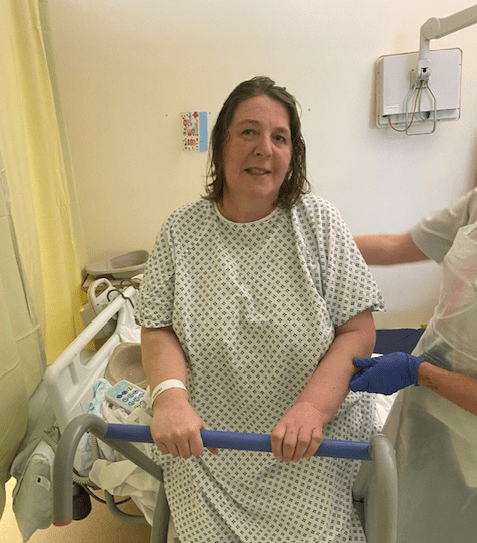
The therapists would set targets. “You need to be able to sit upright for an hour.” So I’d sit for two. “You need to manage four hours.” I’d aim for six. Whatever they said I needed to do, I tried to push a little further.
I think a lot of that came from being a mum. My son still needed me. I had always fought for him and now I had to fight for myself.
Recovery was slow and complicated. I have severe spasticity in my left arm and leg. My arm remains mostly unusable. I have sensory loss. If you touch my arm and I’m looking at it, I can feel it. If I’m not looking, I feel nothing. I once burned my thigh on a heated towel rail and didn’t know until my husband spotted the mark. I’ve cut my foot in the garden and only realised when I saw blood on the floor.
My working memory took a big hit too. My long-term memory is brilliant, I can tell you things from decades ago, but short-term memory? – not so good. I have notebooks and pens in every room, Post-it notes everywhere. If I don’t write it down, it’s gone.
Emotionally, that first year was the hardest of my life. I thought everything I’d worked for had vanished. I was angry. I threw things. I took it out on my husband, which I’m not proud of. The highs and lows were intense. But then I’d manage a few more steps in physio, or stand a little steadier, and hope would creep back in. That hope, that tiny possibility that I might walk again, kept me going – and slowly, I did.
In August 2021, my cousin passed away from a massive brain haemorrhage. It was tragic, but it brought me out of my ‘pity party’ and made me realise how lucky I was and how different things could have been. It helped fuel my determination to make the best of things.
I had three years of physiotherapy and occupational therapy. It started daily, then weekly. If someone cancelled, my physio would ring and offer me their slot because she could see how determined I was.
My arm wasn’t responding much and it became apparent it was paralysed along with my whole left side, so I poured everything into my legs and I made a decision to focus on my walking. I even had surgery on my Achilles tendon to improve my foot position so I could get my heel down properly.
Today, I walk with a stick. I can manage a couple of thousand steps if I push myself. That might not sound like much to some people, but to me it’s huge. I can stand. I can move. I can go out.
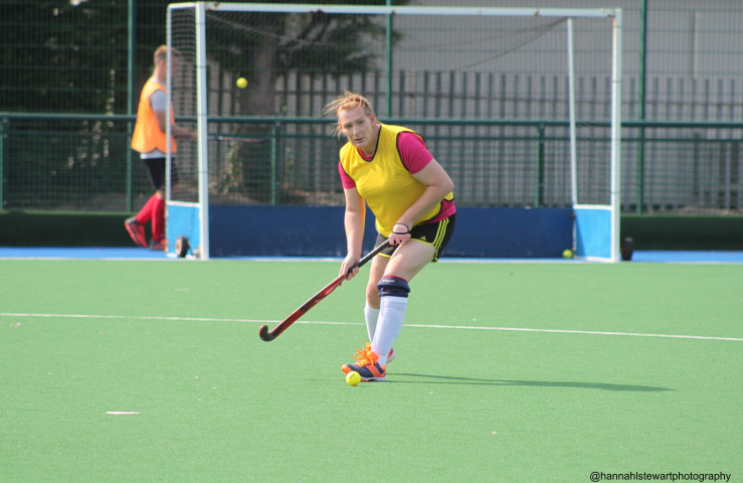
In the five years since my stroke, I’ve been on three cruises. I’ve been to Disney World. I’ve climbed into a tuk-tuk in Portugal and onto a barge in Amsterdam. Yes, it takes planning. Yes, it’s slower – but I do it. The only real limits are the ones we place on ourselves.
Stroke changed what matters. The small irritations of life just don’t have the same power anymore. It’s also brought us closer as a family. My son helps me physically; lifting washing, loading the machine – and through helping me, he’s become more independent himself. In a strange way, we’ve grown together through it.
Finding Support And Help After My Stroke
One thing I’ve realised is how isolating stroke can be. When you talk to people who haven’t experienced it, sometimes you see their eyes glaze over. They mean well, but they don’t really get it.
When you speak to someone who has been through it, someone who understands fatigue, frustration, the grief for your old self – that connection is priceless. That’s why I’ve decided to help open a new Different Strokes support group in Derby at the end of this month. If I can sit in a room and say, “I’ve been there,” and someone else feels less alone because of that, then something good has come from all of this.
Peer support matters. Being understood matters.


Life didn’t end at 51. It changed. It’s harder in some ways. I have to think ahead more. I can’t do everything I used to do. But I’ve gained perspective, strength I didn’t know I had, and a deep appreciation for being here.
People say life begins at 50. I had my stroke at 51 and thought it was over – it absolutely wasn’t.
Your donation helps others like Maggie on their journeys
There are 100,000 strokes in the UK each year with 1 in 4 happening to somebody of working age or younger. Different Strokes aims to promote independent stroke recovery and help these younger stroke survivors reclaim their lives.

Make a smile lottery is a weekly fundraising lottery. A fun and exciting way to help Different Strokes raise vital funds that will secure our future.
It only costs £1 per play, and you can choose to play every week or whenever you feel like taking a chance and doing something good. For more information click here.