Jeremy’s Story – Haemorrhagic stroke at just four years old causing right sided hemiplegia and aphasia
- Greg Hollingworth

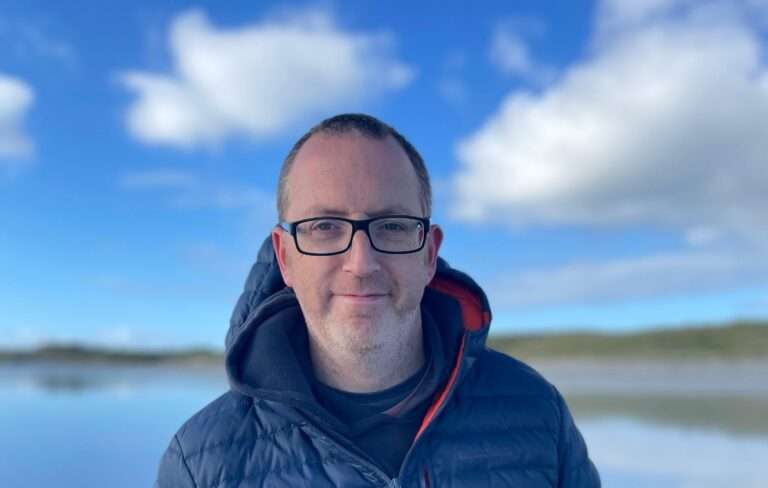
I feel now, finally, and at the age of 41, it is the right time to share my experiences of being a young stroke survivor; to hopefully help increase knowledge and awareness of the symptoms and aftereffects that this type of brain injury can cause. Hopefully writing my experiences and thoughts down can help someone else who’s currently undergoing rehabilitation from a similar form of stroke, or just identify with any of the challenges my family and I faced. I also think this will be quite a cathartic experience for me.
I think the first thing that has to be said is that having a stroke as young as I did, caused huge upheaval and pressure on my family; not just for my parents, but also my grandparents, aunts and uncles. To this day they continue to help and support me where it is needed.
The day of my stroke I was sent home from my local preschool unwell, vomiting with a high temperature and unable to stay awake. These symptoms/illness continued into the afternoon, until the on-call doctor from my local GP practice was called, then subsequently in an ambulance to take me to Huddersfield General Hospital, which was nearby. It was there that it was (very quickly) decided (chiefly by a paediatrician) to transfer me to Pinderfields hospital in Wakefield, which at the time had more specialised equipment to deal with my suspected injury. Following a lumbar puncture I was diagnosed with a bleed to the brain and placed into an induced coma and admitted into intensive care.
This was explained to me in later years, that this was to allow time, to take pressure off the brain and allow for more testing and examination to be done, as it was still unclear as to the severity of the brain injury (I understand this was done this way to allow my brain to recover from the shock/trauma).
It was then discovered from this that I had suffered an intracerebral bleed; right side hemiplegia. I spent two weeks in an induced coma, with it being unclear of what damage I would face when I woke up. Eventually I came out of intensive care and following assessments from neurologists it was explained that blood pressure on an inadequately formed cell had burst, damaging the left side which is responsible for the right side of my body and speech.
It was advised the scans (CT and MRI) showed that the damage had been done, and any surgery was not required – and that self-repair to a limited extent was the best option. However, I would be hemiplegic/paralysed on the right-side and physiotherapy would be required to gain any sort of movement and it was unclear if speech would return.
The neurologist did explain to my parents that there was a chance that due to my young age the brain was not fully formed and there was a reasonable chance of speech returning, with intense speech therapy. There was also a chance of developing epilepsy at some time in the future. Unfortunately, at the age of 13 I had my 1st epileptic seizure. Today after a few years of trial and error with medication my epilepsy is controlled reasonably well, with a small amount of medication and sensible lifestyle choices (i.e. getting plenty of sleep and a balanced diet). Everything in moderation.
During my stay in intensive care my parents were able to stay with me 24/7; my mother doing the day shift, and my dad taking over at night (with the staff setting up a studio apartment close by) and with my little sister being sent to my auntie’s and uncle’s home to stay for roughly two months.
To me, this an example of the upheaval a stroke can take on the whole family, not just the individual. I obviously have very little recollection of this time in my life
Once I was out of hospital (initially returning home in a wheelchair and without speech) speech therapy, physiotherapy and hydrotherapies started soon after; being a quite intense schedule for everyone involved.
As the parents of a child that’s had a stroke there was very little information and similar experiences for them to research. Rehabilitation was relatively unknown and it seemed trial and error in terms of outcomes. In the late 80s early 90s childhood strokes were pretty much unheard of!

Childhood strokes are still rarely discussed today, so I want to help Different Strokes raise awareness that they are more common than most people realise. They are certainly not reserved for people in later life.
My recollection of my experiences came a little further on, and after a few special needs assessments by the local council, when I started to reintegrate into the main stream school system at roughly around the age of 6.
Very Close to our Family home at the time was a village called Holme and their junior and infant school combined had no more than 30 pupils. I think while I was there, in my year group there were just 5 students. So, it was decided that if I were to stay in mainstream education, that this was the place I’d be able to get the one to one education I needed to catch up, as it was noted that I was falling behind educationally at this time.
It took me a substantial amount of time to catch up in all aspects; educationally, mentally and socially.
Throughout my education I felt the pressure of trying to catch up, but looking back now I see most of the pressure was coming from myself, and a constant need to compare to my school friends and peer groups, which was an unfair comparison. Even with the strides I’ve made, it is still an unfair comparison for me to make in adulthood.
Comparison the thief of joy and all that
Alongside me returning to school I continued my rehabilitation with physio appointments. My stability and walking had started to improve; I then started hydrotherapy to work alongside this, and to get my right side more active.
This was important, as by now both leg and arm had started to spasm up (involuntary movements) and become increasingly painful. To begin with I remember this not being a pleasant experience and at the time didn’t feel much need or noticed much benefit, but got better in time and I’m sure this did contribute to my recovery as well.
The one piece of therapy I started, but soon developed as a hobby as I looked forward to every Sunday, was horse riding. My parents found a horse-riding stables that would accept me.
This would be around the age of eight, and I continued this to around my early teens. As it started as an idea of rehabilitation, and to encourage me to use my right arm and leg to get a bit more movement, it became more of a hobby than a chore.
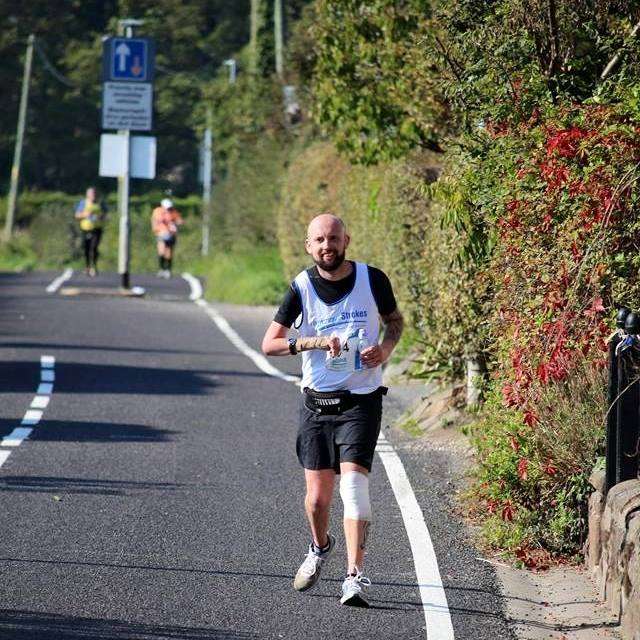
A few years later I joined my local running and athletics club at the age of fourteen and I was encouraged to compete in disability sport athletics. I kept on competing up until my mid-20s. This gave me a chance to compete on a much more level playing field and helped me massively with my confidence – and I’m sure socially as well.
I would encourage anyone to get involved in disabled sport, as they cater for all abilities and physical restrictions. I chose to concentrate on athletics, but there are many different sports and activities to get involved with at all levels.
My suggestions regarding early stages of rehabilitation
(And I know this is easier said, than done)
Firstly: I’d suggest (as hard as it is to avoid) comparison to others or to yourself pre-stroke is unfair; and in my case it would be unattainable. Rehabilitation goals can be testing but must be measurable, so that progress can be seen by yourself and those closest around you. If it becomes more than this and becomes an unhealthy obsession, I know I found this really can become counterproductive, and for me it played havoc with my mental health. In my personal experience, very little was achieved while in that frame of mind.
“Take and enjoy the Small Wins “
Secondly I’d like to mention not being put off by “perceived failures” in terms rehabilitation. You might have some “perceived failures” every now and then. Try not to let it play on your mind too much and try your best to think long term. I have plenty examples of when this happened to me at different stages of my life. An example of this would be when I was roughly 10 years old, maybe even a little older. All my friends I played with went through stage of playing on their bikes. Without stabilizers I couldn’t do it, as my balance was nowhere near good enough. I tried a fair few times but kept falling off, that was despite all the physio I was doing, the mind-numbing balancing, coordination drills and core exercises.
The physiotherapists were seeing improvements and others around me were seeing the benefits. I remember I wasn’t. I was judging success on if these exercises were going to magically help me to stay on this bike; it never did. I’m hemiplegic and eventually I had to begrudgingly accept that this wasn’t going to be achieved and to be patient to see improvements.
I was young though to be fair, so I was short on patience.
However, I’m almost certain all those exercises as a child and continuous small improvements throughout helped my walking ability. I also gained strength throughout my body, which has enabled me to be as mobile and physically independent as I am today.
Now I go to the gym where I still concentrate on improving my core strength, balance and any improvement on my right side (especially my right arm) gives me plenty of satisfaction. It will never be as good as it could have been without my brain Injury, but once again:
“Comparison is the thief of joy”
Thirdly I would suggest an occupied mind is a healthy mind and a bit of humour where possible is always a good sign.
I’ve always found if I’ve got a couple things to concentrate on (whether it be a learning project or hobby/interest related) my health is so much better, along with my focus and concentration span. There are still some effects on my ability to communicate, which will be lifelong; possibly less evident to others than myself and those close to me.
A good example of these would-be my speed of thought, the breaks in concentration and the ability to communicate what I was thinking and process this in a correct and concise manner to speak. I can remember becoming increasingly frustrated with myself due to this, especially in my late teenage/early twenties.
What did help me was that I remember somebody mentioning a very basic analogy
“The brain is similar to a CD”
After a stroke it’s like it’s constantly spinning, but after a stoke had unfortunately had developed a scratch. The CD would then not work perfectly all the time if it had developed a scratch; it would jump and skip on occasions.
This fitted in well with the parallel comparison of the occasional loss of concentration, when I was speaking or listening, zoning out and losing my train of thought mid-conversation, which I still experience from time to time. I believe this simple analogy helped me accept and better understand my injury at the time, helping me to make small allowances for myself. Also moving forward to create strategies to allow improvements and ways to deal with it.
I do think the intense and immediate speech therapy work done early on laid the foundation and had a bearing on the improvements made later in life. Otherwise as frustrating as it was then, it could have been a lot worse.
I have realised this has shaped my personality and character, in the sense that I do like organisation and structure in all aspects in my life and can get frustrated if this isn’t the case.
I’d be interested to know if my fellow younger stroke survivors have found this:. the need to have more structure in their lives in all settings of their social, educational and also work life ?
Although I’ve always considered myself a reasonable ‘chilled’ person without a plan, or if I’ve organised myself to do something and for some reason it hasn’t happened the way I had hoped, I can become frustrated and overcritical with myself.
In my work career I’ve benefited from a scheme called ‘Access to Work’ where I’ve been able to apply for funding for (and in my case) taxis to and from work, based on the nature of my disability, where I struggle with fatigue and the possibility of epileptic seizures. They can support disabled people removing obstacles and barriers in various ways, allowing them to get into or stay in work with funding or equipment.
This has helped me to concentrate on work and take away the stress and physical demands of using public transport to and from work. In all the jobs I’ve had I’ve also benefited from them all having a certain amount of process and structure to them with just enough variation to keep my mind occupied and engaged.
Now working in my current role as a data analyst on a hybrid basis, this has helped me massively by cutting down travel and preparation time but with also the option to go into the office and engage with work colleagues on occasions when I get fed up of my own company…..
Growing up knowing I’d had a stroke at such an early age I have mixed emotions
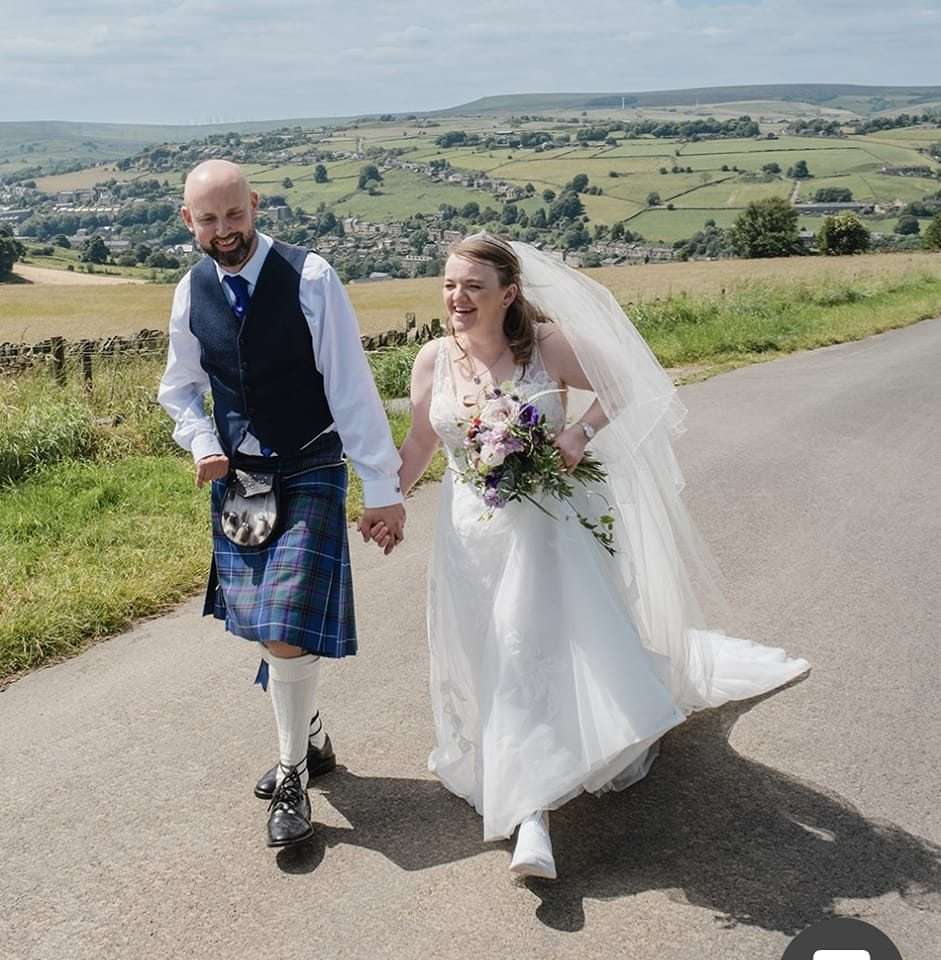
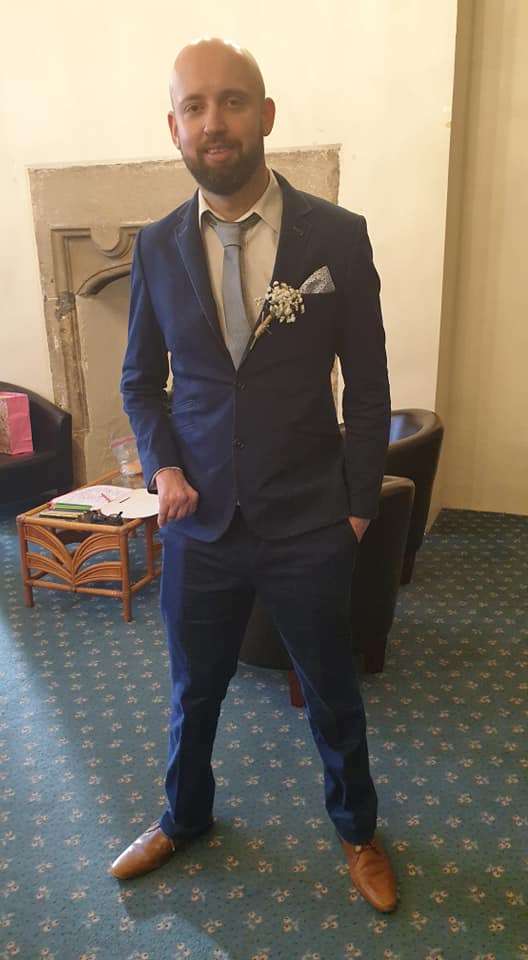
Was I extremely unlucky this had happened to me or was I unbelievably fortunate that this happened to me at such an early age? I imagine the truth probably lies somewhere in the middle, and maybe that’s a view that other young stroke survivors have? I’d love to know what our community thinks about this. I’m now married, we have been together for 8 years and married for 2, living independently and enjoying life. Looking forward to the future. I think the hard work done by all involved at such an early age was crucial in my rehabilitation.
The one key message I’d like to put over as mentioned small wins are important, and any perceived failures need to be moved on from quickly, with a bit of humour where possible. Due to the after effects of my stroke (and subsequent epilepsy) I have never and believe I will never be able to drive. However, I have never or will ever be asked to be the nominated driver on a night out, every cloud eh?
I came across Different Strokes in my early twenties and have been on their mailing list ever since, reading many of their inspirational stories and often good practical advice that has be shared by members – as well as keeping up to date with all their impressive work they are carrying out to help individuals who have a stroke in early life.
I hope moving forward I can get involved with some fundraising initiatives along with the research projects that are ongoing.
Your donation helps others like Jeremy on their journeys
There are 100,000 strokes in the UK each year with 1 in 4 happening to somebody of working age or younger. Different Strokes aims to promote independent stroke recovery and help these younger stroke survivors reclaim their lives.

Make a smile lottery is a weekly fundraising lottery. A fun and exciting way to help Different Strokes raise vital funds that will secure our future.
It only costs £1 per play, and you can choose to play every week or whenever you feel like taking a chance and doing something good. For more information click here.