Diane’s Story – Ischaemic Stroke at 49
- Greg Hollingworth

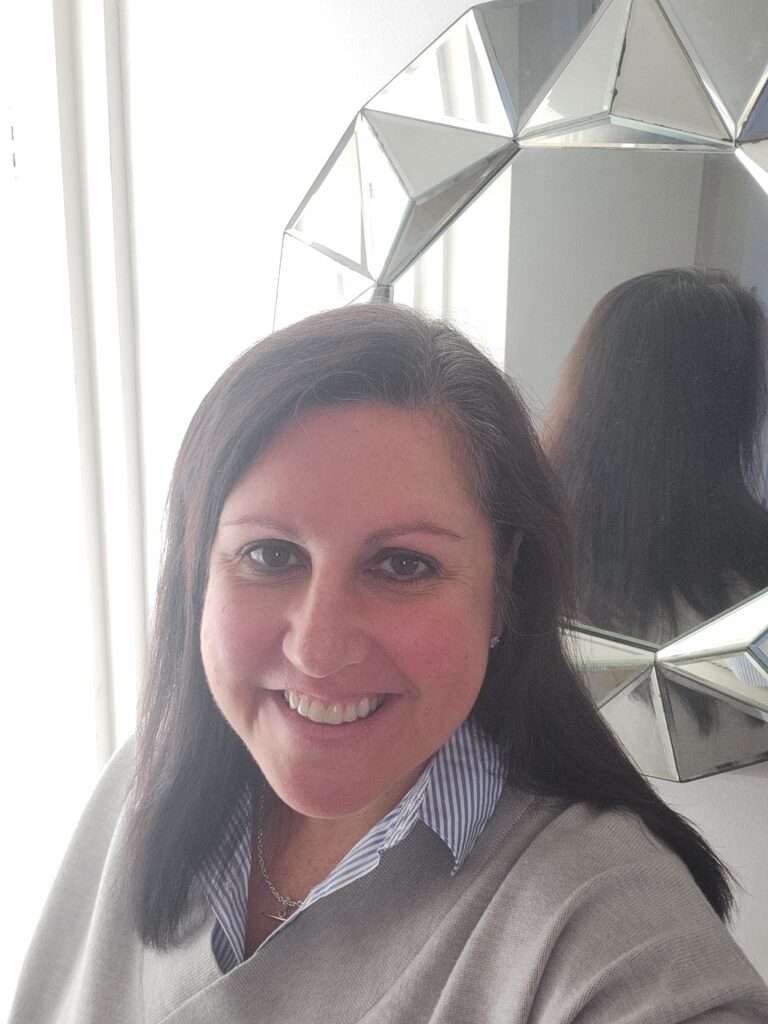
I never imagined I would have a stroke. I was 49, newly settled in the UK, and finally feeling like life was starting to move forward again.
I live in a small village just outside Southampton. I moved here from Connecticut in the US about two and a half years ago. My visa took nearly two years to come through, so when it was finally approved in January of 2025, I felt like I could breathe again. I found a job, started work, and after six weeks I felt settled, capable and hopeful.
Then, on 14th May, everything changed.
That morning began like any other. I got up, got myself ready, got my 12‑year‑old daughter ready for school, dropped her off and drove to work. I was busy, independent and high‑functioning.
At work, we were in the middle of moving offices and a camera crew had come in to film a ‘before and after’ video. As part of it, we all walked from the old building to a nearby park.
I walked there without any problem. But when I turned around to look at the owner, something felt wrong. I grabbed the hand of the woman next to me and said, “Something’s not right.” I couldn’t explain it any better than that – I just knew.
I’d done first aid training a couple of weeks earlier, so I knew to put myself into the recovery position. Someone called 999. My speech was badly slurred and delayed and I remember feeling like I was being treated as if I’d been drinking. But the ambulance arrived within minutes. I was blue‑lighted to Queen Alexandra Hospital.
In A&E, everything moved fast. The stroke consultant took one look at me and said, “Let’s go, let’s go, let’s go,” and I was taken straight for a CT scan. I remember looking at the head of HR, who had come with me in the ambulance, and saying, “I think they think it’s a stroke.”
It was.
I’d had an ischaemic stroke – a clot – in my basilar artery in the cerebellum, one of the worst places it can happen. Because they caught it quickly, I was able to receive clot‑busting treatment just over an hour after the onset.
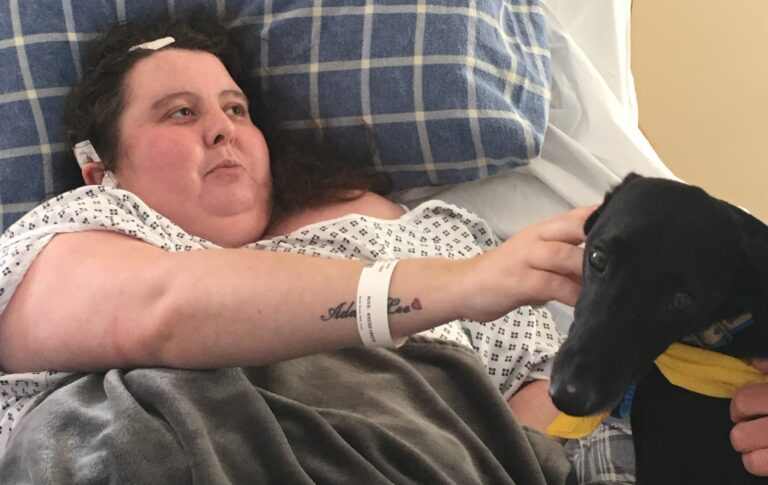
I stayed in the hospital for five days. I hoped that once the treatment was given, everything would snap back into place. It didn’t. My biggest ongoing issue has been my vision. I have diplopia (double vision) and without my glasses I see two of everything. I now wear a prism in my lenses to make the world line up again. Surgery may be an option one day, but for now it’s a case of waiting.
My left side was also affected. I can still do everything, but it’s slower. Before my stroke, I could type 50–60 words a minute. Now it’s more like 30–40. My son joked that I’m just typing like everyone else now.
I was discharged home after five days, but that’s where things became harder in a different way. I fell through the cracks between hospitals and services. Follow‑up care didn’t happen when it should have, and I quickly realised that managing my recovery was becoming a full‑time job in itself. Chasing appointments, pushing for referrals, and trying to get the support I needed was exhausting – especially when all I really needed was to rest.
Emotionally, the adjustment was huge. I went from being independent and capable to having my whole life turned upside down. I saw a psychotherapist, who helped me understand something vital: I had to grieve for the person I used to be. That gave me permission to feel what I was feeling, and then slowly move forward.
One of the hardest things for me was not being able to drive. Losing that freedom meant having to rely on other people, something I wasn’t used to at all. It really brought home how much a stroke takes away, even when the effects aren’t always obvious.
Support has made all the difference. My husband has been my rock throughout all of this, and my family has been there when I needed them. I also found Different Strokes after my consultant appointment in Winchester. Being part of the Southampton group has helped me feel less alone. Even just reading other people’s stories reminds me that stroke isn’t just something that happens to ‘old people’, and that younger survivors face their own unique challenges.
I’m now at a point where I’ve accepted what’s happened. I’m not in denial or asking ‘why me’ anymore. I’m alive and that matters. I’m planning a phased return to work and while I know there may still be challenges ahead – I’m hopeful. If there’s one thing I’ve learned, it’s this: you have to be your own advocate. Listen to your body. Ask for help. Make sure you’re getting the support you need, even when it’s hard to push for it.
Having the right people fighting in your corner matters – but sometimes, you have to be the one who starts the fight.
Stroke changed my life in ways I never expected. I’m still adjusting, still adapting, and still learning who I am now. I may not love the ‘new me’ yet, but I’m learning to live with her and that’s a start.
Your donation helps others like Diane on their journeys
There are 100,000 strokes in the UK each year with 1 in 4 happening to somebody of working age or younger. Different Strokes aims to promote independent stroke recovery and help these younger stroke survivors reclaim their lives.
Make a smile lottery is a weekly fundraising lottery. A fun and exciting way to help Different Strokes raise vital funds that will secure our future.
It only costs £1 per play, and you can choose to play every week or whenever you feel like taking a chance and doing something good. For more information click here.