Kyra’s Story – Ischaemic Stroke at 22
- Greg Hollingworth

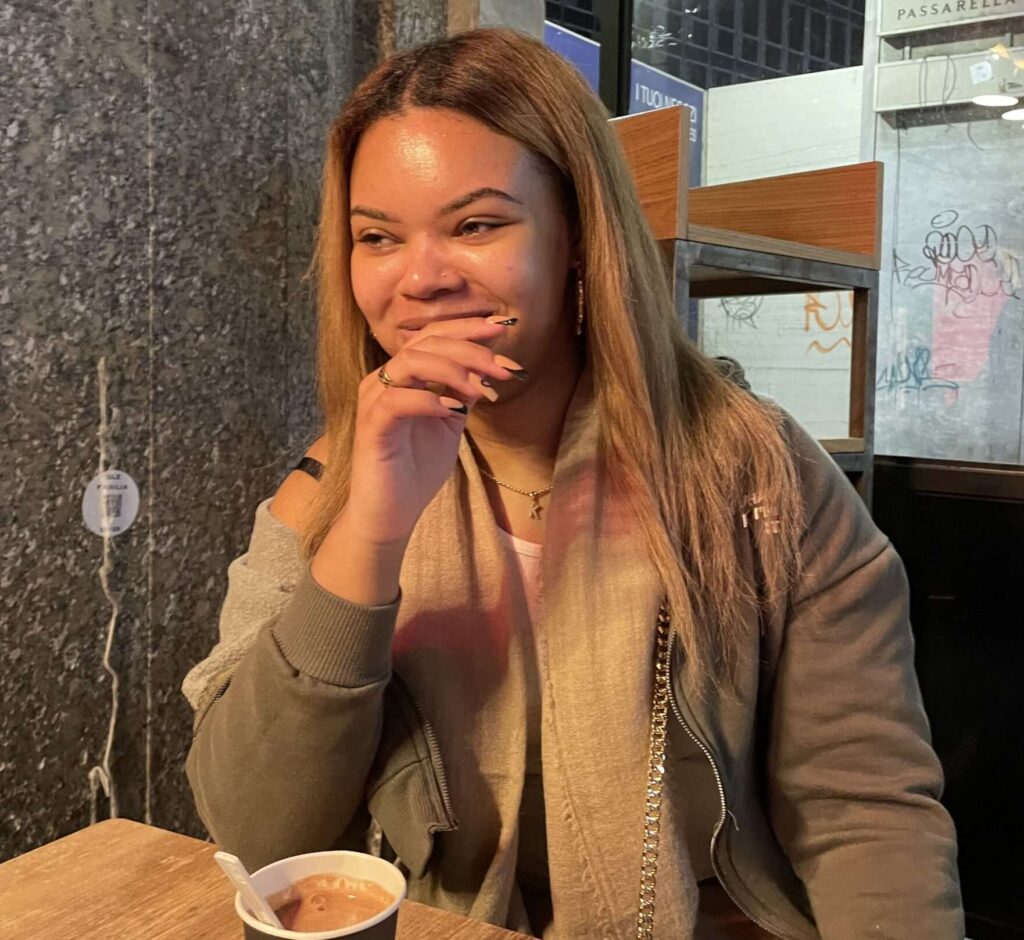
I was 22 when I had my stroke. Before that, I was just living like any other 22‑year‑old – going out with friends, seeing my family, working. I’d just started what I thought was my dream job in the prison service. It felt like everything was falling into place. But then, within weeks, it all changed.
I’d been struggling with pain in my left leg for ages. I was back and forth to appointments, and no one seemed to really take me seriously. It felt like I had to push and push for anyone to look properly into what was happening.
I actually has the stroke whilst I was in hospital for my leg – people say I was lucky it happened there, and maybe I was, but it’s hard to call it lucky when I’d been saying something was wrong and no one listened.
The strange thing is, I don’t actually remember much of those first days. I had the stroke on 1st October 2023, but I don’t remember anything until about the 6th. It’s like there’s a week of my life missing. After that, it’s all one big blur – like everything happened in a single day. When my mum told me I’d had a stroke, I didn’t even believe her at first. I thought she was lying. It didn’t seem real.
No one really explained it to me either. Nobody from the hospital sat down and said,
“Kyra, you’ve had a stroke. This is what’s happened. This is what it means. This is the plan.”
I wish they had. I like knowing what’s going on – even if it’s bad – but instead it was just a whirlwind of tests and medical jargon I didn’t understand. That’s where my mum came in. She didn’t leave my side. She works in health care, so she understood more than I did, and she asked all the questions I didn’t even know to ask. If she hadn’t been there, I probably would’ve just broken down completely.
It never really hit me straight away that my whole life had changed. There was no moment where I thought,
“This has happened, and this is what it means.”
And that’s hard for younger people especially. At my age, I didn’t expect this. I was working, planning my future, living life – and suddenly I was in a hospital bed being told I couldn’t walk!
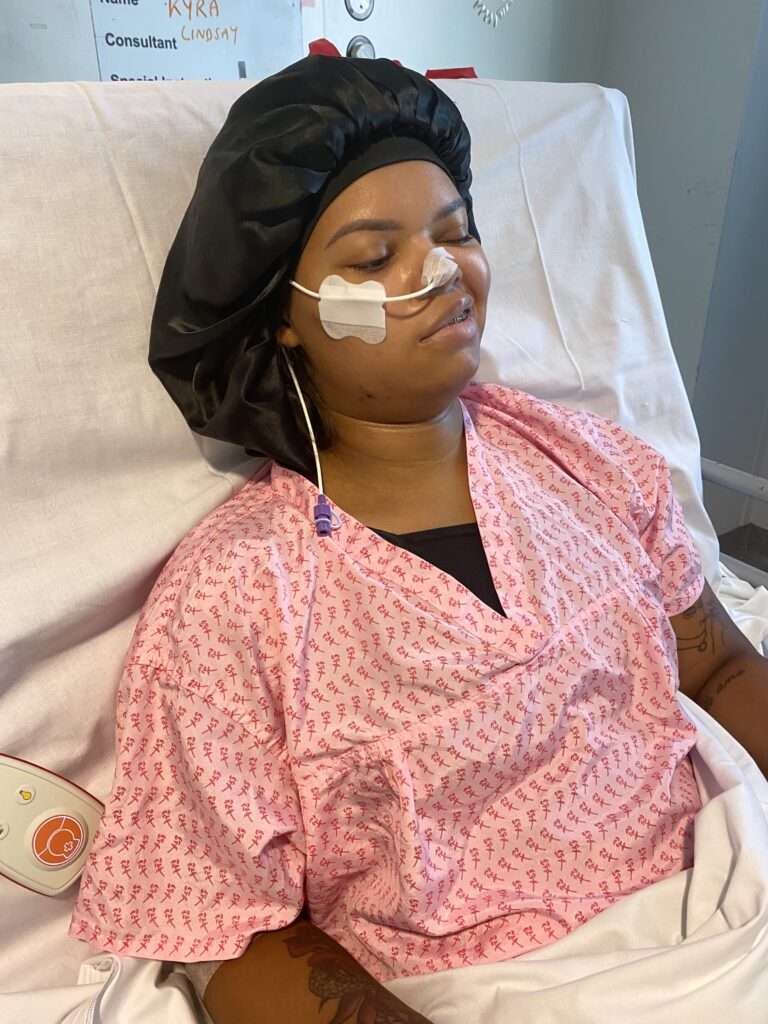
If you’re young and going through this, I think that’s the biggest thing: the shock. You don’t expect it. You don’t have time to process it. One day you’re fine; the next everything is different – no one really prepares you for that. It’s frightening not knowing why it happened. If there’d been a cause, at least I could change something, but there wasn’t. It just happened. And that’s scary because if it happened once, it could happen again.
I spent about two months in hospital after my stroke. I know that’s not as long as some people, but at 22 it felt like forever! I think part of the reason things weren’t picked up sooner is because of my age. My mum has practically turned into a doctor since it happened – she’s gone through all my records, asked endless questions, and found that lots of my markers were high, but no one checked for the right things. I get that they didn’t expect a stroke in someone my age with no family history or health problems, but at the same time, the signs were there.
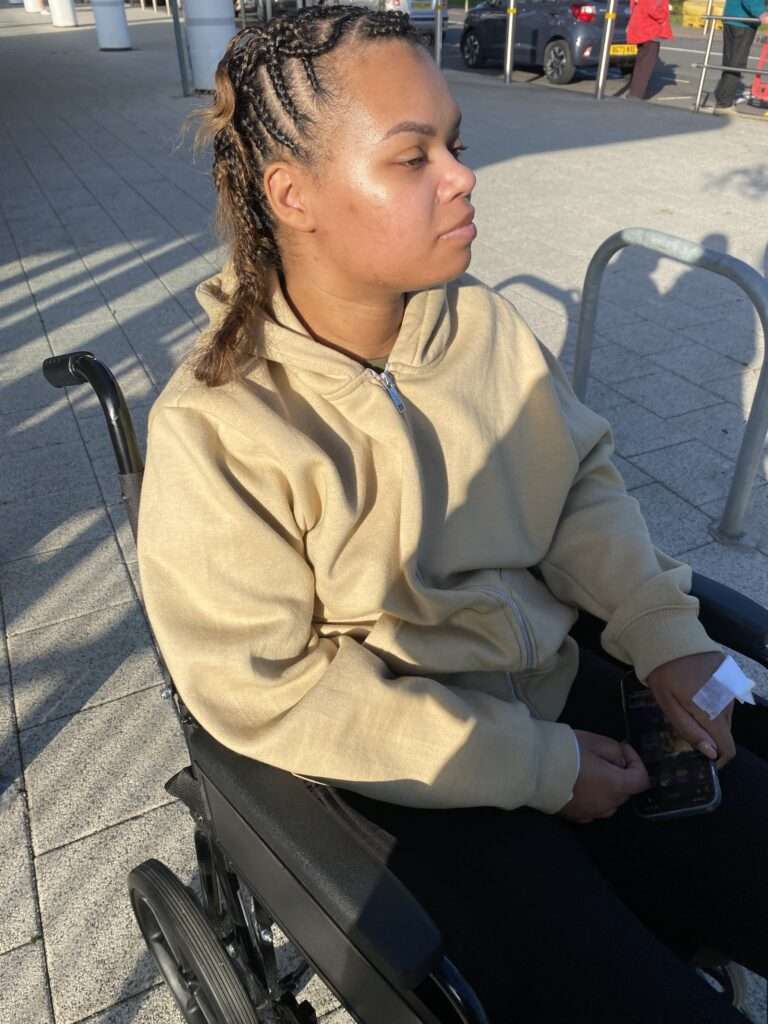
Being in hospital was tough. Days blurred into each other. I felt cut off from everything; like life was going on outside while I was stuck inside four walls. My mum and sister were my lifeline – we’ve always been close, but during that time they were everything. I’ll never forget the first time my mum wheeled me outside. I’d been in there about five weeks. She found a wheelchair, and we just went out. I’d actually written it in my diary: “Going outside today.”
I’ve never felt so happy to breathe fresh air, see people, and feel part of life again.
We made little moments special – a coffee shop breakfast, lunch together – it almost felt normal. It helped me cope, like I wasn’t just living in a hospital but still living my life. Those moments, and having my mum and my little sister by my side, made all the difference.
Before my stroke, I wouldn’t say I was totally carefree, but I could be. Nothing really bothered me. I’d always worked, always had money coming in. I just enjoyed myself – holidays, time with friends, living life. I felt like things were finally falling into place. I’d got the job I wanted, and for the first time in a while, I felt good about the future.
Then the stroke happened, and everything changed. I went from feeling confident to feeling anxious about everything. I’d never been like that before. Suddenly I worried constantly – about my health, about my future, about how people saw me. At first, I didn’t even want to go outside. I hated people seeing me in a wheelchair. I felt ashamed, even though I can see now there was nothing to be ashamed of.
Everyone kept saying,
“You’re young, you’ll recover quickly,”
but when I didn’t, I felt like I’d failed. I’ve always put pressure on myself to meet goals and deadlines, but recovery doesn’t work like that. I wanted answers – when will I walk again? When will I be myself again? I HATED hearing “not yet” – it was frustrating and, at times, humiliating needing help for basic things.
I just wanted to be independent, to feel like me again, but that pressure I put on myself made it harder. It’s something I’m still learning to manage – how to let go of those expectations and just focus on what progress I am making. If I could give advice to anyone going through this, I’d say:
“Don’t be too proud. Put your ego aside.”
That was one of my biggest struggles – I hated asking for help. I felt like I was failing if I did, like it meant I wasn’t strong enough, but I’ve learned it’s nothing to be ashamed of. Sometimes asking for just a little bit of help – a hand to steady you, someone watching over you – is better than struggling alone, falling, and feeling worse. I wish I’d realised sooner that it doesn’t make you weak. It just means you’re being smart about your recovery.
From the start, all I wanted to do was walk. That was my goal. I didn’t care about my arm at first – which I regret now – I just wanted to get on my feet. I was stubborn. They told me to use my left hand for eating or writing, but I refused. It felt like admitting defeat, like saying I was broken. In my head, if I could do something once with my right side, then I could do it again. That’s what kept me going.
I’d focus on every small win – picking something up, moving a bit further than yesterday – and build on it. People would tell me I couldn’t do things, but I needed to prove to myself that I could. That determination, even when I couldn’t explain it to anyone else, drove me forward.
So if you’re in this position: ask for help when you need it, but also trust yourself. Every little thing you can do is proof that you can do more.
Now I still walk with a stick. At first, that scared me. I didn’t want to be in my twenties and using a stick. It made me feel like a burden, like people would see me and think less of me. I hated going out in a wheelchair too. My mum and sister used to push me around, and I’d notice people staring or giving dirty looks. It made me feel like I didn’t belong, like I was out of place.
That’s what I find hardest – the public perception. People stare, whisper, or make comments. I wish they wouldn’t. If you’re curious, just ask. Kids do it all the time – they’ll point or say something, and I’ll happily explain. I’d rather that than the silent stares from adults. Strangely, it’s often older people who approach me and ask what happened, but people my own age rarely do.
The stroke has made me so much more self‑conscious. Before, I never cared what people thought. Now I do. It’s a weird, uncomfortable feeling, and I’m still getting used to it. But it’s also softened me. I talk to people more, even strangers. I never used to do that. In a way, it’s made me kinder.
When I first heard about Different Strokes, I didn’t realise how much it would change things for me. I came across the charity after my mum found the Stroke Association, and someone there pointed us in their direction. It was a turning point. Up until then, I’d felt very isolated — like I was the only one going through this as a young person. In hospital, I was surrounded by much older people, most of whom had already lived full lives with grandchildren and retirement ahead. Meanwhile, I was lying there thinking,
I haven’t even started my life yet – how am I supposed to live it now?
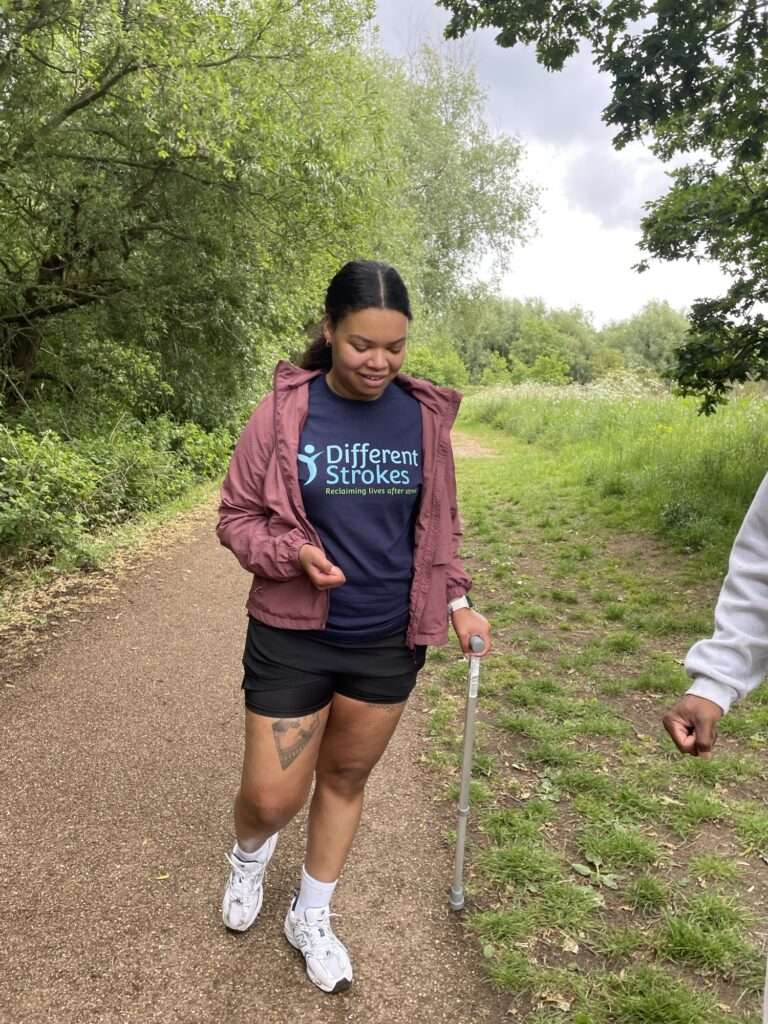
Meeting others through Different Strokes, people closer to my age, gave me hope. It showed me that recovery isn’t just about surviving; it’s about finding ways to live fully again. I wanted to be part of that community, so in May I took part in a 5K walk to raise money. It took me four hours to complete three miles. To put that into perspective, people around me were running the same distance in twenty minutes. But I did it. I raised £600, and more importantly, I proved to myself that I could set a goal, stick with it, and achieve it – even when it was painfully hard. It was as much a mental battle as a physical one.
I also received a bursary from Different Strokes, which allowed me to access physiotherapy sessions in Bromsgrove.
That support was huge. The therapists there pushed me in a way I needed. On my first day, they took away my stick and made me walk across the room. It terrified me, but it forced me to see what I was capable of.
Slowly, I’ve been rebuilding strength and confidence. I only use my stick now when I’m really tired, in unfamiliar places, or when it’s busy. It’s still my safety net, but it no longer defines me.
These experiences with Different Strokes have shaped the way I see my future. Before my stroke, I wanted a serious career — something that made a difference. That hasn’t changed, but now my focus has shifted. I don’t just want a job; I want to help people in a real, tangible way. I’ve seen how much the right support can change someone’s life, and I want to be part of that for others that is why I am going to become a volunteer for the Black and Asian Stroke Survivor project – raising awareness of the increased stroke risk within the Black community.
Looking ahead, I’m excited to go back to work, start driving lessons again, and travel, I used to love holidays, and I want to get back to that. But I also want to appreciate the little things: going for walks in the countryside, seeing a waterfall, even just sitting with friends over coffee without feeling like a burden.
I’m no longer trying to get back to who I was before my stroke. Instead I am becoming this new version of me – someone stronger, more resilient and more grateful.

Your donation helps others like Kyra on their journeys
There are 100,000 strokes in the UK each year with 1 in 4 happening to somebody of working age or younger. Different Strokes aims to promote independent stroke recovery and help these younger stroke survivors reclaim their lives.
Make a smile lottery is a weekly fundraising lottery. A fun and exciting way to help Different Strokes raise vital funds that will secure our future.
It only costs £1 per play, and you can choose to play every week or whenever you feel like taking a chance and doing something good. For more information click here.