

Jo Elliott is a fellow stroke survivor who decided to use her experience to help others. Working as part of a trio of volunteers running our Different Strokes Southampton group.
Here is what the person who nominated Jo had to say:
“Since Jo joined the Different Strokes, Southampton, support group she has become instrumental in the running of the group. She initially joined to get support and after regularly attending the group it was obvious from fairly early on that she wanted to give back to the Different Strokes world and to people who needed support post-stroke, whether they were stroke survivors or carers, or family member affected by stroke.
Jo is now officially a group coordinator, and without her hard work and determination, we would not be able to support the hundreds of stroke survivors that we do. Jo not only conducts monthly visits to the main stroke ward in Southampton General Hospital but has now extended that and meets with stroke survivors/family members in neuro intensive care and other wards on the neuro side of stroke. She has also engaged with speech and language therapists to source a private SALT to provide communication support for members of the group. Without Jo’s determination the Southampton group would not run as well as it does. Jo is also a full time mother to 3 children and a wife.”
We asked Jo to tell us more and how she feels about being our Peer Support Champion Award Winner 2021.
Congratulations Jo, can you tell us a bit more about what you do in your role with Different Strokes Southampton?
“I am a Group Co-ordinator for Different Strokes Southampton alongside Ranj Parmar and Andy Clay.
I started attending the group a few months after my stroke in late 2014. In mid-2015 I started to ask Ranj and Andy if I could assist with anything and that’s when my volunteering began.
I would say my role is namely that of the ‘organiser’, I arrange guest speakers for our weekly meetings and stay connected with relevant local organisations to ensure they know about us and refer stroke survivors to us. Sometimes we are asked to do presentations and we are also actively involved with patient groups and stroke research in Southampton. Pre-lockdown we regularly visited the stroke ward at the local hospital to talk with stroke survivors, listen, signpost and offer advice when required. We have moved this to a weekly virtual service since the onset of the pandemic.
One of my other responsibilities is to monitor our email address and respond to any requests or enquiries we receive. I keep in regular contact with all the members of our group and try to keep them updated whether by email, social media, or our website. This communication has been particularly important during lockdown as we have moved our meetings online; I am aware that some members are unable to join us due to cognitive challenges, or simply by not having access to the technology required. I feel it’s important to keep connected so that when we do return to physical meetings, those who couldn’t come along virtually don’t feel forgotten about.
Ranj and Andy started the group up ten years ago and now all three of us work together, each of us bringing our own skills, experiences, and perspectives and without this partnership the group just wouldn’t be what it is today. Periodically we meet as a committee and decide on the direction of the group going forward. These decisions are led by the experiences of the survivors that we support.
After my own hospital discharge, I felt as if I had ‘fallen off a cliff’ with a lack of some practical support and this is something I’ve witnessed with other survivors too. We also get asked for lots of tips when we speak to stroke survivors still in hospital, so I created a discharge guide on our website as a way of providing the information that they might need.
Due to the generous efforts of our fundraisers and supporters we were already providing subsidised physical rehab for our members, however prior to lockdown we noticed a lack of speech therapy in the community. We therefore sourced a speech and language therapist and have since arranged subsidised speech and language therapy that our Southampton group members can benefit from. We are really proud of achieving this in lockdown and have already witnessed improvements in communication for those members involved.”
What do you like about volunteering?
“When I first had my stroke, I felt very different from everyone else, I was on long-term sick leave from my job, I felt isolated and had lost my confidence. I contacted Different Strokes and received a helpful information pack and they told me about my local group and when they met, however, I just didn’t have the confidence to go initially. Eventually, I plucked up the courage and as soon as I went to a group meeting, I found I got so much empathy from being with other people going through similar challenges. I then realised that I had received lots of sympathy from everyone in my life post-stroke, but it wasn’t the same as the empathy you get from people who are living life after stroke themselves.
I love volunteering and being able to offer stroke survivors an opportunity to mix with people who have gone through the same challenges. I enjoy providing advice, signposting, and being able to help that person to benefit from the stroke community in the same way I have. We all help each other to accept what has happened, and without attending the group myself, I don’t think I would have accepted my stroke and the impact it has had on my own life without talking to and being supported by other stroke survivors. One of the reasons I enjoy volunteering so much is that it feels good to be able to make a difference and help stroke survivors to overcome the new challenges they face post-stroke.
I don’t work anymore due to my neuro-fatigue, so I am not being paid in the traditional sense, however, the remuneration I get is from helping people and making a difference and this gives me purpose.”
How do you feel about being our Peer Support Champion 2021?
“I think most volunteers will agree that you don’t do what you do for accolades and awards – you do it because you care! I get a lot out of what I do already, but this has been the icing on the cake! It has been important for me to support the group in the way that I was supported after my stroke and it has helped me to turn the negativity of having a stroke into a positive.
I was so surprised when Austin called to tell me. My family see first hand how hard I work volunteering for Different Strokes and how passionate and committed I am to our group – they are very proud!”
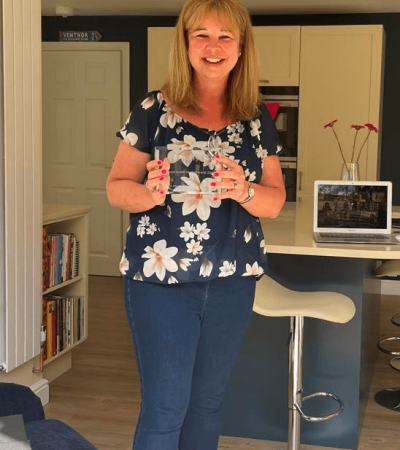
We can see exactly why Jo’s family must be so proud – a fantastic volunteer making a huge difference to the lives of others. We hope you will join us in congratulating Jo on her well-deserved award.