Katy’s Story – Ischaemic Stroke at 43
- Greg Hollingworth

The 1st July 2025 changed the path of my life and now, thirteen weeks on, I cannot tell you how grateful I am to be able to tell this story. It is one that is full of grief for who I was and anger; the latter I hope will fade with time but there have also been lots of wins along the way.
It was a Tuesday, a day I normally head into the office. I had got up, showered and dressed. I had nearly finished drying my hair, when I felt the most intense pins and needles I’d ever felt in my right hand. They didn’t hurt as such, but there was no denying their presence. I genuinely thought I was just overheating – given the day, a hairdryer and lack of time. I sat for a few minutes trying to call downstairs to my husband and son, but they didn’t hear me, which was not unusual for the chaos that normally happens in our home every morning.
After a few minutes I went to stand up, but realised that it didn’t feel normal and I was really falling to the right hand side. I decided at that point it was heat stroke, because in my mind why would it be anything else? I washed my hands, looked at myself in the mirror and I didn’t look any different. I was really happy with how I looked for the day ahead.
Getting down two flights of stairs was hard. I was leaning against the walls – convinced I was going to fall. When I got downstairs I told my husband I didn’t feel right and sat in a chair in the dining room. I got a lecture that I hadn’t been feeling right for a while and it was hard to listen when I never did anything about it. Normally I would fight back, but I didn’t have the energy that morning. I drank a glass of water and decided it would not be right to drive. I wanted to move to the living room to be more comfortable. I had to ask my then eight year old son to help move me as I couldn’t walk. He moved me twice from a low chair to the sofa. I don’t know how he helped carry my weight, but at that point I’d realised something seriously wasn’t right. They went off to do the school run and by now the pins and needles had spread to my right foot and leg, not as intensely but enough for me to notice. I sent a form into my doctor asking for an appointment – something I rarely do, but this was different. By now I’d also looked up my symptoms on the internet and stroke had come up. Because my face and speech were fine I wrote this off. I thought this was a new symptom of migraine – which I have suffered with for over twenty years.
My husband returned from the school run and said he was going to work in a local hotel which he often does. I said I didn’t think I should be alone and asked him to stay whilst I figured out what was wrong. Fifteen minutes later we got a call from the doctors saying we needed to go to A&E immediately. They didn’t say why, just that was the best for us to go.
I wasn’t able to walk to the car which showed me I was getting worse. The hospital is only a ten minute drive – I just wanted to sleep.
Arriving at the Hospital
We got to the hospital and we couldn’t park anywhere near A&E. At this point I felt quite detached from how I was physically feeling. Maybe this was my way of coping, but I felt like everything was happening to me and it was easier to let it be that way. We had to use a wheelchair in the hospital to get me to A&E as I had just become limp.
We got to A&E and my husband had to advocate for me whilst I sat wishing I was asleep in the chair. The waiting time at A&E said 1,068 minutes and I just kept thinking I’d rather go home. We were triaged within five minutes, I can’t remember the questions, I just kept thinking I was wasting people’s time and that I needed a sleep. I had managed to be carried/supported for triage but then sat back down by a window telling my husband I wanted to sleep.
I told my husband to call my manager who had tried to contact me, as by now I was missing from work. I hadn’t contacted anyone as I didn’t know what to say. It was a short call and almost immediately I was called in by a doctor, who said I needed to remain in a wheelchair.
He did tests and asked me lots of questions. I still felt lucid and my face felt fine – I just couldn’t walk and had the pins and needles. He did a test with a pen on the bottom of each of my feet. I remember my left foot jolting out as a reflex. Nothing happened with my right foot. I didn’t really feel anything. This was my turning point. I realised something bad was happening.
The doctor wheeled me elsewhere and said get ready
“We are treating you as a suspected stroke – you’re about to be flooded with people”
My husband didn’t hear what he said so I repeated it, wanting to cry but just not able to – and also there was still a large part of me that didn’t believe this was happening.
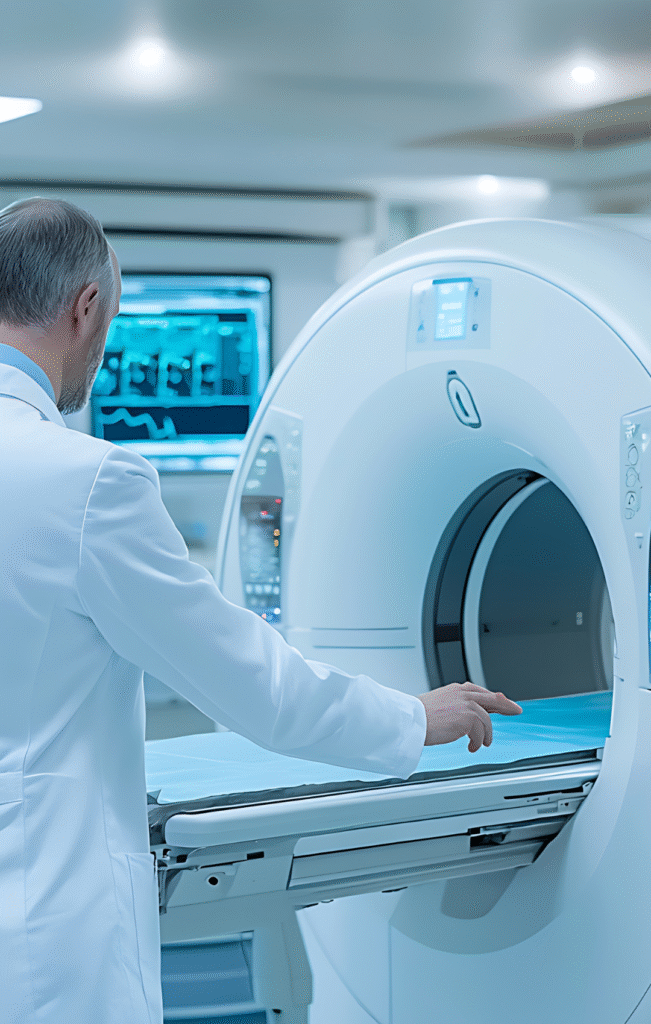
He was right, and within minutes I was wheeled into a room, a woman put a cannula in my arm. I hate needles. I had two other nurses asking me questions, and what I now know was a stroke doctor, running tests on my limbs and the original doctor talking away. I have no idea how much time passed, but I was told they were going to take me for CT scans – and we needed to go quickly. I was wheeled through the hospital in a daze, and all I kept thinking was that I desperately needed the toilet and still hoping I wasn’t wasting anyone’s time.
I was taken in for the scans but we had a little wait as I had A LOT of jewellery on that became my husband’s responsibility, I really struggled to get my earrings out as my right hand wasn’t working. This worried me.
I laid down ready for the scans and remember listening to the instructions. I was told I might need a dye to be put in my cannula, but they weren’t sure yet. It turns out I did need it. I was told it might feel like I was wetting myself, and I’d get a hot flush with the dye. So I only focused on the fact I still really needed a wee. I think this was helpful as I was convinced this had happened during the scan so I wasn’t really focusing on the output.
Once the scans were completed we sat in a holding area with my husband. Two nurses stayed with us whilst the doctors went and held a huddle to view my results. I wasn’t really thinking about anything at this point I was still sat disengaged. The doctors came back round and pulled the curtains round us. I was told was that my brain looked great but they could see a blood clot in my brain stem, which they said had been caused by a dissection. I later understood this was where an artery in my neck had split.
They believed this could be causing a stroke but were unable to confirm. However, what then happened got me worried. They asked my husband if he had power of attorney; I knew what was to come next would be upsetting. I was told that my best chance of the stroke not taking further hold was to have something called a thrombolysis. I seem to remember being told there was a risk when being given this, and that 1 in 18 have a bleed on the brain. I asked to check the number wasn’t 1 in 80, but unfortunately it was that high. This treatment can only be given within a 4-4.5 hour window of the onset of symptoms. I was dangerously close to not being able to have the medicine. We asked for a few moments together and I desperately wanted to call my parents but had no idea what I would say to them. I made the decision that even if I had a bleed on the brain this was the better option, as otherwise the blood clot could cause more damage than what I was already dealing with.
We were still talking when they pulled the curtain round and said that we were losing time, so we agreed. I was wheeled to a large room with people in it, I couldn’t really understand what it was. I’d lost my husband for five minutes, not realizing he was talking to the doctor. I was asked to lay on a bed and then surrounded by people ready for them to administer the thrombolysis. There was much discussion on if it was 11.49 or 11.51, which I didn’t understand at the time. We took 11.51 which means nine minutes later they wouldn’t have administered the medication – I think about that moment a lot.
It turns out the room I was in was resus in case I had an adverse reaction. I’m pleased I didn’t know that at the time. I then had what I remember as a normal half an hour, whereby I got to have the wee I desperately still needed. I believe coherently called my parents and tried to tell them what was happening, without showing how scared I was.
I was moved fairly quickly to the acute stroke ward and was put on a lot of machinery. What struck me most was how young I was compared to the other women on the ward; something I now hate being told as this has become a daily occurrence since my stroke happened.
I was violently sick when I was moved up to the ward. I hadn’t eaten anything that day and had felt very nauseous, likely from hunger or the stroke. Every time I moved some machine I was linked up to beeped. Nothing felt reassuring at that point in time. My husband had to leave me to pick up our son from school and tell him that mummy wasn’t coming home. What I would have given to hug him that day. He was told little information but enough that he understood mummy was quite unwell and he wouldn’t be able to see me that day.
I think this is when I started to detach further from the experience. It was easier to just let things happen rather than overthink it and to just lay there watching the world unfold. My blood pressure became so high at one point I was monitored every fifteen minutes. This meant physically taking my pressure and checking my pulse. It was invasive, but also the repetition became familiar in a short space of time.
I was told that if my symptoms worsened during that time I should tell them, as I would have to have another CT scan as the first 24 hours are crucial post thrombolysis. After 5pm I felt my face, neck and ear had pins and needles and told them a few hours later when I felt clearer. I then had to wait until 1am for a CT scan. Being wheeled on a trolley through the hospital at that time was eerie and again I further detached.
What caused my Stroke?
The next day I knew that I was due to have another CT scan as close to 11.51am as possible, so I laid and waited. I was supported to use a commode, because I realised very early on I had no ability to use my right hand side. This felt degrading at the time, but it was something I became familiar with and I was only able to be moved with two nurses.
The third CT scan showed that the thrombolysis had worked and as I would come to learn over the next few days I had been medically treated effectively. There was no more they could do and it was now all down to me and physiotherapy.
By day three my parents arrived from Majorca where they live and I just felt sad for them. I’d made them pack up early to witness me trapped in a bed, unable to use my right side at all – and very, very angry with myself, and the world. I saw multiple consultants whilst I lay in that bed all confirming I’d had a stroke. I was worried that I had caused it myself; a lot of internet scrolling had occurred when I was able to with my left hand.
What I had no knowledge of is that there are multiple different types of stroke, reasons why it happens and who it can happen to. My husband believed instantly that it was one of two things; either stress or I had used a self-massager on my neck the previous day. No one ever confirmed anything because ultimately they will never know but I like facts and my husband also likes to have a narrative to ground his own thoughts.
The type of stroke I had can often be associated with people who have come off rollercoasters, or is sometimes called a ‘hairdresser’s stroke’ because you can literally move your neck in the wrong way and you have a stroke – something I had no idea about. I unpacked the day before and there were multiple reasons why it could have happened a trip to the hygienist where I’d had to extend my neck on the chair, a trip to get my nails done where I’d used a massage chair and last thing the body massager, because my neck and shoulders were agony. All this, whilst I had also done a full days work where I was working on due diligence for an upcoming sale of the business I work for; not a typical day.
I had an overwhelming guilt that I had caused this to myself and it was going to affect not only my own life going forward, but that of others. I didn’t want to be a burden on anyone. I felt an unbelievable sense of loss, I had so many exciting things coming up not least spending the summer as a family in Spain and I knew this was gone.
What I now believe happened and still there will never be any confirmation is that I’d had a dissection in my neck for 7-10 days before the stroke presented. I had horrendous neck pain from the prior Sunday onwards; the whole of the back of my neck and head hurt. I put this down to a migraine, potentially the time of the month and having a crazy work and personal week.
I have now had the courage to read the messages I sent colleagues and friends during that week. I described my head as being ‘too heavy for my neck’. I couldn’t keep the weight of my head whilst sat up. Multiple times I said I was crying from the pain and I used lots of pain relief, hot water bottles, etc. At one point I had to lay in our spare room and dictate to my husband some work information and he typed for me because I felt so out of it. I went to sleep for a few hours during different days so I could get back to work I stayed home Monday to Thursday. This week was also super important to me because we were doing a work charity walk on the Friday and not being the most sporty of people I wanted to prove I could do it. I also had my sons sports day where close friends said I hadn’t been myself. I did the walk I did 12K of what I believed was a 10K walk and was incredibly proud of myself. When we had finished the walk I got a message that one of my favourite people’s dad had died, all whilst he himself was in hospital very unwell. I was overwhelmingly sad. What I have come to terms with is that even if I had gone to have my symptoms looked at by the GP given my history of migraine, it is unlikely they would have ever considered a dissection in my neck, so I was actually lucky that my stroke highlighted what had happened and I should be forever grateful that I was dealt with so quickly.
You know yourself and I would advise myself and anyone else going forward get yourself checked out and be persistent if you need to be, nothing is more important than your health.
Starting Recovery
I started some physio on day three of being in hospital with two amazing women. Just sitting me up was a feat – my blood pressure would rise to ridiculous levels each time! I’d feel nauseous and spaced out. Sometimes it meant I wasn’t allowed out of bed and they’d try later. At other times we’d test a few times to ensure I could get out of bed. We very quickly realised that all sensation had gone in my right arm to fingertips and from below my knee to my toes and my ‘middle’ had shifted – everything fell to the right.
They coached me, wiped my tears and would come back with exercises that I should be practicing from bed, textures I should putting in my hand to try and bring back my neural pathways and advising on how my family could help. This was great for my son as he would bring lego in for us to do. Although, I am left handed which I have to say helped.
For the first four days I was in hospital I was on a ward with women at least twenty years older than me and my mental health really declined. One of these women passed away because of their initial stroke, and it really upset me. I was constantly being told I was ‘too young’ for this to have happened to me, but also that because I was young the prognosis would look better longer term. Yet outside of the poor woman who died, it literally felt like the women opposite me were zooming around either independently or on a walking frame. It took two people to hold me up at all times, support me to use the commode, wash me in bed. Some of the nurses were brushing my hair sympathetically – I guess I looked so disheveled.
I was moved to my own room which was a comfort and it had a bathroom. I have never been so excited and nervous to have a shower, which needed to be done in a wheelchair with a nurse and my husband. I had been sent fancy products from friends and it felt so nice to feel a bit more like me again. That first shower, whilst the pain was another level, was a turning point for me.
I was also given my own wheelchair when I was moved to my room and advised to get off the ward when I could. I think people could sense I didn’t feel good. I only managed five minutes outside the first time as everything felt overwhelming, but we used the wheelchair each day to get me out of my room, to get some fresh air and to just try and feel like I wasn’t in hospital.
After I had been in hospital seven days the real work started and I was moved to the intense physiotherapy team. I needed this structure and something to push towards. I did two sessions one individual and one group session each day, the groups were tough because I was so young and ended up helping elderly patients who had been in hospital for a significant period. I was physically and mentally broken after each session and would end up in bed for most of the rest of the time. They pushed me hard and I was determined I wanted to get home and understand what my new normal was. I still wasn’t being told timescales either.
Desperate to get Home
On Wednesday 9th July I was told that they thought I might be able to be discharged the following Monday. I did not want to spend another weekend in hospital and was very vocal about this, so then there was some discussion around Friday.
I was done, I was struggling being apart from my son, I missed my home, the privacy, food and I felt my recovery would be better at home. On Thursday 10th July my physios and husband turned up at the same time and I told them all I would be leaving hospital that day with or without their support! I hadn’t slept all night and just couldn’t stay in that room. Thankfully they got it – then the hard work started. I had to prove I could handle at least one flight of stairs aided to be discharged to early dependency care at home. We had shown them a video of our home, so they knew the challenges and we had given up on me being able to sleep in my own bed.
I was taken to some stairs in a wheelchair as I still couldn’t walk unaided at this point. I dragged myself up the first flight of stairs, one person in front, one to the side and one behind me in case I fell, left foot first then a drag of my right foot getting to the top of that flight was exhausting then we went again. What I hadn’t realised was that coming down was going to be way harder emotionally as I had lost the confidence to do this, and you put your weaker foot first. I cried, fear taking over but I did it. We did those two flights of stairs five times as I needed to practice, I also practiced with just my husband as if I was discharged he would be responsible for my safety.
We did it! I was allowed home that day, with a ton of medication and two walking frames. I was told we would be contacted by the early discharge team. We said no to a wheelchair and with the knowledge this was just the start.
We didn’t tell my son I was going to be home, I hid in the living room when he returned from school believing he would be going to the hospital later.
The video I have of him finding me is one of the best moments of my life, that little man is the reason I’ve continued to get up every day, he is all the purpose I need.
I have gone through many phases since I returned home, becoming very competitive with myself on wins and gains, pushing myself harder than I should so I had something to tell others. What I quickly learnt is that slow and steady is the pace I need to work at. I don’t need to prove anything to anyone else.
Once my physio found me stuck sobbing on my bedroom stairs, because I could only get down by sliding on my bum. My little boy held my hand whilst I cried. Trying to take clothes on and off and the first few showers at home revolved around me alternate sobbing and screaming at my husband, whilst I clung on for life to a stool then the walls and his hands.
There have been dark days, but I have deliberately tried to not lean into them, because it’s too scary to think about longer term recovery if I do. Instead, I have tried to do things which are never new they’re always things I was able to do but new to the new me, post 1st July.
I got on a plane at eight weeks with lots of airport assistance and back in a wheelchair. As we landed in my happy place, my son turned round to me took my hand as I cried and asked me if they were happy tears. He’s been amazing, he’s seen things no one should ever see but he gets it in his own way. He would like his mummy back and I want to be back, but we both need to operate with time and patience. Whilst away he told me in earnest that it makes him sad when he notices people looking at the way I walk but then he tries to be happy remembering I could once do it properly and hopefully that will come. That was a tough day.
Three months on...
Tomorrow is three months since my stroke and I will be having CTs to check if I still have a dissection in my neck, honestly I am petrified but this is a journey I need to keep undertaking. If my right side remains weak I can still continue, just not like I did pre-stroke and I have to be ok with that, lots of people don’t get the opportunity I’ve had. I have also learnt that no one will ever be able to tell you how you will be mentally and physically in timeframes.
In three months, I’ve learnt to walk again, drive recently, go back to work, navigate a holiday, get on trains, kick a football and I can’t shake hands or go bowling and I’m still scared of needles.
One thing I’m still finding a challenge is other people, but I have a nine year boy, who is all the inspiration I need. Friends and colleagues mean well, but unless you have been through a trauma like this, I don’t think anyone can truly understand.
You have to be able to communicate that to them for them to help navigate your new world as well.
Yes, I look and sound the same, but I am fundamentally different; I walk the world like a child, I am nervous for every corner I turn, every new old experience and socializing turns into being asked how I ‘really’ am – or forgetting that I can’t keep up the pace I once had. I now need to know if there are stairs, the timings, I can’t take myself lots of places, it has become exhausting.
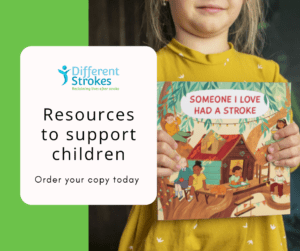
I get that this is hard on them too, but I can’t help but think this is probably worse as a younger stroke survivor because I was very independent and active before my stroke. I can still count on both hands the number of times I’ve left the house alone in three months.
Next steps are to enjoy Christmas – and to figure out how to wear heels. My friends are planning a celebration for my next birthday, which will be exactly seven months post stroke. I turn 44 on the 1st February. At times I wasn’t sure I wanted to be around for it, but I am incredibly clear now. I own my recovery. The stroke doesn’t have the ability, nor does it need to keep taking from me.
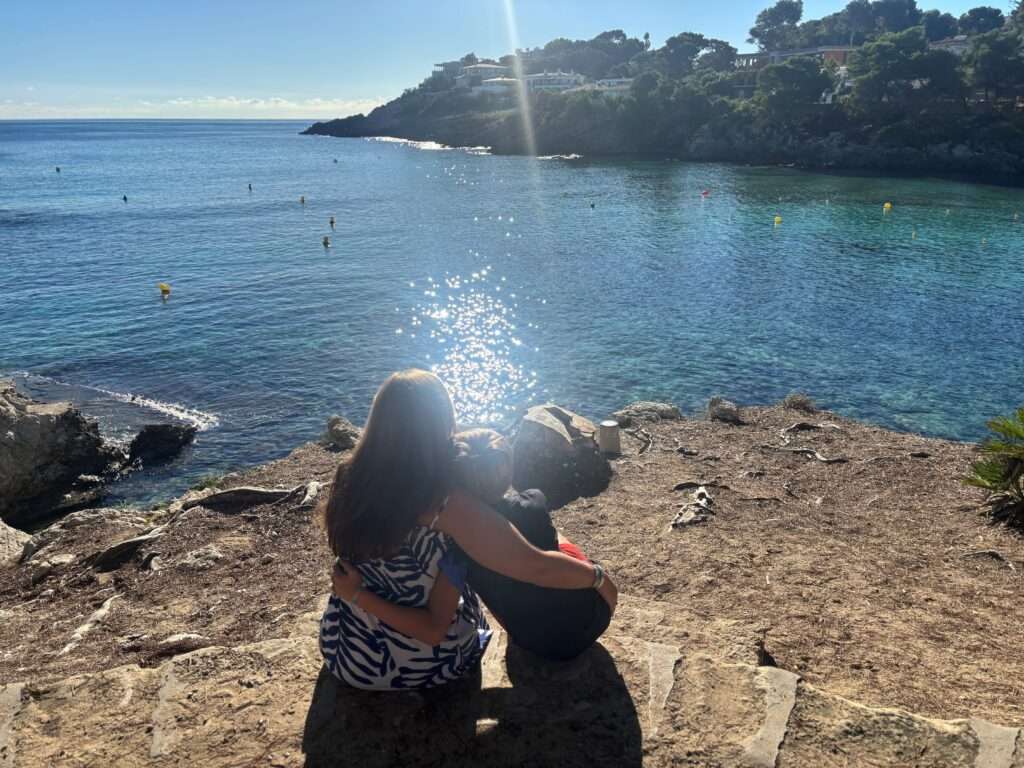
Your donation helps others like Katy on their journeys
There are 100,000 strokes in the UK each year with 1 in 4 happening to somebody of working age or younger. Different Strokes aims to promote independent stroke recovery and help these younger stroke survivors reclaim their lives.
Make a smile lottery is a weekly fundraising lottery. A fun and exciting way to help Different Strokes raise vital funds that will secure our future.
It only costs £1 per play, and you can choose to play every week or whenever you feel like taking a chance and doing something good. For more information click here.